
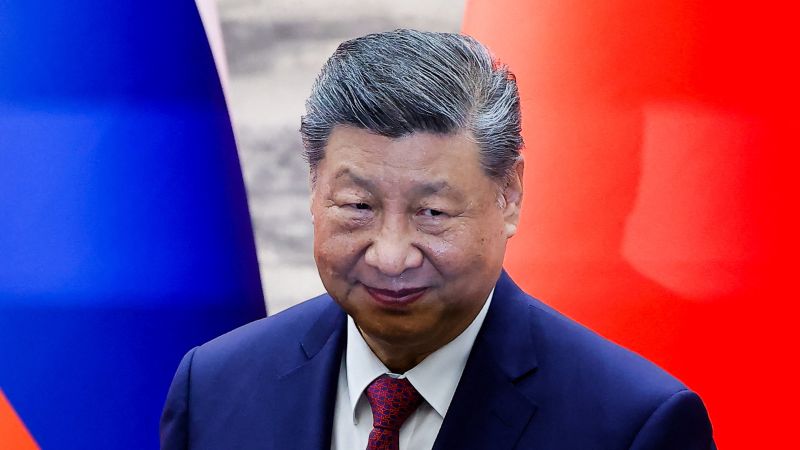
China’s Xi Jinping Arrives in North Korea for Strategic Summit with Kim Jong Un
Qwenews.com – China’s Xi Jinping arrives in North Korea for a significant two-day visit, marking his first international trip of 2026 and a rare opportunity for high-level diplomatic engagement. The summit with North Korean leader Kim Jong Un takes place against a backdrop of shifting global alliances and heightened tensions in the region. Beijing’s decision to host Xi at Pyongyang underscores its continued commitment to fostering stability in Northeast Asia, even as North Korea strengthens its ties with Russia and the United States. The visit aims to reinforce the economic and political partnership between the two nations, which has been a cornerstone of China’s geopolitical strategy for decades.
Historic Meeting and Symbolic Importance
Xi’s arrival in North Korea was met with a ceremonial display of loyalty, including a grand welcome at Pyongyang’s airport where Kim Jong Un and his wife, Ri Sol Ju, greeted the Chinese leader. North Korean children presented floral arrangements, a gesture that highlights the cultural significance of the meeting. The summit, set against the 65th anniversary of the 1961 Treaty of Friendship, Cooperation, and Mutual Assistance, is seen as a reaffirmation of the enduring relationship between China and North Korea. This alliance, which has weathered numerous challenges over the years, remains a key pillar of Beijing’s influence in the region.
“The bond between China and North Korea is not only historical but also essential for maintaining peace and prosperity in our shared neighborhood,” stated a Chinese official during the visit. This sentiment aligns with the leaders’ pre-trip exchange of letters, where Xi emphasized the importance of bilateral cooperation. The meeting is expected to address pressing issues such as North Korea’s nuclear program, regional security concerns, and economic collaboration, all of which are critical to China’s strategic interests.
Xi’s presence in North Korea follows a series of high-profile meetings with Russian President Vladimir Putin and U.S. President Donald Trump in Beijing earlier this year. These engagements underscore China’s role as a mediator in global conflicts and its efforts to balance relations with major powers. The summit with Kim Jong Un is likely to focus on strengthening military and economic ties, while also addressing the implications of North Korea’s growing alignment with Russia. Analysts suggest that the visit could signal a new era of cooperation between the two nations, particularly as they navigate challenges posed by U.S. sanctions and global supply chain disruptions.
North Korea’s Nuclear Ambitions and Regional Implications
Just days before Xi’s arrival, North Korean leader Kim Jong Un visited a nuclear material processing plant, reinforcing his administration’s commitment to advancing the country’s nuclear capabilities. State media reported that Kim emphasized plans to “exponentially strengthen” Pyongyang’s state’s nuclear program, a move that has drawn concerns from neighboring countries and global allies. China’s support for North Korea’s nuclear development has long been a point of contention, but the summit is expected to address these issues while highlighting the benefits of a unified approach to regional security.
Xi’s visit also comes at a time when North Korea has been increasing its military cooperation with Russia, including the deployment of thousands of troops to Ukraine. This alignment has raised questions about the potential for a broader Russian-North Korean partnership, which could challenge China’s influence in the region. However, Beijing’s strategic emphasis on maintaining its economic ties with Pyongyang suggests that the summit aims to prevent a complete shift in the country’s foreign policy. Discussions may focus on ensuring North Korea’s nuclear program remains under Chinese oversight while addressing its growing collaboration with Moscow.
Geopolitical Context and Future Prospects
China’s state media framed the visit as a chance to “chart a new course for bilateral relations” and “advance regional peace and prosperity.” The leaders’ meeting is expected to solidify their partnership amid global uncertainties, including the ongoing U.S.-China trade tensions and the evolving dynamics of the Russia-Ukraine war. By hosting Xi, North Korea reinforces its reliance on China for economic stability and political support, while Beijing gains leverage in its efforts to mediate between North Korea and the United States.
The summit also provides an opportunity to discuss the implications of North Korea’s recent diplomatic overtures, such as its participation in the UN Security Council and its engagement with South Korea. While these steps have signaled a willingness to engage with the broader international community, they do not diminish the importance of China’s role in North Korea’s strategic planning. The visit is anticipated to result in agreements that enhance trade, investment, and military coordination, ensuring that the two nations remain aligned in their shared goals. As Xi and Kim meet, the world watches closely to see how their collaboration will shape the future of Northeast Asia.