
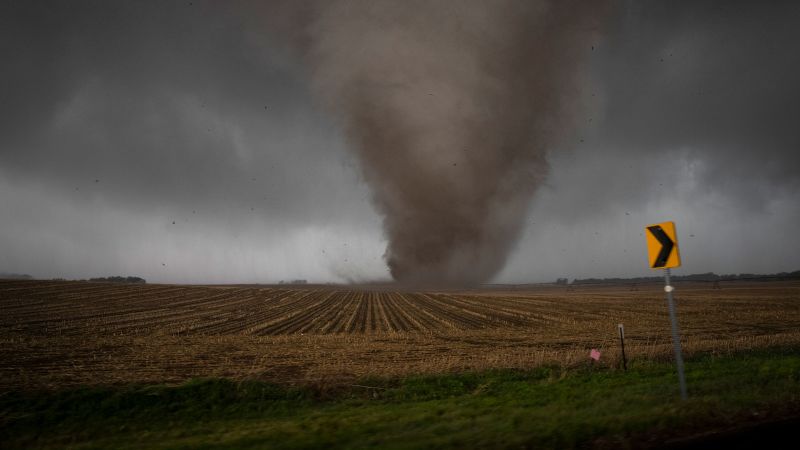
Understanding Tornado Intensity Ratings
Qwenews.com – Here’s how we find out how strong tornadoes were—a critical process that helps scientists and emergency responders prepare for future storms. Every year, the United States experiences approximately 1,200 tornadoes, and each of these events is evaluated using the Enhanced Fujita Scale (EF Scale). This system categorizes tornadoes on a spectrum from EF0 (weakest) to EF5 (strongest), with ratings based on the observable damage they inflict rather than direct wind speed measurements. The EF Scale was introduced in 2007 as an updated version of the original Fujita Scale, offering a more precise method for assessing tornado strength by accounting for modern building materials and infrastructure.
The Science Behind Damage Assessment
Here’s how we find the intensity of a tornado through meticulous damage surveys. When a tornado passes through an area, meteorologists from the National Weather Service (NWS) conduct post-event evaluations to estimate its power. These assessments involve examining the type and extent of destruction to determine wind speeds, which are then matched to specific EF categories. Unlike hurricanes, which are tracked in real-time via satellites and radar, tornadoes often have brief lifespans and unpredictable paths, making damage analysis the primary tool for rating their strength.
The process of rating tornadoes begins immediately after the storm has passed. Teams of trained surveyors, often working alongside local officials and first responders, document the damage in a structured manner. They prioritize areas where the most severe destruction occurs, as these provide the most reliable data for estimating wind speeds. For example, a tornado that uproots trees and damages well-constructed buildings is likely rated higher than one that only knocks down lightweight structures. Rapid and thorough documentation is essential to capture accurate information before recovery efforts begin to obscure evidence.
Damage Indicators and Wind Speed Correlations
Here’s how we find the rating of a tornado by analyzing 28 specific damage indicators. These indicators include structures such as homes, barns, and power poles, as well as natural elements like trees and vehicles. Each indicator is assessed for the severity of damage, which is then linked to a corresponding wind speed range. For instance, EF0 tornadoes typically cause light damage, such as broken tree branches or minor roof damage, while EF5 storms can completely destroy well-built buildings and hurl debris over long distances.
The EF Scale relies on a combination of qualitative and quantitative assessments. Surveyors compare the destruction of various objects to estimate the wind speed range. A snapped hardwood tree might indicate winds between 93 and 112 mph, whereas a completely torn-off roof could suggest winds of 135 mph or higher. By analyzing multiple indicators, meteorologists can narrow down the rating and provide a more accurate representation of the tornado’s intensity. This method allows for consistency across different regions, even when building standards vary.
“Here’s how we find the rating of a tornado by evaluating its impact on the environment and structures.”
While the EF Scale provides a standardized framework, it is not without limitations. One key aspect is that it does not account for the actual wind speeds measured during the tornado’s occurrence, which can sometimes differ from the estimated values. Instead, the rating is based on the damage observed after the fact, which depends on the availability of witnesses, the condition of the affected area, and the expertise of the survey teams. This approach ensures that ratings reflect the real-world effects of tornadoes, even if they are not perfectly aligned with precise wind speed measurements.
Historical Context and Evolution of the EF Scale
Here’s how we find the origins of the Enhanced Fujita Scale. The original Fujita Scale, developed by Dr. Tetsuya Theodore Fujita in the 1970s, was a groundbreaking tool for categorizing tornadoes. However, it relied heavily on anecdotal reports and subjective interpretations, which sometimes led to inconsistencies. The EF Scale was created to address these shortcomings by incorporating more objective criteria, such as updated building standards and detailed damage indicators. This refinement allows for more reliable ratings, even in areas with varying construction practices.
Here’s how we find the EF Scale’s impact on tornado forecasting and research. By using a more systematic approach, the scale has improved the accuracy of tornado assessments, enabling better tracking of trends over time. For example, the EF Scale has helped identify shifts in tornado behavior, such as an increase in EF5 storms in certain regions. This data is crucial for updating risk models and enhancing public awareness. Despite these improvements, the EF Scale remains an approximation, as it cannot account for every variable that affects a tornado’s strength during its brief existence.
The final step in determining a tornado’s rating involves aggregating data from multiple indicators to assign a consistent category. Here’s how we find the process of combining evidence: surveyors use a damage index to rate each object affected, then compare these ratings to established wind speed thresholds. This iterative analysis helps refine the tornado’s classification, ensuring that the EF Scale remains a reliable tool for understanding the severity of these powerful storms. As technology advances, the EF Scale continues to evolve, with ongoing research aiming to improve its accuracy and adaptability to future challenges.