
Xi’s Strategic Overhaul with North Korea
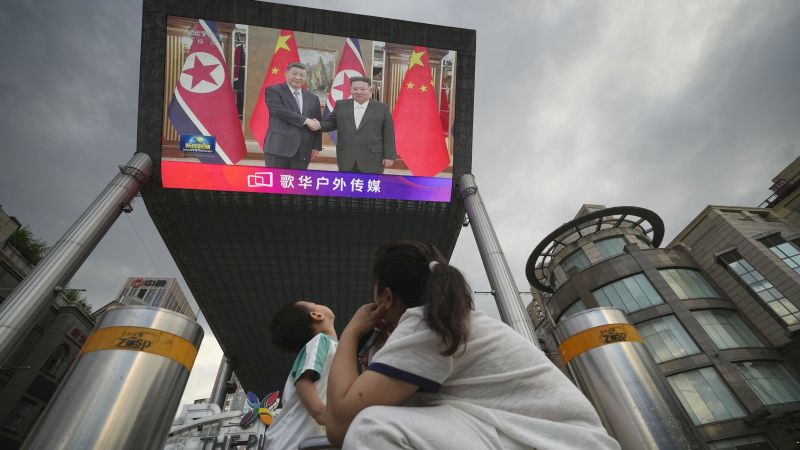
Qwenews.com – Chinese President Xi Jinping’s recent two-day state visit to North Korea marked a pivotal moment in their bilateral relationship, offering a fresh perspective on China’s evolving diplomatic priorities. This trip, his first overseas journey of 2026, underscored a shift in Beijing’s approach to its nuclear-armed neighbor, as outlined in official statements released after discussions with North Korean leader Kim Jong Un in Pyongyang.
A New Vision for Bilateral Ties
Xi emphasized the importance of deepening collaboration with North Korea, framing their partnership as a cornerstone for regional stability and shared development. “In the face of global transformations unlike any seen before,” he stated, “the two nations must open new pathways for socialist progress and peace in the region.” The remarks highlighted a focus on expanding cooperation in sectors such as trade, agriculture, construction, and healthcare, while reinforcing military and diplomatic ties.
“In the face of the profound changes unseen in a century,” Xi told Kim Jong Un, “both sides should open up a brighter prospect for the socialist cause of the two countries as well as regional peace and development.”
Strategic Realignment and Denuclearization
Unlike 2019, when Xi referenced North Korea’s commitment to denuclearization, his 2026 remarks omitted that phrase, signaling a recalibration of priorities. North Korea, under Kim’s leadership, has continued to advance its nuclear program despite UN sanctions, even amending its constitution in 2023 to institutionalize its nuclear policy. This move suggests a growing confidence in Pyongyang’s strategic position, which has also strengthened its alliances with Moscow.
Global Influence and Diplomatic Leverage
China’s rising stature on the world stage has enabled it to shape international narratives with greater confidence. Recent high-profile visits by U.S. and Russian leaders to Beijing have positioned Xi as a key player in global geopolitics. Meanwhile, Trump’s military interventions in Venezuela and economic campaigns against Iran have bolstered Beijing’s narrative that China is a reliable, forward-thinking power.
Xi’s engagement with North Korea also highlights his role as a flexible leader, capable of navigating complex alliances. By hosting Kim alongside U.S. and Russian leaders, he demonstrated China’s ability to balance competing interests, from democratic allies to authoritarian regimes.
A Legacy of “Forged in Blood”
Historically, China and North Korea have shared a bond shaped by their joint struggle during the Korean War. Kim Jong Un reiterated this legacy, calling the visit “the highest demonstration of the importance China attaches to North Korea–China friendship.” The two nations remain each other’s principal economic and diplomatic partners, with China providing critical support to Pyongyang’s development goals.
Experts suggest that Xi’s focus on expanded exchanges with North Korea reflects a broader strategy to build a unified economic and security bloc, positioning Beijing as a leader in the evolving global order. This approach also ensures continued influence over Pyongyang, even as the U.S. seeks to reengage with the Korean Peninsula.