
What was it all for? US-Iran agreement brings bitter rivals full circle
Qwenews.com – The current standoff features a 60-day ultimatum for Iran to reach a nuclear agreement under the looming shadow of U.S. military intervention. President Donald Trump has expressed optimism about a deal, even as Tehran’s leadership doubles down on defiance. This dynamic echoes a previous moment in history, raising the question: Is this a repeat of events that transpired in April 2025?
Sound familiar?
Sound familiar? While déjà vu is technically an illusion of the mind, the above has happened once before.
Indeed, the Middle East finds itself in the same position as it was in April 2025, mere weeks before the first Israeli strikes on Iran and the subsequent U.S. assault on its nuclear facilities. Though the past year has seen a downward spiral in relations, the cycle appears to be returning to familiar ground.
In March 2025, Trump penned a message to then-Supreme Leader Ayatollah Ali Khamanei, proposing a two-month deadline for a nuclear deal or risking military action. His envoy, Steve Witkoff, later traveled to Oman to push for diplomatic progress. However, the talks unraveled when Israel’s “Operation Rising Lion” escalated tensions, leading to a 12-day conflict.
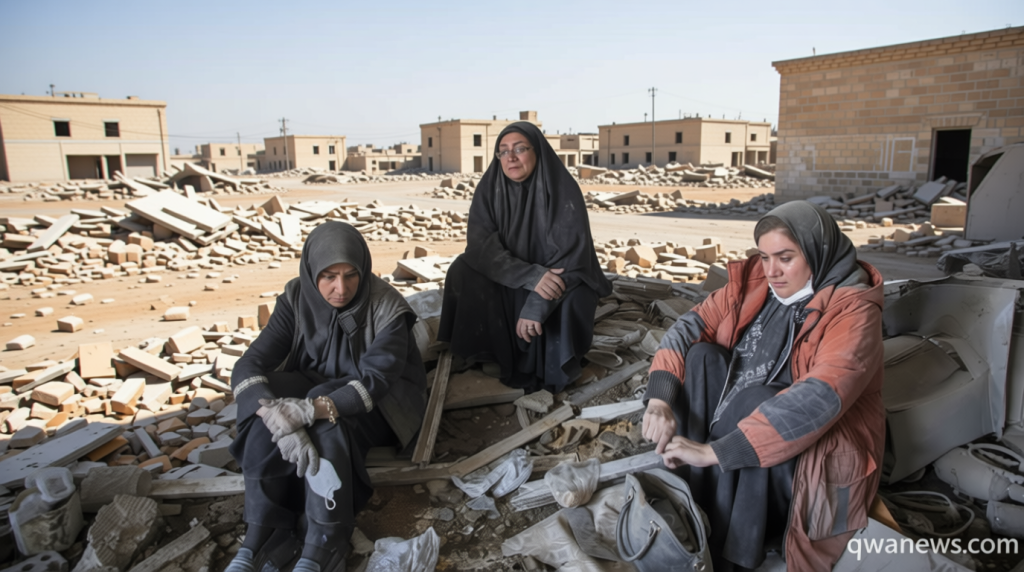
During this period, Israel targeted Iran’s security infrastructure, claiming to weaken its missile capabilities. The U.S. then followed up with strikes, asserting it had “obliterated” Iran’s nuclear program. Over 3,000 lives were lost in Iran, with civilians making up a significant portion, while Lebanon reported more than 3,600 casualties, many of them civilian.
The Cycle of Violence: Casualties and Consequences
Attempts to replicate the events of June last year feel both brutal and redundant. Trump has tested the same approach twice, each time pressured into conflict by Israeli Prime Minister Benjamin Netanyahu. Despite his claims of success, some of his own intelligence analysts question the extent of the damage inflicted on Iran.
The broader implications of this cycle remain uncertain. What has been achieved through the past year of violence? Has each round of conflict made an Iranian nuclear weapon more or less probable? The true test of Trump’s strategy lies in whether the fighting can be halted.
The Uncertain Path Ahead
Iran’s desire for a nuclear weapon has only intensified following the loss of its supreme leader and key security figures. The destruction of its facilities and the disruption of its scientific network have created a more challenging landscape for any rapid development of a nuclear arsenal. Yet, the country’s capabilities were underestimated during the attacks of February 28, which exposed vulnerabilities in its defense system.
Trump now faces the next generation of Iran’s leadership, hoping that grief and loss will foster openness to negotiation. Supreme Leader Mojtaba Khamenei, who survived an attack that killed his father, wife, and son, seems an unlikely candidate for swift compromise. Similar patterns emerged in Afghanistan, where relentless raids on Taliban leaders left their successors more entrenched in hardline positions.
The Test of Trump’s Strategy
The succession process has arguably strengthened the influence of hardliners within Iran. The chaos of security measures and the anxiety of leadership transitions have made diplomacy more difficult. Trump’s repeated partial deals and shifting commitments reflect this challenge, as he grapples with a complex and fragmented chain of command.