
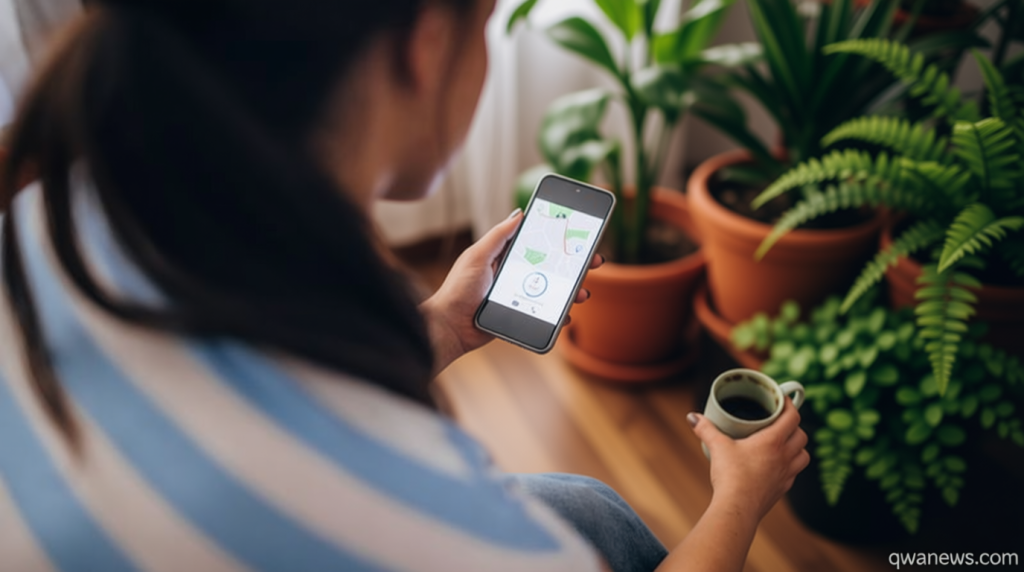
Parents Track Adult Children for Safety – Is It Actually Safer?
Qwenews.com – Parents are tracking their adult children to ensure their safety, yet the practice is sparking debate about its effectiveness and impact on family relationships. A recent survey by the C.S. Mott Children’s Hospital at the University of Michigan found that over 50% of parents use digital tools to monitor their grown children’s whereabouts, highlighting a growing reliance on technology for reassurance. While the intention behind these efforts is often rooted in concern, the findings question whether constant tracking truly enhances safety or risks undermining the independence of young adults.
The Dual Nature of Tracking
Tracking technology, such as GPS apps and smartphone location services, has become a common tool for parents to stay connected with their adult children. However, the survey reveals a mixed perception of its benefits. Nearly a quarter of respondents who track their children believe it can intensify anxiety rather than alleviate it. “Tracking often amplifies fears because the brain fills in gaps with assumptions when only limited data is available,” explained Kara Alaimo, a communication professor at Fairleigh Dickinson University. “This can lead to overreacting to situations that aren’t necessarily dangerous.”
“I’m not suggesting all tracking is bad, but it can easily slip into problematic territory when parents overextend their involvement.” – Sarah Clark, University of Michigan research scientist
Clark’s research also indicates that 68% of parents use tracking primarily to manage their own anxiety, while 64% rely on it as a precaution for emergencies. Additionally, 17% track their children to ensure they are in spaces deemed acceptable by the parents. These motivations, though well-intentioned, may not always align with the child’s autonomy or their own sense of independence. The survey included responses from over 1,500 parents with children aged 18 to 25, offering a nuanced view of modern parental practices.
Helicopter Parenting and the Loss of Autonomy
Experts caution that constant surveillance can prevent young adults from developing independence. Kara Alaimo argues that when children are not allowed to make their own choices, they may feel trapped or distrustful. “Tracking shouldn’t replace their ability to think critically about their own safety,” she said. “It’s important for them to navigate risks on their own.”
“Just because you can track someone doesn’t mean you understand their context or can act effectively when needed.” – Kara Alaimo
The transition from childhood to adulthood is a critical moment for families to reassess the balance between monitoring and trust. Many parents assume they are in control, but young adults should have a say in how much they are observed. Clark emphasized that tracking is most beneficial in specific scenarios, such as a first date or a new trip, but should not become the sole method of ensuring safety. The study’s findings suggest a need for more open conversations about expectations and boundaries.
Technology and the Psychology of Control
As technology advances, so does its role in parental oversight. Smartphones and location-sharing apps provide parents with real-time data, allowing them to monitor their children’s movements with ease. However, this constant access can create a psychological dependency, where parents feel more secure when they know their children’s whereabouts. The survey’s data suggests that this sense of control may not always translate to actual safety, as children often manage their own risks without parental intervention.
“Parents are tracking their adult children not just for emergencies, but to maintain a sense of connection and reassurance.” – Sarah Clark
Additionally, the rise of social media and digital communication has blurred the lines between monitoring and interaction. Parents may track their children’s locations to feel more involved in their lives, but this practice can also lead to feelings of intrusion. The study underscores that while technology offers tools for safety, its use must be thoughtful to avoid fostering resentment or reducing the child’s confidence in their own decision-making abilities.
Striking a Balance Between Safety and Autonomy
To maximize the benefits of tracking, experts recommend a strategic approach rather than constant surveillance. “Parents should consider tracking as a supplement to, not a replacement for, their children’s judgment,” Alaimo noted. She suggested that children could be encouraged to share their locations with trusted friends, empowering them to take charge of their safety while still providing parents with peace of mind.
“Teaching young adults to recognize risks on their own makes them more capable of navigating challenges without constant supervision.” – Kara Alaimo
Clark also highlighted the importance of reflection in parental decision-making. “Families should ask themselves: Are we tracking out of concern, or are we micromanaging?” she said. The survey’s insights indicate that many parents are using tracking as a default measure, often without discussing its long-term effects. By fostering dialogue and setting clear boundaries, families can ensure that tracking supports safety without stifling growth. This balance is essential for maintaining healthy relationships and preparing young adults for the responsibilities of independence.