
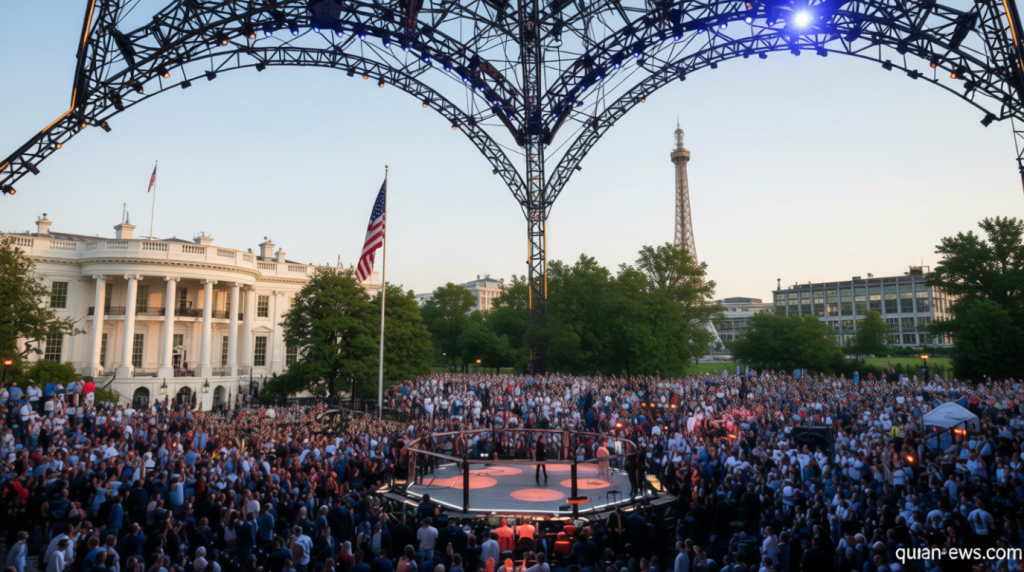
UFC Fight Night Concludes at White House, Spurring Days of Demolition and Restoration
Qwenews.com – With UFC fight night wrapped at the White House, the final act of the event has kicked off a multi-day process of dismantling and restoring the presidential residence’s public spaces. The chaotic transformation of the South Lawn and Ellipse into a temporary combat arena, which had drawn thousands of fans and media attention, is now being reversed as crews begin their meticulous work to return the area to its pre-event state. The event, held on June 15, 2026, marked the culmination of months of planning, and its aftermath is setting the stage for a thorough logistical cleanup.
Event Setup and Public Impact
The UFC fight night, which took place on the White House grounds, was a spectacle that required extensive modifications to the presidential complex. From the moment the event began, the South Lawn was converted into a stage for combat, with additional infrastructure erected on the Ellipse to accommodate fans and broadcast operations. The setup, which included high-tech lighting systems and temporary seating, turned the White House into a global entertainment hub, drawing widespread public engagement and media coverage. However, this grand display came at the cost of significant disruption to daily operations.
“The White House grounds were transformed into a state-of-the-art event space, complete with lighting, sound systems, and security measures,” said White House spokesperson Emily Carter, who noted that the event’s scale was unprecedented for a presidential venue.
Logistical Challenges and Timeline
The breakdown of the event has been organized into a structured timeline, with each phase addressing specific components of the setup. Crews initiated the dismantling of security barriers and anti-riot fencing on Monday, followed by the removal of lighting structures and stage equipment. The UFC’s event schedule outlined that merchandise trailers would depart in the early hours of Tuesday, while food and beverage operations would begin decommissioning their setups by midday. Broadcast equipment, which had been installed in record time, is now being dismantled, with the final stages of the cleanup set to span several weeks.
Restrooms, camera towers, and interior staging have been targeted for removal in subsequent days, with each phase requiring coordination between federal agencies and the UFC’s event team. The process is expected to involve over 700 subcontractors, ensuring that every element of the temporary infrastructure is accounted for. By Friday, the focus will shift to clearing power systems and tents, with the final phase of “turf remediation” scheduled to begin by June 23.
Presidential Involvement and Public Reaction
President Donald Trump had previously expressed interest in keeping certain event elements, such as the iconic “Claw” lighting structure, as permanent fixtures. However, the immediate disassembly of the structure was prioritized after the event, with federal officials emphasizing the need to restore the White House’s appearance for upcoming public engagements. While the president’s personal preferences were acknowledged, the decision to dismantle the setup was based on logistical efficiency and the desire to minimize long-term disruptions.
The event sparked mixed reactions from the public and political analysts. While some praised the spectacle as a bold move to blend entertainment with diplomacy, others criticized the use of taxpayer funds for the setup and its subsequent removal. “It’s a remarkable effort to bring energy to the White House, but the costs should be transparent,” remarked political commentator David Hayes, who highlighted the debate over public spending in the context of a high-profile event.
Financial Commitment and Coordination
The UFC covered the majority of the event’s expenses, including production, labor, and the construction of temporary structures. The total cost of the setup, which included staging, lighting, and security, is estimated to have reached approximately $60 million. Federal agencies, meanwhile, provided emergency equipment such as magnetometers, first aid stations, and portable restrooms, with the exact financial contribution from the government yet to be disclosed.
Logistical coordination was a joint effort, with federal officials managing traffic and security while the UFC handled the creative and technical aspects of the event. Daily screenings of 20 to 30 trucks transporting equipment were conducted, ensuring that the removal process was both efficient and well-organized. The collaboration between the UFC and the White House highlights the intersection of sports, politics, and public spectacle in modern presidential events.
Days of Demolition and Restoration
As the cleanup progresses, the White House’s grounds are being transformed once again, this time with a focus on restoration rather than construction. The initial days of breakdown are expected to be the most intensive, with crews working tirelessly to dismantle the event’s infrastructure. This includes removing anti-scale fencing, deconstructing temporary seating, and extracting broadcasting equipment from the Ellipse.
By the end of the week, the focus will shift to the meticulous task of repairing any damage to the White House’s lawn and surrounding areas. The “turf remediation” phase, set to begin on June 23, will involve restoring the grass and removing debris from the event. Staff parking, which had been relocated to Pennsylvania Avenue during the event, will also be reestablished as part of the final restoration efforts. The process, though extensive, aims to leave the White House in its original condition by the end of the cleanup period.
Legacy and Future Implications
The event’s aftermath has raised questions about the long-term impact of hosting large-scale entertainment at the White House. While the immediate cleanup will take weeks to complete, the event’s influence on public perception and political strategy may linger longer. Officials have emphasized that the White House remains a symbol of national authority, and the UFC’s involvement underscores the potential for unconventional events to shape political narratives.