
Ukraine Targets Russian Navy Base During Putin’s Davos Event
Qwenews.com – On the final day of the St. Petersburg International Economic Forum (SPIEF), widely dubbed Ukraine targets Russian navy base as Putin’s Davos, Ukraine launched a coordinated drone attack on a key Russian naval installation near the city. The strikes, which targeted facilities in the Leningrad region, marked a significant escalation in the conflict as Kyiv intensified its focus on disrupting Russian military operations. This event, held in the Russian city, served as a backdrop for the Ukrainian forces’ operation, signaling a deliberate effort to pressure the Russian economy and military infrastructure during a critical diplomatic gathering.
Strategic Strikes and Immediate Impact
The Ukrainian military claimed the attack focused on the naval base in Kronstadt, a vital hub for Russia’s Baltic Fleet. According to President Volodymyr Zelensky, drones traveled approximately 1,000 kilometers to reach the target, hitting key infrastructure that supports Russia’s naval capabilities. The base, which hosts both operational ships and a naval academy, is strategically positioned to control access to the Gulf of Finland and the eastern Baltic Sea. Reports indicate that a Russian warship stationed there was damaged in the assault, underscoring the tactical significance of the strike.
“Last night, our drones covered a distance of about 1,000 kilometers to the St. Petersburg region – to the enemy navy’s arsenals and a base in Kronstadt,” Zelensky stated, emphasizing the precision and reach of Ukraine’s military operations.
The attacks caused visible damage, with local authorities confirming fires at multiple sites. St. Petersburg’s governor, Aleksandr Beglov, reported that three individuals were injured in the drone assault, urging citizens to stay indoors as a precaution. In the Leningrad Region, officials confirmed the interception of 141 drones, leaving behind debris in several locations. The scale of the operation suggests a calculated move to disrupt Russian naval readiness and create a lasting impact on the region’s strategic balance.
Expanding the Frontlines Beyond St. Petersburg
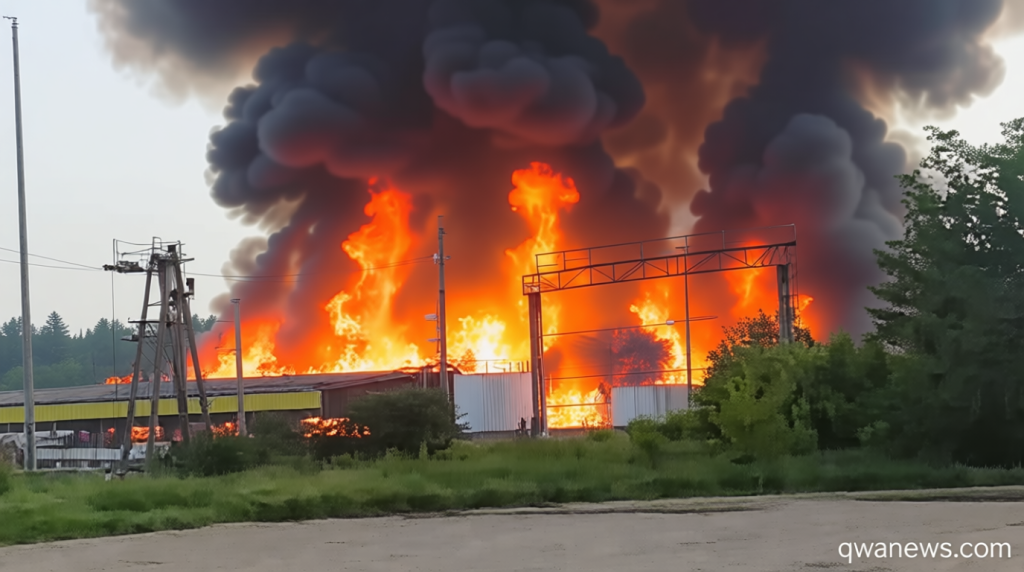
While the focus was on the naval base, the broader campaign included strikes on other Russian oil and military targets. In Bolshaya Izhora, a significant fire broke out near a naval arsenal, prompting the evacuation of over 600 residents. CNN corroborated the smoke plumes from the site, which is a crucial node in Russia’s energy supply chain. Additionally, Ukraine claimed long-range strikes hit an oil depot in the Krasnodar region, igniting massive flames and destroying three tanks filled with petroleum products.
Further away, in the Urals, a fire at the Tyumen oil refinery was attributed to a technical malfunction by local authorities. However, the Ukrainian military noted that Russia had launched 272 drones overnight, with 249 intercepted, indicating a persistent aerial conflict. These coordinated strikes demonstrate Ukraine’s strategic shift toward targeting critical infrastructure, aiming to weaken Russia’s economic and military capacity simultaneously.
Political Context and Economic Pressure
The timing of the attacks was no coincidence. The SPIEF, which brings together Russian billionaires and global leaders, provided a unique opportunity for Ukraine to strike while Russia was preoccupied with economic diplomacy. Zelensky’s recent letter to Putin, urging an end to the war, arrived just days prior, with the forum serving as a potential stage for dialogue. Yet, the attacks were seen as a symbolic gesture to highlight the ongoing strain on Russia’s resources and morale.
Russian emergency services confirmed the fire at the Krasnodar depot, evacuating dozens of people and deploying over 50 firefighting units to contain the blaze. The incident reflects the growing challenges Russia faces in maintaining its energy sector amid relentless Ukrainian attacks. Analysts suggest that by targeting oil infrastructure, Kyiv is not only depriving Russia of fuel supplies but also undermining its ability to sustain military operations in the east and west.
International Reactions and Broader Implications
The strikes have drawn mixed reactions from the international community. Some analysts view the attacks as a strategic move to capitalize on the political atmosphere of the forum, while others question the effectiveness of drone warfare against well-protected Russian assets. Western allies have expressed support for Ukraine’s actions, highlighting the importance of targeting Russia’s energy infrastructure to weaken its war effort.
Meanwhile, Russian officials have accused Ukraine of escalating the conflict to cause chaos during a pivotal economic summit. The incident has also reignited debates about the role of Western sanctions in fueling Russia’s reliance on domestic resources. As the attacks continue, experts predict that Ukraine’s focus on the navy base and oil depots will remain central to its strategy, aiming to cripple Russia’s ability to project power and sustain its war in Ukraine.