
French Heatwave Sparks Intense Debate Over Air Conditioning
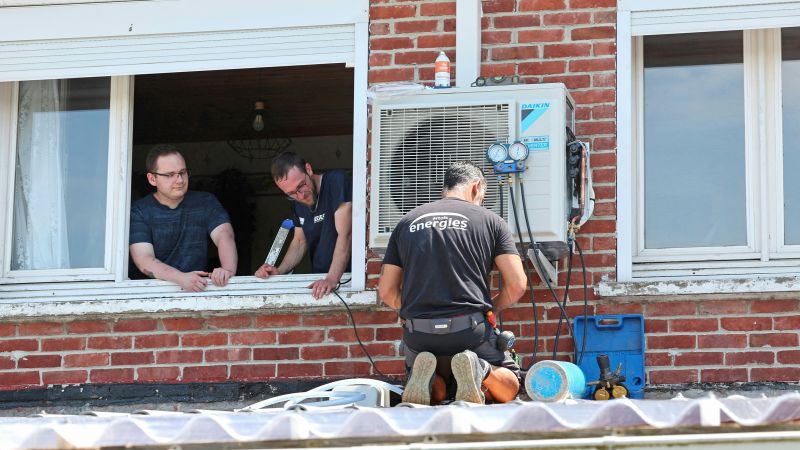
Qwenews.com – France is bracing for a new wave of intense heat, with scorching temperatures set to return this week. As the country grapples with the aftermath of the previous heatwave, the same question resurfaces: why hasn’t France embraced air conditioning more readily? Public frustration has reached a boiling point, with citizens taking matters into their own hands to secure cooling solutions amid rising temperatures.
On Thursday, crowds gathered outside Lidl stores in the Paris region, vying for limited air conditioning units. In Aubervilliers, a suburb of the capital, the rush became chaotic as shoppers pushed through doors, leading to minor conflicts. A witness recounted the scene:
“I saw people get trampled.”
Another shared their experience:
“I was in shock, I got shoved around in every direction, and unfortunately I didn’t leave with an AC unit.”
The demand highlights a growing desperation, even as France’s energy transition agency notes that only 24% of households have AC—up from 18% two years ago, yet still significantly lower than Italy’s 50%.
Legacy of Design and Regulation
France’s cultural aversion to air conditioning is rooted in both aesthetics and bureaucracy. Many believe the machines are visually unappealing, noisy, and emblematic of American influence. Additionally, the country’s energy infrastructure has long been seen as a factor. While air conditioning is often criticized for its carbon footprint, France’s reliance on nuclear power and other low-carbon sources means its impact is less severe compared to nations like Germany or Poland.
Historic buildings in Paris, a hallmark of the city’s skyline, pose another challenge. Heritage rules frequently block the installation of exterior condenser units, preserving the city’s uniform appearance. In co-owned properties, approval from the co-ownership body is required, and unauthorized installations can be reversed. These regulations, while protecting architectural integrity, have also slowed the adoption of AC, even as heat becomes more frequent.
Political Tensions Over Cooling Solutions
As the 2027 presidential race approaches, air conditioning has emerged as a divisive political topic. Marine Le Pen’s National Rally party has championed the cause, advocating for a nationwide “plan clim” to install units in schools and hospitals. They propose $23 billion in interest-free loans to support 30 to 40 million households. Meanwhile, the Greens, once staunch opponents of AC, have begun to soften their stance, with leader Marine Tondelier admitting that cooling is now essential in some public spaces.
On the left, views are split. Jean-Luc Mélenchon’s hard-left France Unbowed party warns against widespread AC use, claiming it could cause more harm. The government, caught in the middle, has approved emergency installations in hospitals while resisting the idea of fully embracing AC. This tension reached a peak when the Greens filed a no-confidence motion against the government’s heatwave response, signaling how deeply politicized the issue has become.
Human Impact of the Heat Crisis
Resistance to air conditioning has also been framed in environmental terms, with critics arguing it directly contributes to climate change through energy consumption. However, France’s energy mix—where nearly 95% of electricity comes from low-carbon sources—mitigates this impact. Nuclear power alone supplies two-thirds of the country’s energy, making AC operation far less carbon-intensive than in many other European nations.
Over six days in June, more than 2,000 excess deaths were recorded, according to health authorities. This has prompted a shift in public sentiment, with some acknowledging the necessity of cooling systems in schools and hospitals. Yet, the debate continues, reflecting a broader struggle between tradition, practicality, and the urgent need to adapt to a warming climate.