
From ‘The Wave’ to ‘Ole, Ole, Ole’: Mexico’s World Cup Soccer Traditions Explained
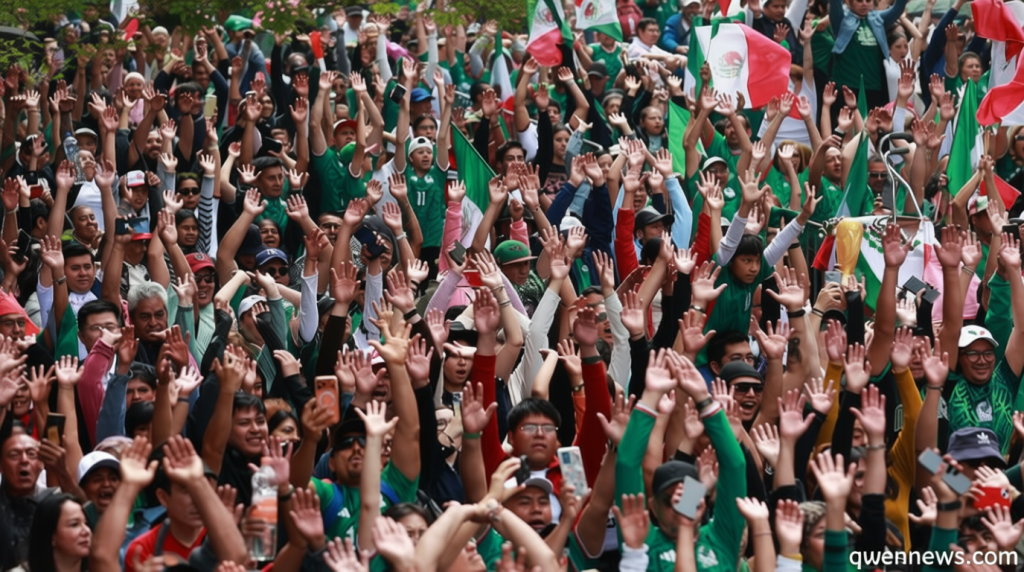
Qwenews.com – Though many nations claim to be the most fervent in supporting soccer, Mexico holds a unique distinction as the country that brought one of the sport’s most iconic rituals to global prominence: the Mexican Wave. Nearly four decades after its rise to fame during the 1986 World Cup, Mexican officials are now reporting a new milestone—the largest wave ever recorded—just ahead of the 2026 tournament, which will see the nation host 13 matches. The event took place in Mexico City’s Paseo de la Reforma, where thousands of fans synchronized their movements in a powerful display of unity. CNN has contacted Guinness World Records to verify the claim.
A Global Celebration, Not Just a Game
In Mexico, soccer transcends the boundaries of sport, becoming a communal festival. Fans often describe it as a gathering of joy and shared spirit, far beyond the confines of a match. “It’s like hosting a party at home and inviting friends over,” shared Christian, a spectator at a recent friendly between Mexico and Serbia in Toluca. “Now it’s our turn to be the hosts,” he added, emphasizing the pride in the event.
As the 2026 World Cup approaches, the country is preparing to showcase its vibrant traditions. The Toluca stadium, a week before the opening game against South Africa on June 11, already buzzed with energy. The air was filled with rhythmic beats of drums, horns, and cumbia music—a genre known for its bold brass and accordion melodies—transforming the arena into a massive dance floor. Fans chanted “Olé, Olé, Olé,” their voices merging with the sound of spinning matracas, wooden flag-shaped noisemakers, and plastic horns called cornetas.
The Origins and Legacy of the Mexican Wave
The wave itself is a ritual that has become a staple of international sporting events, yet its fame is largely attributed to Mexico. While its exact beginnings are debated, some trace its roots to the U.S. in the late 1970s or early 1980s. It wasn’t until the 1986 World Cup that Mexico’s fans propelled it into the global spotlight, captivating millions of spectators with their synchronized movements. This marked the moment the wave became widely known as the “Mexican Wave” outside North America.
For many Mexicans, the wave is more than a fan tradition—it’s a cultural emblem. Fernando Vizcaíno, an expert in Mexican nationalism, notes that the ritual reflects the nation’s collective identity. “There’s no ball, no field, and no goal in that moment. The wave becomes Mexico itself,” he explained, highlighting its symbolic power as a researcher at UNAM. The tourism department in Mexico City echoes this sentiment, calling the wave “a universal symbol of joy, brotherhood, and euphoria.”
Stadium Soundtrack and Rituals
Music plays a central role in Mexico’s soccer culture, with chants and songs creating an electrifying atmosphere. While such elements are common worldwide, the intensity and volume in Mexican stadiums are unmatched. Gabriela, a vendor at Toluca’s main stadium, described the experience as immersive. “Believe me, with any genre of music, people immediately start partying,” she said. “Especially with banda, corridos, and grupera—genres that pulse with energy.”
Among the most recognizable chants is “Chiquitibum,” popularized by a beer commercial during the 1986 World Cup. Its repetitive syllables and upbeat cadence serve as a rallying cry for fans. However, not all chants are celebratory. FIFA has fined the Mexican Football Federation for the use of slurs and offensive lyrics, prompting campaigns to promote more positive expressions. One controversial chant, which includes a four-letter word, has drawn significant criticism.
For this year’s World Cup, Mexican authorities have taken steps to manage the volume. While noisemakers and horns are a staple of local matches, they’ve been banned to prevent excessive noise. Despite this, the spirit of the game remains uncontainable, with fans using every tool at their disposal to keep the energy alive from start to finish.