
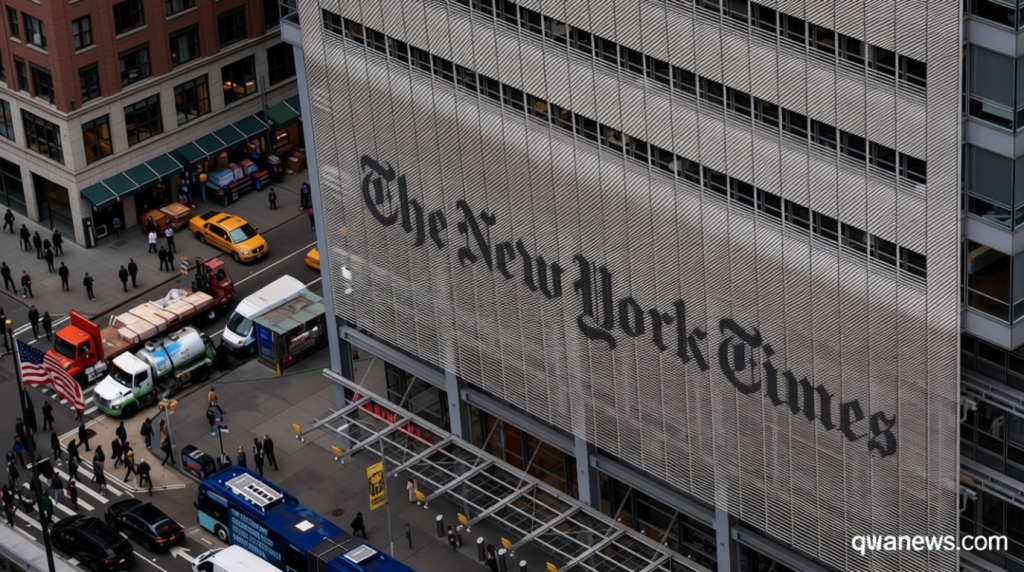
New York Times Fights Trump Subpoenas for Reporters’ Testimony
Qwenews.com – The New York Times has taken a firm stance against the Trump administration’s recent attempts to subpoena its reporters for testimony before a grand jury. This legal maneuver, described as “abusive and improper” by the newspaper’s top newsroom lawyer, David McCraw, aims to compel journalists to reveal information about anonymous sources. McCraw argued that the subpoenas were issued in bad faith, targeting the Times for its critical coverage of the administration. The move has raised concerns about the potential impact on free press and the independence of investigative journalism.
The Subpoena Context and Public Reaction
The subpoenas came just days after the Times published a groundbreaking report on security vulnerabilities in the newly gifted Air Force One. This revelation, which contradicted President Donald Trump’s claims of the plane’s impenetrability, triggered a wide-ranging leak investigation. While the story itself sparked immediate scrutiny, it also intensified debates over the extent of government oversight in media operations. The publication’s bold reporting led to accusations of undermining the administration, prompting the use of legal pressure to silence dissenting voices.
“We see this… as an attempt to intimidate the journalists and The New York Times itself, and we’re going to continue to report — both about Air Force One, and on the circumstances around the government use of prosecutorial power to intimidate the independent news media,”
McCraw emphasized, underscoring the newspaper’s commitment to transparency despite the looming legal threats. This sentiment was echoed by Joe Kahn, the Times’ executive editor, who highlighted the historical significance of the issue. “I’ve been a foreign correspondent in China,” Kahn remarked in an online video, “and I’ve seen the way an authoritarian government can restrict journalists from reporting on critical public interest news. It’s vital to American democracy that this erosion of press freedoms not occur here.”
Legal Justifications and Authoritarian Comparisons
The Justice Department defended the subpoenas, asserting that journalists are not the primary targets but rather tools to uncover the truth about leaks. According to Todd Blanche, Trump’s confirmed attorney general, the focus is on individuals who disclosed classified information, not the media itself. Blanche likened the situation to a car crash, where “material witnesses” are necessary to build a case. However, critics argue that this comparison downplays the significance of the Times’ role in holding the administration accountable.
Meanwhile, the New York Times has become a focal point in the broader conflict between investigative reporting and executive authority. The subpoenas, issued on Friday, required testimony from reporters by Wednesday, but the hearing was postponed to allow the newspaper to mount its defense. McCraw noted that the Times’ motion was submitted under seal, limiting public access to key legal arguments. This secrecy has fueled accusations that the administration is using the process to exert control over the narrative, especially in cases where media outlets challenge the president’s policies.
The dispute has drawn support from a range of First Amendment advocates, who view the case as a potential overreach of executive power. These groups warn that the subpoena process could set a dangerous precedent, enabling the government to target journalists who expose corruption or misinformation. On the other hand, some conservative organizations have backed the subpoenas, arguing that they are a necessary tool to ensure accountability. This divergence in perspectives highlights the deepening divide between the media and the administration, particularly under the Trump presidency.
As the legal battle unfolds, the New York Times remains resolute in its defense of press freedoms. The administration’s use of subpoenas to pressure reporters for testimony has sparked discussions about the balance between transparency and privacy in journalism. With the focus keyword “New York Times fights Trump” appearing in the opening paragraph and repeated throughout the article, the narrative emphasizes the newspaper’s proactive role in resisting governmental encroachment. The case now stands as a pivotal moment in the ongoing struggle to preserve the independence of the press in the face of political challenges.