
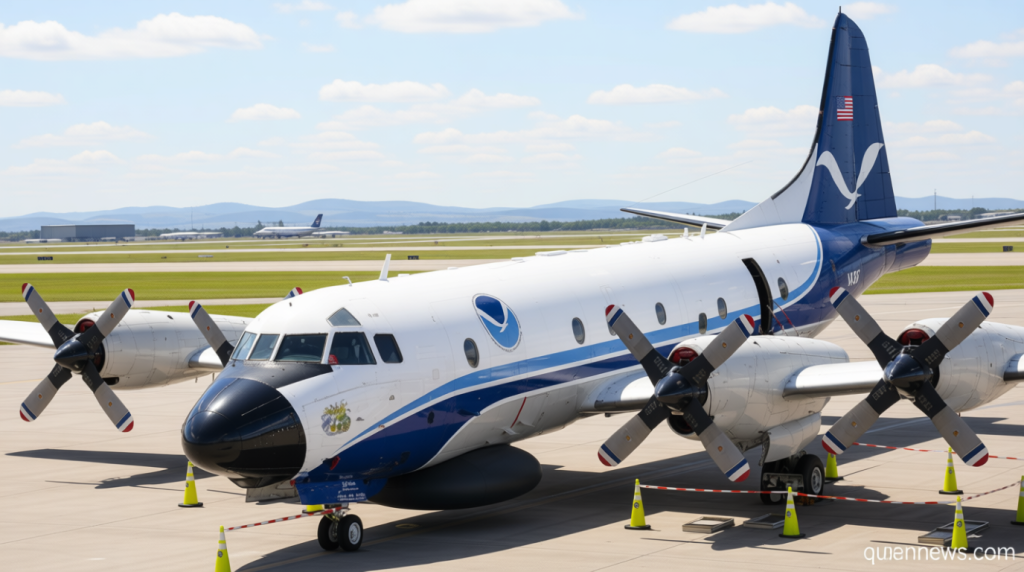
NOAA’s Hurricane Hunter Fleet Needs Upgrades; Senators Seek Expansion
Qwenews.com – NOAA’s Hurricane Hunter fleet is facing a critical challenge as its aging aircraft struggle to meet the demands of increasingly severe weather events. A coalition of senators from both major political parties is pushing for legislative action to expand and modernize the fleet, ensuring it remains capable of providing essential data for accurate hurricane forecasts. The proposed Senate bill, set to be introduced this week, would allocate $2.5 billion for new planes and an additional $45 million annually to hire specialized pilots, marking a significant step toward addressing the fleet’s outdated infrastructure and operational limitations.
Aging Aircraft and Operational Challenges
Currently, NOAA operates a fleet of aging aircraft, including two decades-old WP-3D Orion turboprops—nicknamed “Kermit” and “Miss Piggy”—and a modified Gulfstream jet called “Gonzo.” These planes are expected to reach the end of their service life by 2030, raising concerns about their ability to sustain high-frequency missions during peak hurricane seasons. The reliability of these aircraft has already been tested, with mechanical failures leading to last-minute cancellations that disrupt critical data collection. This vulnerability is compounded by the growing intensity of climate-driven storms, which require more precise and timely information for effective disaster preparedness.
While the U.S. Air Force also conducts hurricane reconnaissance, its C-130J planes lack the sophisticated instrumentation that NOAA’s fleet provides. The Hurricane Hunter program’s manned aircraft are uniquely equipped to gather detailed storm data, including wind speed, pressure, and temperature measurements, which are vital for predicting storm behavior. The current fleet’s limitations have sparked urgency among climate scientists and policymakers, who emphasize that without modernization, NOAA may fall behind in its ability to support communities at risk.
Senate Bill Aims to Secure Funding and Expand Capabilities
The Senate bill introduces a statutory requirement for NOAA to maintain backup aircraft for every mission, reducing the risk of disruptions caused by mechanical failures. It also includes provisions to integrate advanced technologies, such as tail-mounted Doppler radars, which enhance the accuracy of hurricane forecasts. These upgrades are essential for improving predictions of rapid storm intensification, a phenomenon that has become more frequent due to rising ocean temperatures. However, NOAA has only authorized six planes, double its current count, and Congress has yet to commit the necessary funds to replace the aging aircraft.
Senator Maria Cantwell, a Democrat from Washington, has highlighted the importance of NOAA’s Hurricane Hunter fleet in her home state, where atmospheric river-induced flooding has become a recurring issue. “As weather patterns shift, our communities depend on precise forecasts to prepare for extreme events,” she stated. Cantwell’s comments underscore the need to preserve human-operated aircraft, which offer nuanced insights that drones cannot yet match. The bill also blocks efforts to transition the fleet entirely to unmanned systems, ensuring that the expertise of trained pilots remains central to data collection efforts.
The proposed expansion aligns with broader goals of enhancing national climate resilience. NOAA’s Hurricane Hunter fleet has been instrumental in tracking storms for decades, but its current size is insufficient to handle the increasing frequency and severity of hurricanes. With climate change projected to heighten storm activity, the need for a robust and modernized fleet has never been more pressing. The Senate bill not only addresses immediate operational gaps but also positions NOAA to adapt to future weather challenges with greater agility.
NOAA is awaiting delivery of a modern replacement for its Gulfstream jet and plans to introduce at least one new WP-3D Orion in the coming years. These upgrades would strengthen the agency’s capacity to monitor storms in real time, providing critical data to meteorologists and emergency managers. The bill’s passage could be the key to unlocking the funding required for these replacements, ensuring NOAA’s Hurricane Hunter fleet continues to play a pivotal role in safeguarding coastal communities and infrastructure.