
36 Disastrous Hours for American Soccer as World Cup Bubble Bursts
Qwenews.com – American soccer endured 36 hours of turmoil that shattered its World Cup hopes, marked by a critical FIFA ruling and a crushing 4-1 loss to Belgium. The collapse began with the controversial decision to clear Folarin Balogun of his suspension just hours before the match, allowing the U.S. striker to rejoin the action via Article 27. This procedural move, while technically sound, ignited widespread criticism over political influence and transparency. The 36 disastrous hours for American soccer exposed vulnerabilities both on and off the field, as the team’s performance faltered amid mounting scrutiny.
The FIFA Decision and Political Fallout
The FIFA ruling, which reinstated Balogun’s eligibility, sparked immediate debate about the organization’s impartiality. While the decision followed a precedent set by Cristiano Ronaldo’s similar case, critics argued that the timing was too convenient, raising questions about the potential impact of political pressure. President Donald Trump’s recent comments to FIFA president Gianni Infantino added fuel to the fire, as he claimed no direct involvement in the ruling. “I didn’t know what a red card meant,” Trump said, deflecting accusations of interference. Despite the defense, the 36 disastrous hours for American soccer were seen as a pivotal moment where political influence collided with sporting integrity.
The ruling’s implications extended beyond the match itself, casting doubt on the U.S. team’s ability to navigate high-stakes situations. With the World Cup bubble on the brink of bursting, the Americans faced not only a tactical challenge but also a credibility crisis. Fans and analysts questioned whether the team’s performance would now be viewed through a political lens, undermining their efforts to focus solely on the game.
A Defeated Team in a Tainted Match
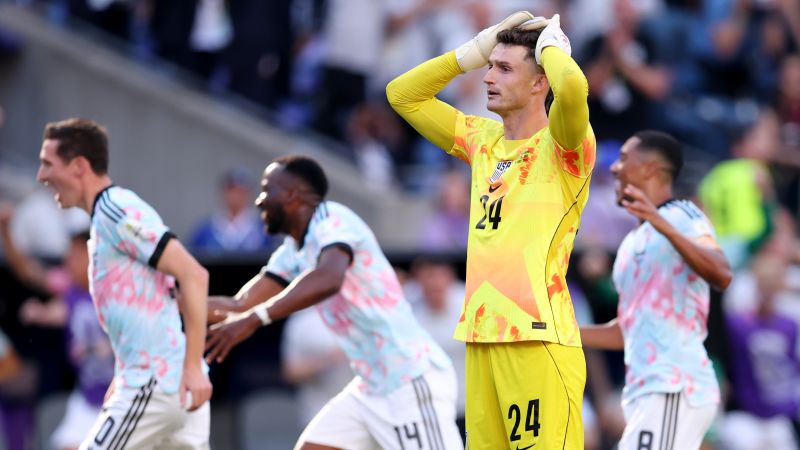
The match against Belgium became a microcosm of the 36 disastrous hours for American soccer. From the outset, the U.S. squad appeared unprepared, with Belgium exploiting defensive lapses to take an early lead. The first goal, scored in the ninth minute by Charles De Ketelaere, set the tone for a dominant Belgian performance. Despite a brief moment of hope when Malik Tillman’s free kick deflected into the net, the Americans could not capitalize. De Ketelaere’s second goal, a header past U.S. goalkeeper Matt Freese, left the team reeling and exposed a lack of cohesion.
By halftime, the Americans were trailing 2-0, and the second half only deepened the crisis. Freese’s critical error—splitting his focus during a pivotal moment—gifted Belgium their third goal, sealing the result. The 36 disastrous hours for American soccer culminated in a performance that highlighted both tactical shortcomings and the psychological toll of the preceding controversies. The team’s inability to adapt under pressure left fans disheartened and raised concerns about their readiness for the tournament’s grueling schedule.
Aftermath and Global Reaction
The defeat reverberated across the soccer world, with many criticizing FIFA’s decision as a blow to the U.S. team’s morale. The Royal Belgian Football Association swiftly condemned the ruling, vowing to challenge it through all available avenues. Coach Rudi Garcia called the loss a “battle against political encroachment,” emphasizing the team’s commitment to maintaining the game’s integrity. However, the 36 disastrous hours for American soccer had already overshadowed the match, with the U.S. squad’s struggles perceived as a result of both on-field errors and off-field distractions.
Analysts pointed to the Americans’ defensive vulnerabilities and lack of urgency as key factors in the loss. “The 36 disastrous hours for American soccer were a perfect storm of missteps,” said one commentator. The team’s inability to recover from early setbacks underscored a gap in preparation and execution. While the defeat was inevitable, the circumstances surrounding it intensified the sense of inevitability, leaving the U.S. in a precarious position as the World Cup progressed.
The Road to Recovery
Despite the 36 disastrous hours for American soccer, the team’s resilience was still evident. The loss served as a wake-up call, prompting discussions about necessary adjustments in strategy and mindset. Players and coaches acknowledged the need for improved composure, particularly in high-pressure moments. “We have to learn from this,” said a U.S. defender after the match. “It’s a chance to regroup and prove we’re not defined by these 36 hours of chaos.”
Looking ahead, the Americans face a critical window to rebound. The World Cup group stage demands consistency, and the 36 disastrous hours for American soccer have raised the stakes for their next matches. While the political controversy may linger, the focus will now shift to rebuilding confidence and addressing tactical flaws. The team’s ability to recover from this setback will determine whether the 36 hours of turmoil become a turning point or a defining weakness in their journey toward global success.