
The Largest Scorpion to Walk the Earth Was the Size of a Baseball Bat
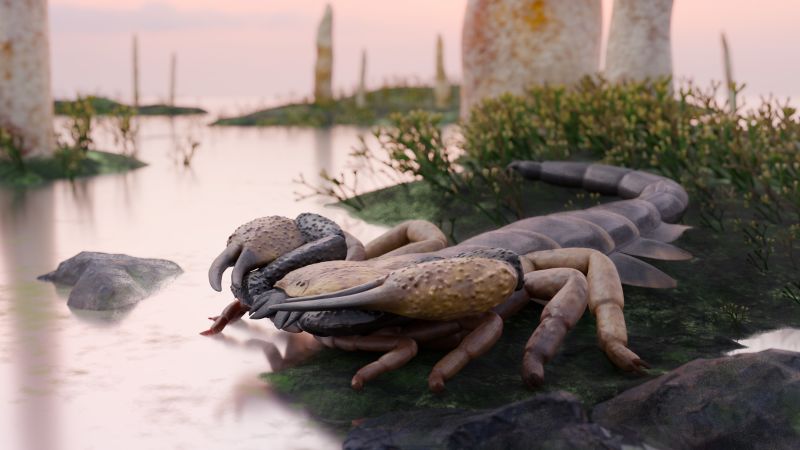
Qwenews.com – Imagine a prehistoric creature so immense that its body would span the length of a baseball bat, dominating the landscape with its imposing presence. This is the astonishing discovery of *Praearcturus gigas*, the largest scorpion to walk the Earth, which lived over 415 million years ago in what is now Great Britain. Recent research, combining century-old fossil specimens with newly uncovered evidence, has reshaped our understanding of this ancient arthropod, highlighting its place as a formidable giant in the history of life. By reclassifying *P. gigas* from a crustacean to a true scorpion, scientists have uncovered new insights into the evolutionary timeline and the conditions that allowed such massive creatures to thrive.
Uncovering the Legacy of a Forgotten Fossil
Researchers revisiting the fossils of *P. gigas* at the London Natural History Museum have identified features that solidify its status as the largest scorpion to walk the Earth. Initially misclassified as a crustacean due to its early morphology, this species was later reevaluated using advanced imaging techniques and comparative analysis with other ancient arthropods. The study, published in *Palaeontology* on June 2, 2026, revealed that *P. gigas* could have measured nearly 1 meter in length, making it significantly larger than any known scorpion species from the same era. This finding challenges prior assumptions about the size limits of arthropods in the early Devonian period.
“The process of refining our understanding of *P. gigas* exemplifies how scientific inquiry evolves through persistent exploration of the same evidence,” said Elizabeth Dowding, a paleoenvironmental analyst at Friedrich-Alexander University in Germany. “Each discovery adds layers to our knowledge, proving that even well-studied fossils can hold new secrets about the natural world.”
Key Evidence and Comparative Discoveries
One of the most compelling pieces of evidence for *P. gigas*’ classification came from its anatomical similarity to the Canadian scorpion *Eramoscorpius brucensis*. The shared sternum structure, found in both species, suggests a closer evolutionary relationship than previously thought. This connection was pivotal in confirming that *P. gigas* belonged to the scorpion lineage rather than the crustacean group. Richard Howard, the lead author of the study and curator of fossil arthropods at the Natural History Museum, emphasized the significance of this finding: “The link between *P. gigas* and *E. brucensis* provides a clear pathway to understanding how scorpions diversified during the Devonian era.”
The Devonian World: A Unique Habitat for Giants
*P. gigas* lived in a time when Earth’s atmosphere was rich in carbon dioxide but low in oxygen, a factor that may have contributed to its massive size. Unlike later scorpions, which evolved in more oxygenated environments, this ancient giant thrived in the early Devonian period, a time when most life forms were still confined to aquatic habitats. The scorpion’s terrestrial adaptation, combined with its size, suggests it occupied a specialized ecological niche. Researchers believe its pincers, measuring approximately 6 inches in length, were likely used for both defense and hunting, giving it a significant advantage in its environment.
Despite lacking preserved eyes, the study authors hypothesize that *P. gigas* had forward-facing compound eyes, similar to modern scorpions. These eyes would have been essential for navigating the dimly lit, forested landscapes of the Devonian. The scorpion’s jagged exoskeleton and robust body structure also point to a highly adaptable organism, capable of surviving in a world that was still transitioning from water to land. This makes *P. gigas* a crucial link in the evolutionary chain of arthropods, offering a glimpse into how such giants could emerge and thrive in ancient ecosystems.
Why This Discovery Matters for Paleontology
The reclassification of *P. gigas* has broader implications for paleontological research, demonstrating how new technologies and interdisciplinary collaboration can uncover hidden truths. By analyzing the fossils with CT scans and 3D reconstructions, the team was able to map the scorpion’s anatomy in unprecedented detail. This approach not only confirmed its size but also revealed unique adaptations that set it apart from its smaller relatives. The study underscores the importance of revisiting historical specimens, as they often contain untapped information that can reshape scientific narratives.
Additionally, the presence of *P. gigas* in Great Britain challenges previous ideas about the geographic distribution of large arthropods. While other giant species were found in warmer, tropical regions, this scorpion inhabited a more temperate environment, suggesting that size was not limited to specific climates. The findings also highlight the role of oxygen levels in determining the maximum size of land-dwelling organisms, a concept that remains central to evolutionary biology. As scientists continue to refine their understanding of ancient life, *P. gigas* serves as a powerful reminder of the Earth’s diverse and often surprising past.
Future Research and Broader Implications
Experts predict that further discoveries will continue to expand our knowledge of *P. gigas* and its relatives. The scorpion’s size and structure offer valuable clues about the environmental conditions that supported such massive creatures, potentially reshaping theories on how life diversified during the Devonian period. Researchers are also exploring the possibility of other similarly sized arthropods existing in unexamined regions, which could provide even more insights into the ecological dynamics of prehistoric Earth.
While *P. gigas* may have disappeared millions of years ago, its legacy endures in the scientific community. The study exemplifies the iterative nature of research, where each new piece of evidence contributes to a more complete picture. As technology advances and more fossils are unearthed, the story of *P. gigas* will likely evolve, reinforcing the idea that the largest scorpion to walk the Earth was not just a marvel of its time but a key player in the history of arthropod evolution.