
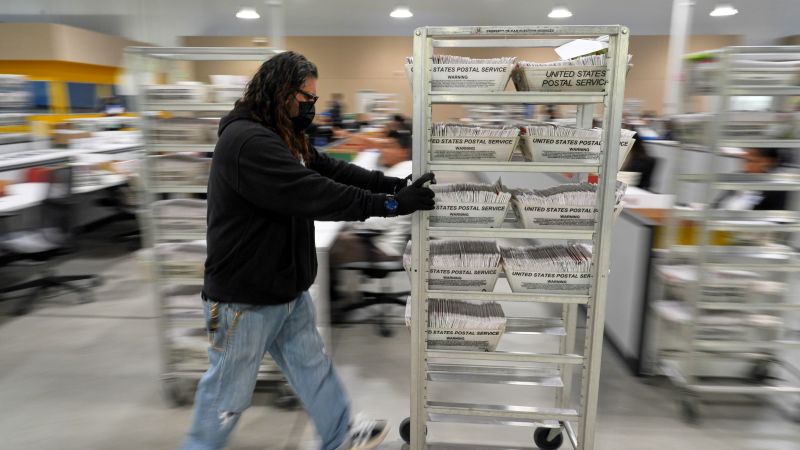
Justice Department Officials Sidestep Trump’s California Election Fraud Claims
Qwenews.com – As the dust settles on the recent Los Angeles election, Justice Department officials continue to weave around former President Donald Trump’s persistent allegations of widespread Democratic vote-rigging. Trump’s public insistence that a full-scale investigation is underway has sparked debate over the agency’s response, with critics arguing that its actions lack urgency. While the Justice Department has not yet filed any new criminal cases related to the election, its officials have framed their approach as a careful balancing act between political pressure and procedural rigor.
Trump’s Assertions and the DOJ’s Strategic Response
Trump’s claims of California election fraud, often amplified on social media, have placed the Justice Department in a delicate position. Officials have been careful to acknowledge his concerns without fully endorsing them, emphasizing that evidence is still being gathered. “We are doing the work, and we are doing the best we can in the circumstances,” said Bill Essayli, the Trump-appointed First Assistant US Attorney for Los Angeles. This statement, while supportive of Trump’s narrative, also highlights the department’s cautious stance, as it avoids prematurely confirming or denying the existence of fraud.
“The system is not designed to protect or prevent fraud. The system sucks,” Essayli remarked on CNN, shortly after Trump’s claim about investigating LA’s vote count.
Despite his critique of the election system, Essayli has maintained that the department remains committed to its investigative duties. He pointed to ongoing efforts to examine individual instances of alleged misconduct, such as illegal voter registration or minor discrepancies in ballot counting. However, these cases have not yet reached the level of systemic fraud Trump has consistently claimed, prompting questions about the DOJ’s prioritization of resources and its alignment with the administration’s political agenda.
Internal Pressures and Legal Constraints
Inside the Justice Department, the pressure to satisfy Trump’s demands continues, even as the agency grapples with its own challenges following his ouster of former Attorney General Pam Bondi. Officials are navigating a complex landscape where they must reconcile the president’s public rhetoric with the legal standards required to build credible cases. This tension is evident in their statements, which often avoid direct confrontation with Trump’s claims while hinting at progress in investigations.
“We are looking for any sort of wide-scale conspiracies,” Essayli stated during a recent appearance on “The Glenn Beck Program.”
Legal experts note that the DOJ’s ability to act quickly is constrained by the need for concrete evidence. “Until there’s a clear pattern of fraud, the department can’t rush to charge individuals or organizations,” said a law professor specializing in election law. This cautious approach, while methodical, has led to accusations that officials are deliberately delaying action to avoid contradicting Trump’s claims. The department’s spokesperson, however, reiterated that its focus remains on upholding election integrity through established legal frameworks.
With the 2024 presidential election looming, the situation in California has taken on added significance. Trump’s repeated assertions that the state’s election process is flawed have raised concerns among voters and analysts alike. “The DOJ’s hesitation to commit fully to Trump’s narrative could be seen as a deliberate strategy to manage public perception,” said political analyst Maria Lopez. This perspective adds another layer to the debate over whether the department is acting in good faith or simply accommodating the administration’s agenda.
Meanwhile, election veterans warn that the DOJ’s selective emphasis on Trump’s claims could undermine confidence in local officials. “This has just created this environment where you’re tearing away the very fabric of the trust that has built up for decades for county officials,” said Neal Kelley, a retired Republican election administrator from Orange County. The department’s spokesperson acknowledged the importance of transparency, but defended its focus on individual cases, stating, “We are not ignoring the larger picture—we are methodically addressing it.”
As the investigation unfolds, the Justice Department’s approach continues to draw scrutiny. While officials have been careful to dance around Trump’s unsupported claims, the public’s growing skepticism suggests that the agency must find a way to clarify its stance without appearing dismissive. The outcome of this balancing act may shape perceptions of election fairness for months to come.