
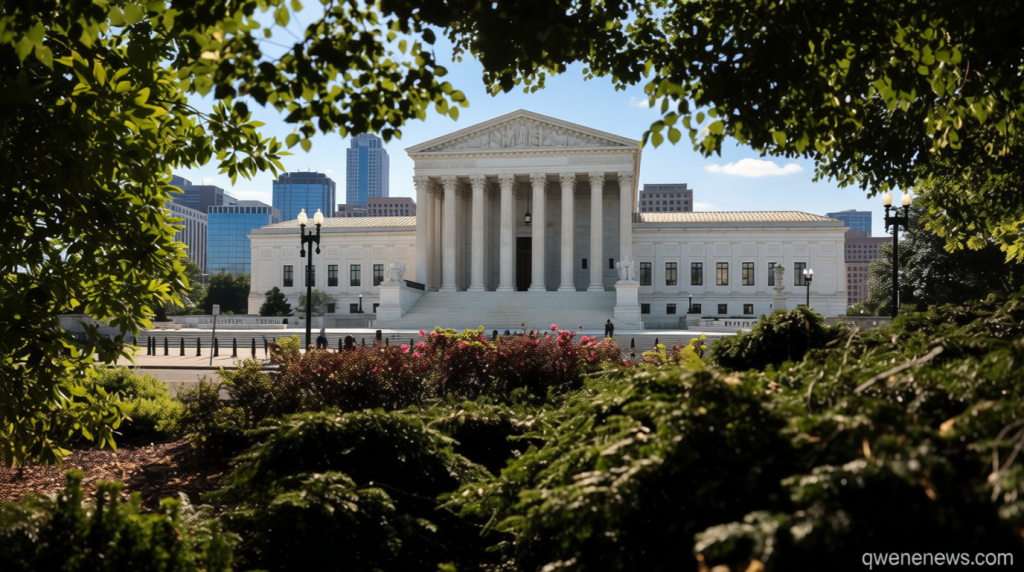
Supreme Court Narrows Federal Authority to Disarm Drug Users
Qwenews.com – On Thursday, the Supreme Court issued a ruling that significantly restricted the federal government’s ability to seize firearms from individuals who use marijuana regularly. The decision, penned by Justice Neil Gorsuch, overturned a law from the 1960s that allowed authorities to disarm Americans based on habitual drug use. The case centered on Ali Danial Hemani, a U.S.-Pakistan dual citizen, who faced charges under the federal statute linking drug use to gun possession.
A Legal Shift in Drug-Related Gun Restrictions
Hemani’s indictment in 2023 stemmed from an FBI raid of his home, which uncovered a Glock 9mm pistol and 60 grams of marijuana. While the Justice Department alleged he dealt drugs, used cocaine, and supported Iran, the court found the prosecution inconsistent with the Second Amendment. The ruling emphasized that the government must demonstrate a threat to public safety to justify disarming someone for drug use.
“We do not question that sometimes an individual’s unlawful use of marijuana (or any other controlled substance) may render him a danger to others,” the court stated. “But, again, the government disclaims the need to show anything like that in this case. Instead, it asks us to conclude that anyone who regularly uses marijuana is categorically violent and dangerous without any further showing.”
Broader Implications for Drug Addiction and Gun Laws
The decision left unresolved key questions about whether drug users, particularly those addicted or intoxicated, could be targeted under the law. All nine justices agreed on the narrow scope of the ruling, despite the Second Amendment typically dividing the court along ideological lines. This outcome highlights growing concerns about the breadth of federal gun regulations tied to drug offenses.
The case unfolded amid a broader reevaluation of marijuana use across the U.S. Half of the states have legalized recreational cannabis, and an even larger number permit medicinal use. Legal analysts noted the court’s cautious approach in avoiding larger constitutional debates about drug-related gun prohibitions. “The court seems to have gone out of its way to avoid deciding any bigger questions about whether it’s constitutional to criminalize gun possession by drug addicts,” said Steve Vladeck, a CNN Supreme Court analyst and Georgetown Law professor.
Political Context and Historical Precedents
The ruling coincided with the Trump administration’s ongoing support for the Second Amendment, yet it defended the federal law, citing the dangers of combining guns and drugs. The Justice Department reported approximately 300 annual charges under the statute, with convictions potentially leading to 15-year prison sentences. During oral arguments in March, justices from both ideological camps expressed skepticism about the law’s wide application.
Justice Amy Coney Barrett, a Trump appointee, questioned whether someone taking Ambien without a prescription would qualify under the law—a scenario that illustrated the statute’s broad reach. The case also gained political traction due to the conviction of Hunter Biden in 2024 under the same law, though his case involved crack cocaine addiction and was later pardoned by his father, President Joe Biden.
Revisiting the Bruen Standard
This decision provided the Supreme Court another opportunity to refine its 2022 ruling in NYSRPA v. Bruen, which set a historical precedent for evaluating gun restrictions. The court later clarified that prohibitions must align with early American laws to withstand Second Amendment challenges. Hemani’s case brought attention to colonial-era laws targeting public drunkenness, which the Trump administration argued justified disarming habitual users.
However, Hemani’s legal team and marijuana advocates contended that those historical statutes were not analogous to modern drug use. The ruling underscores the court’s evolving stance on balancing individual rights with public safety concerns in the context of drug laws.