
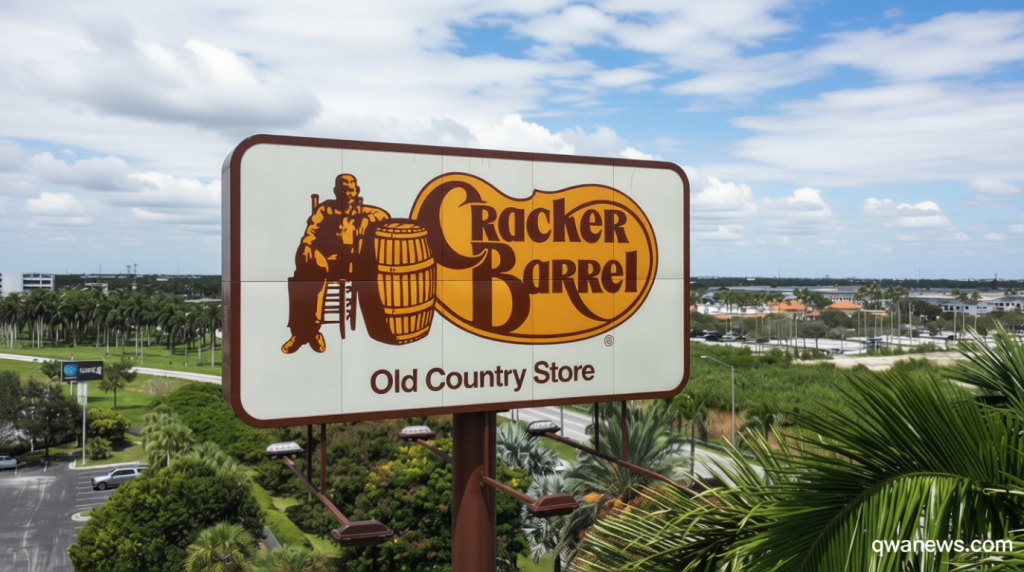
Cracker Barrel’s CEO Departure Reveals Deeper Culture War Dynamics
Qwenews.com – When Cracker Barrel announced that CEO Julie Masino would be departing, one detail stood out: she’s leaving with company-funded security still deployed from last year’s public meltdown. The restaurant chain’s leader requires additional protection because an internet mob targeted the business over something as seemingly minor as a logo update. This situation perfectly captures our current era of heightened outrage.
When a Logo Becomes a Battleground
An executive virtually unknown to the public became the target of online attacks simply for attempting to rescue a struggling chicken and biscuits establishment. In our hyper-connected world, what should have been a routine corporate rebrand transformed into accusations that the radical left was dismantling a cherished American aesthetic. Americans harbor frustration about economic conditions and political developments, yet feel powerless against these larger forces. Consequently, virtually anything can serve as a proxy for their anger—even targets that haven’t harmed anyone, much like the woman who received death threats after being filmed with her boss at a Coldplay performance.
It gives the public a sense of agency. A brand is more likely to respond to stakeholder demands and pressure, more quickly, than a member of Congress.
Alison Taylor, clinical associate professor of business and society at NYU’s Stern Business School, explained that clinging to symbolic culture war issues provides a welcome distraction from genuine American problems. Big corporations, highly attuned to public sentiment, have become convenient outlets for frustration. It requires less effort to accumulate social media likes while complaining about a logo than to actually construct housing.
Cracker Barrel’s Real Challenges
The frenzy surrounding Cracker Barrel’s logo change occurred while many observers had likely forgotten the restaurant chain entirely. Masino assumed the CEO position in 2023 because the company urgently needed to attract customers under sixty-five. Its aging clientele had either stopped dining out or passed away during the pandemic, while remaining older patrons showed hesitation about returning. By the time Masino took the helm, Cracker Barrel faced intense competition from establishments like Chili’s and Texas Roadhouse.
“We’re just not as relevant as we once were,” she acknowledged shortly after becoming CEO. The restaurant followed standard recovery tactics: refreshing dining spaces and updating menus. Early indicators suggested the turnaround was succeeding, with Cracker Barrel reporting four consecutive quarters of sales growth before everything unraveled last August.
The Logo That Sparked a Firestorm
The company introduced a minimalist logo, eliminating both the namesake barrel and the “old-timer” figure—changes that represented fairly standard corporate practice. Yet none of this context mattered to critics. Conservative activist Christopher Rufo stated on X that the controversy wasn’t really about the restaurant chain itself, but rather about generating substantial pressure against companies contemplating any move that might seem like “wokification.”
What constituted Cracker Barrel’s alleged “radical left-wing politics” and “DEI regime”? A Facebook post supporting Pride month and standard employee resource groups, including provisions for the thirty percent of minorities comprising the company’s workforce. Within days, Cracker Barrel reversed its decisions, restoring the “Old Timer” logo and abandoning restaurant remodeling plans. One right-wing activist proclaimed on X that the change represented “a BIG win in the culture war for America.”
Historical Context and Professional Provocateurs
The faux outrage received additional fuel from professional right-wing provocateurs including Robby Starbuck, Benny Johnson, and a prominent investor in MAGA favorite Steak n’ Shake. This pattern reflects broader corporate behavior beginning in the early 2010s, when companies started positioning themselves on social issues ranging from climate change to racial inequality and gay rights. Organizations supposedly went “woke” by hiring diversity officers, pledging reduced carbon emissions, and supporting Pride parades—though many commitments proved more performative than substantive. (Tractor Supply and John Deere as left-wing crusaders? Really?)
An “anti-woke” contingent on the right subsequently rebelled, prompting companies to roll back commitments as Trump reclaimed the White House. Masino embarked on a public apology tour following the backlash, appearing on conservative firebrand Glenn Beck’s podcast in November for what the program promoted as a “vulnerable tell-all.” The CEO’s departure now closes a chapter that began with a simple logo change but revealed much deeper currents in American public discourse.
Related Reading
Frequently Asked Questions
What is What the Cracker Barrel rage spiral?
What the Cracker Barrel rage spiral is the main topic of this guide. The article explains the context, practical details, and next steps readers should understand.
Why does What the Cracker Barrel rage spiral matter?
What the Cracker Barrel rage spiral matters because readers are looking for a useful answer, not just a short summary. Good content should match search intent and help them decide what to do next.