
China’s Political Elite Choose Modesty Over Luxury for Summer Retreat
Qwenews.com – While global power players flock to Mediterranean resorts like Saint-Tropez and Monaco during their holiday season, China’s governing class opts for something far more understated. Each year, the nation’s most influential figures vanish to Beidaihe, a modest coastal community situated approximately 300 kilometers east of the capital. This destination, beloved by everyday Chinese families, has served as a sanctuary for Communist Party officials for decades.
A Mysterious Annual Departure
The timing of this elite exodus remains deliberately opaque. Security measures intensify throughout early July, with restrictions including drone prohibitions and bans on hot air balloon excursions and private maritime journeys along the shoreline. By the first week of August, Xi Jinping and his inner circle typically slip away without fanfare. Official documentation indicates these summer pauses span roughly ten to fourteen days, during which the leaders remain largely invisible to the public unless confronting critical national emergencies such as earthquakes or floods.
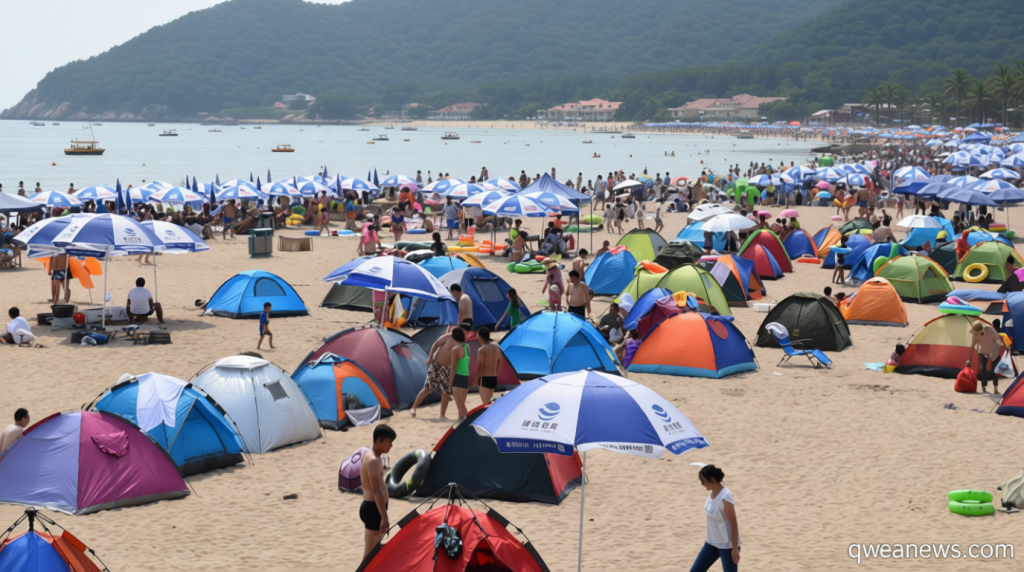
This choice of venue aligns perfectly with Xi’s crusade against governmental corruption at every level. Rather than retreating to opulent five-star establishments in Hainan or Caribbean destinations, the leadership prefers Beidaihe’s traditional character. The town features gray Soviet-era villas adorned with red lettering identifying facilities as “workers’ sanatoriums.” Winding pebble pathways guide visitors toward beaches lined with colorful umbrellas and neon-lit seafood restaurants where patrons sit on basic white plastic chairs.
“They don’t want to look like they’re going to any kind of fancy place where corruption might be possible,” explained Rana Mitter, a distinguished scholar of contemporary Chinese history. “Going to a very traditional, quite humble resort is a good way of symbolizing that, while going to a five-star hotel in Hainan or some international hotel in the Caribbean wouldn’t really have that effect.”
Historical Significance of the Coastal Retreat
Beidaihe’s connection to Chinese political leadership stretches back to 1953, when Mao Zedong designated the seaside location as a summer workplace for senior officials. The founding father particularly enjoyed swimming in open waters. At that time, Beijing endured sweltering summers without air conditioning, and even electric fans remained uncommon luxuries.
The town’s proximity to the capital made it ideal for political deliberations during quieter periods in the leadership calendar. One of the most consequential gatherings occurred in 1958, when Mao announced nationwide mobilization to boost production targets. According to Mitter, this decision ultimately triggered the catastrophic Great Leap Forward, resulting in millions of deaths from starvation caused by inadequate economic planning.
These summer gatherings experienced a decade-long interruption during the Cultural Revolution before resuming after Mao’s passing in 1976. Deng Xiaoping, who succeeded Mao as China’s paramount leader, regularly brought his family to Beidaihe for vacations. In the 1980s, Deng expanded access by welcoming international visitors, recognizing the potential for generating valuable foreign currency during a period when China desperately needed it.
Evolution in the Modern Era
The function of Beidaihe within Chinese elite politics has transformed considerably over time. During the economic reforms of the early 2000s, leaders deliberately avoided public visibility during their holidays, Mitter noted. The current administration under Xi Jinping has introduced renewed mystery to the tradition.
“Then the Xi Jinping era, it’s much more mysterious, like many things under Xi Jinping,” Mitter observed. “(We) don’t know, but there seems to be some consensus that there are meetings year by year.”
Each year, Cai Qi, Xi’s chief of staff, convenes more than thirty-six distinguished Chinese academics in Beidaihe to deliberate on critical national priorities including artificial intelligence. The scheduling of these academic gatherings provides observers with valuable clues regarding when Xi and other senior officials will commence their own summer recess.
Today, Beidaihe attracts approximately fifty million domestic visitors annually, making it one of China’s most popular tourist destinations. Despite this massive influx of travelers, the presence of political leaders remains largely invisible to the public. Standing in the sometimes-chilly summer waters, visitors can spot Shanhai Pass, the ancient fortified gateway marking the eastern terminus of the Great Wall, yet rarely encounter any evidence of the country’s governing elite enjoying their well-deserved break.
Related Reading
Frequently Asked Questions
What is Saint Tropez No thanks China s top?
Saint Tropez No thanks China s top is the main topic of this guide. The article explains the context, practical details, and next steps readers should understand.
Why does Saint Tropez No thanks China s top matter?
Saint Tropez No thanks China s top matters because readers are looking for a useful answer, not just a short summary. Good content should match search intent and help them decide what to do next.