
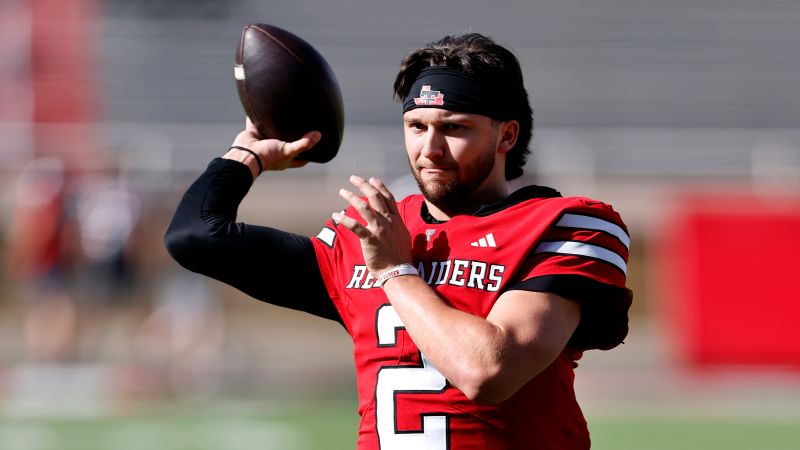
A Texas Judge Allows Brendan Sorsby to Return to the Field Despite Gambling on His Own Team
Qwenews.com – Monday’s ruling by a Texas judge marked a significant shift in the ongoing debate over gambling in college athletics. Brendan Sorsby, the quarterback for Texas Tech, was granted a temporary injunction to resume playing, defying the NCAA’s earlier decision to ban him for wagering over $90,000 on sports, including more than 40 bets on the Indiana Hoosiers while he was still with the team.
The case has reignited discussions about the NCAA’s strict policies and their enforcement. Sorsby admitted to battling a gambling addiction, which began in high school, and placed wagers on obscure events like Turkish men’s league basketball. By his freshman year in college, he described himself as “truly” addicted, yet the NCAA maintained its stance, stating that “whatever the reason for his behavior, he broke the rules and should receive an exception that no other athlete, in history, has ever received.”
A Pattern of Game-Fixing in College Sports
Over the past six months, sports betting has increasingly intertwined with collegiate athletes. Federal investigations into NBA point-shaving schemes, linked to mafia ties, revealed players like Terry Rozier accepting $100,000 to intentionally injure themselves during games. This pattern has extended to college basketball, where more than two dozen players have been permanently barred for manipulating outcomes, including four from Alabama State recently.
These cases highlight how career criminals have exploited vulnerable athletes, promising quick financial rewards for minor adjustments in play. The NCAA, however, has been unyielding in its enforcement, even as the broader landscape of sports betting evolves. Sorsby’s situation, though, has taken a unique turn, with his own team becoming the target of his bets.
Irony in the Ruling
Some view the judge’s decision as an ironic twist. Sorsby, who sought help for his gambling problem, is now returning to the very environment that once fueled his addiction. The ruling underscores a growing concern: how deeply intertwined football is with the culture of betting, even as the NCAA claims to protect the integrity of the game.
“The flesh-eating virus that already is devouring college athletics is now taking a very serious bite out of common sense,” one analyst remarked. Judge Ken Curry, based in Lubbock—the hometown of Texas Tech—argued that Sorsby would suffer “probable, imminent and irreparable injury” without playing this season. This reasoning, however, has drawn criticism for overlooking the long-term risks of unchecked gambling.
A Contrast with Professional Leagues
Major professional leagues have stricter rules to deter gambling. In Major League Baseball, bets on youth games are prohibited, and the NFL goes further, banning players from wagering on any NFL-affiliated events, even during the season. The NHL and NBA also restrict athletes from betting on their own league or associated players.
Sorsby’s attorneys argued that the NCAA’s ban was overly harsh, penalizing him for a mental health condition and preventing him from making an informed decision about the 2026 NFL supplemental draft. The judge’s leniency, they claimed, was necessary to avoid a “probable, imminent and irreparable injury” to Sorsby’s career. Yet, the decision has left many questioning whether the NCAA’s rules are becoming a relic in the face of changing athletic landscapes.
“Whatever the reason for his behavior, he broke the rules and should receive an exception that no other athlete, in history, has ever received,” the NCAA said in a statement.