
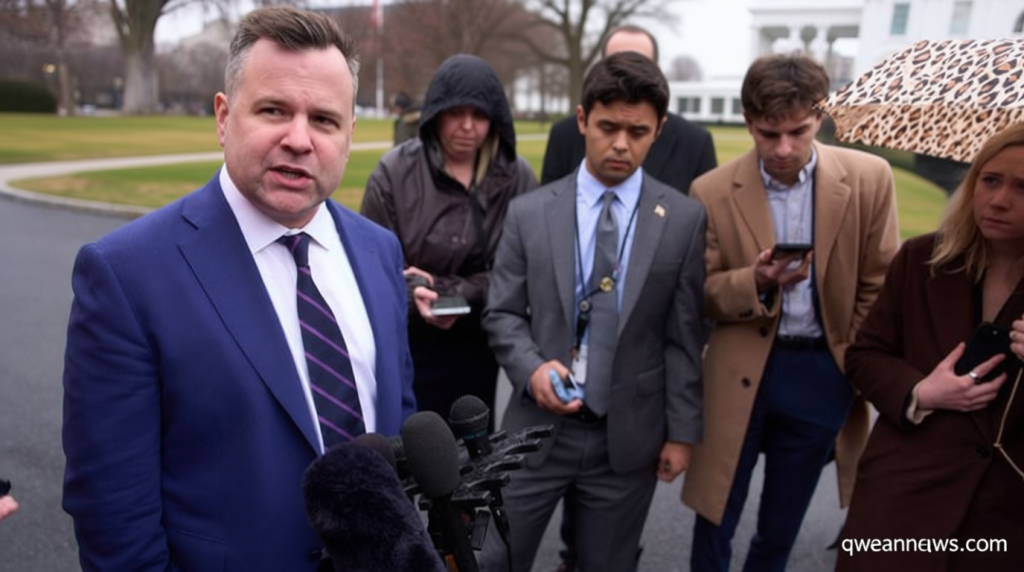
Trump’s New Acting Intelligence Chief Bill Pulte Begins Early Tenure with Controversy
Qwenews.com – Bill Pulte, Trump’s new acting intelligence chief, took office a day ahead of schedule on Thursday, according to sources who spoke to CNN. His early arrival at the Office of the Director of National Intelligence (ODNI) was followed by a request for a complete list of employees, indicating his intention to assess staffing decisions immediately. Pulte, a former official in the Trump administration, is reportedly contemplating the removal of hundreds of personnel from the agency, a strategy that has sparked concern among intelligence community insiders.
The incoming acting director’s prompt presence surprised the outgoing director, Tulsi Gabbard, who had received minimal notice of his visit. While Trump had initially announced Pulte’s appointment to take effect on Friday, the early start suggests a determination to shape the intelligence apparatus quickly. During his visit, Pulte met with legal counsel and senior staff to discuss operational priorities, sources revealed. His actions have been interpreted as a sign of his readiness to implement sweeping changes at the agency.
Strategic Moves and Immediate Impact
Less than a week into his role, Pulte also sought to bring the President’s Daily Briefing (PDB) to his personal residence, raising questions about his approach to handling classified information. The PDB, a vital intelligence summary delivered electronically, is typically used in secure settings. A source noted that Pulte’s insistence on accessing it at home reflected his focus on convenience and control. This decision has led to speculation about his plans to streamline or restructure the intelligence process.
“He seemed overly focused on whether he could take the briefing home,” said a familiar source. “It was a bit odd, but it showed his eagerness to assert authority.”
Pulte’s inquiries extended to his security clearance and access to a government plane, despite the briefing’s primary purpose being to familiarize him with ODNI’s operations. These questions, according to the source, underscored his preparation to act decisively and independently, potentially challenging established norms within the intelligence community.
Pulte’s Background and Political Context
Bill Pulte, a former Federal Housing Finance Agency (FHFA) director, has a history of taking bold actions in his roles. During his tenure at FHFA, he submitted criminal referrals related to mortgage fraud allegations against Democrats, a move that highlighted his willingness to use the agency as a tool for political purposes. His appointment as acting DNI has reignited discussions about his potential to leverage the intelligence community for Trump’s agenda, including scrutinizing election results.
As Trump’s new acting intelligence chief, Pulte is expected to play a key role in advancing the administration’s focus on domestic intelligence matters. With the U.S. and Iran nearing a peace deal to end a four-month conflict, the shift in attention from foreign to domestic issues has placed Pulte in a position to influence investigations into the 2020 election. His early actions have drawn comparisons to the Watergate era, where intelligence was used to support political objectives.
Pulte’s potential to streamline operations and cut staff has raised eyebrows, particularly among those who view the intelligence community as a critical institution for national security. His plans to reduce personnel numbers could impact the agency’s capacity to handle complex threats, though some argue it may enhance efficiency. The debate over his leadership style has intensified as he prepares to navigate the challenges of his new role.
With his tenure officially beginning on June 19, Pulte’s decisions will shape the direction of the intelligence community for the coming months. His early moves have demonstrated a clear prioritization of control and rapid implementation, which aligns with Trump’s broader approach to governance. The outgoing director, Tulsi Gabbard, remains optimistic but acknowledges the need for vigilance as the new chief establishes his priorities.