
Missouri Election Chief Rejects Bid for Redistricting Referendum
Qwenews.com – Missouri election chief rejects bid to hold a public vote on the state’s newly drawn congressional districts. Denny Hoskins, the Republican secretary of state, officially dismissed a citizen petition that sought to force a November referendum on the revised US House map. Advocates had gathered hundreds of thousands of signatures to compel a public vote, but Hoskins ruled the effort invalid under Missouri law.
The secretary of state argued that state statutes prevent congressional redistricting plans from being challenged through voter referendum. According to Hoskins, the large number of signatures collected does not override this constitutional restriction. This decision means Missouri voters will not get a direct say in the new boundaries during the upcoming election cycle.
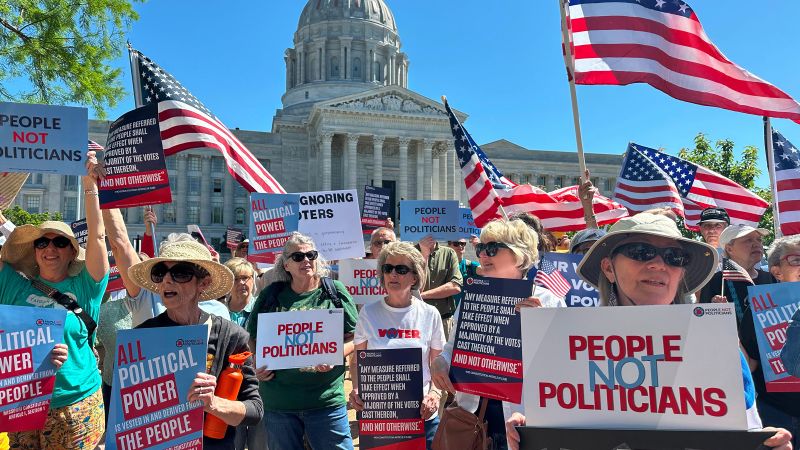
“Secretary of State Hoskins is making a last desperate attempt to silence the people’s voice in Missouri,” Richard von Glahn, executive director of People Not Politicians Missouri, declared. He maintained that the petition possesses sufficient signatures to appear on the ballot.
Trump-Backed Redistricting Effort
Following Texas, Missouri became the second Republican-led jurisdiction to modify its congressional boundaries in response to President Donald Trump’s appeal last year. The objective is to preserve the GOP’s narrow control of the House during the midterm elections. The revised configuration heavily impacts the 5th Congressional District, where longtime Democratic incumbent Emanuel Cleaver’s territory now stretches toward rural central Missouri.
This geographic shift creates a favorable environment for Republicans in what was previously a Democratic stronghold. With six seats currently held by the GOP, officials hope to secure one additional seat under the new arrangement. The strategic realignment reflects broader efforts across the South to redraw areas with significant minority populations.
Legal Timeline and Uncertainty
The advocacy group submitted more than 300,000 signatures to the secretary of state’s office last December. Local authorities spent months verifying validity and confirmed approval of well over the 111,000 signatures necessary for qualification. Hoskins postponed his announcement until the final permissible day under state regulations.
This delay ensured the new districts would be utilized for upcoming contests. Previously, Hoskins requested a federal court injunction to halt the petition, contending that congressional redistricting falls outside referendum scope. That lawsuit was dismissed as premature, with a judge noting Hoskins retained the power to reject the petition unilaterally.
Upon candidate filings in February, Hoskins confirmed participation under the new boundaries and told reporters that the referendum mechanism was never designed for redistricting purposes. Should a court mandate the referendum, questions remain regarding the 2026 elections. Would primary victors campaign in altered districts for the general election? Alternatively, might courts require a complete restart of the congressional primaries using previous boundaries?
Broader Implications for Redistricting
Missouri’s mid-decade adjustment has generated approximately a dozen lawsuits recently. While legislative districts usually update every ten years post-census, Trump’s initiative sparked an unusual wave of mapmaking. Momentum increased after the US Supreme Court overturned a majority Black district in Louisiana last April, encouraging Southern Republicans to redraw areas with significant minority populations.
Ultimately, Republicans project that the new configuration will strengthen their position in Congress. The outcome of any potential legal challenges will determine whether voters get their chance to weigh in on the changes. For now, the Missouri election chief rejects bid to hold a public vote, setting the stage for continued legal battles.
Frequently Asked Questions
What did Denny Hoskins decide regarding the referendum? Hoskins officially dismissed the citizen petition, ruling that Missouri law prevents congressional redistricting plans from being challenged via voter referendum.
How many signatures were collected for the referendum? The advocacy group submitted more than 300,000 signatures, well exceeding the 111,000 required for qualification.
Which congressional district is most affected by the changes? The 5th Congressional District is heavily impacted, with Emanuel Cleaver’s territory now stretching toward rural central Missouri.
What happens if a court mandates the referendum? Questions remain about whether primary victors would campaign in altered districts or if courts would require a complete restart of congressional primaries using previous boundaries.