
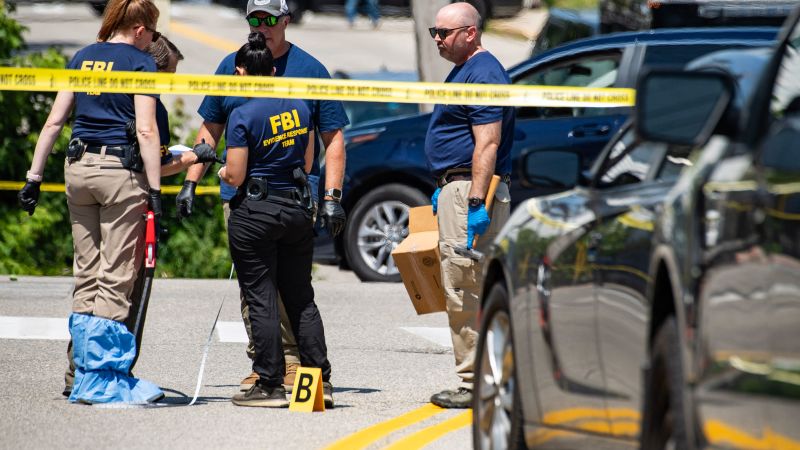
ICE Officer Tied to Fatal Maine Shooting Suffered 2021 Head Injury, Claims Cognitive Impairment
Qwenews.com – The ICE officer linked to the fatal Maine shooting, David Brouillette, has come forward with claims that a head injury from 2021 left him with cognitive impairments, potentially affecting his performance during the critical incident. Federal authorities confirmed that Brouillette used lethal force on July 18, 2026, in Biddeford, Maine, but the details of his involvement remain under scrutiny. Two of his ex-spouses have shared his account of the event, stating he called them shortly after the shooting to admit he was the one who fired the gun. While CNN has not yet officially linked him to the incident, the agency’s statement emphasized that the officer acted in “fearing for public safety.”
Medical History and Cognitive Deficits
Brouillette described the 2021 injury as a result of a steel I-beam falling on his head during a workplace accident. He claimed the incident caused long-term cognitive deficits, including difficulty concentrating and memory loss, which he attributed to post-concussive syndrome. This condition, he said, severely impacted his ability to complete a firefighter training program in 2023, as highlighted in a lawsuit against the Maine Community College System. The legal documents noted that his impairments made it “challenging to perform routine tasks and maintain daily functioning.”
“The injury left me with cognitive impairments that made it hard to focus and remember things,” Brouillette testified in court.
His condition, he argued, should have been considered during his hiring or training for law enforcement duties. Medical records provided in the lawsuit detailed his symptoms, including headaches, dizziness, and an inability to retain information, which he linked to the incident. These claims add a new layer of complexity to the investigation into his actions during the Maine shooting.
Family Testimonies and Emotional Impact
Following the July 18 shooting, Brouillette’s ex-spouses provided critical insights into his mental state and actions. Ashley Brouillette, one of his former spouses, told CNN she was “in a state of shock” when he called her to share the news. She described the emotional toll on her children, noting that they were “incredibly sad” and struggled to process the tragedy. Another ex-wife, Lucinda Brouillette, confirmed his presence at the scene through photographs and stated he was “very focused on the situation” at the time of the incident.
“I felt like the world had stopped,” Ashley said, recounting her reaction to the call.
Lucinda added that Brouillette’s demeanor suggested he was “calm but determined” when he opened fire, a detail that could shift public perception of the event. Both women emphasized that the officer’s behavior appeared to be influenced by his ongoing cognitive issues, raising questions about his decision-making during the confrontation.
Domestic Violence Allegations and Legal Context
Ex-wives and court records reveal a history of domestic abuse linked to Brouillette. In 2009, Ashley admitted to being verbally and physically assaulted by him, as documented by a child-protective caseworker. Lucinda later filed a protection complaint, citing incidents of intimidation and threats that escalated over the years. A judge ordered Brouillette to temporarily surrender his firearms in 2020 but allowed limited contact with Lucinda, which he described as “a form of control” in their relationship.
“I experienced a persistent pattern of abuse, intimidation, and control,” Lucinda texted to CNN, describing the emotional and psychological effects of the trauma.
These allegations suggest a possible link between his personal life and the shooting, though they do not directly prove negligence. The case has sparked discussions about the role of personal history in evaluating an officer’s fitness for duty.
Controversy Over Vetting and Training Standards
The Maine shooting has intensified debates about how ICE vetting and training processes address cognitive impairments. Critics argue that the agency failed to fully assess Brouillette’s condition before assigning him to high-stakes situations. With a history of head injuries and documented cognitive deficits, some question whether his training prepared him for rapid decision-making under pressure. This comes as part of a broader pattern of fatal shootings by ICE agents in recent months, including a similar incident in Texas just days before the Maine case.
“There’s a growing concern that officers with cognitive injuries are being placed in positions where split-second decisions can have deadly consequences,” a spokesperson for the National Immigration Law Center told CNN.
The agency has not yet released a detailed review of Brouillette’s medical history, but the incident has prompted calls for stricter evaluations of officers’ mental and physical health before deployment.
Public Reaction and Calls for Transparency
Since the shooting, public outcry has focused on both Brouillette’s personal circumstances and the broader practices of ICE. Protesters gathered in Biddeford, demanding accountability for the officer’s actions and transparency in the investigation. Social media users shared videos and testimonials, highlighting how his cognitive deficits might have influenced his judgment during the confrontation. Meanwhile, lawmakers have raised concerns about the lack of oversight in federal law enforcement training programs.
Looking Ahead: Implications for Future Cases
As the investigation continues, the case of David Brouillette serves as a reminder of the importance of addressing cognitive impairments in law enforcement. Experts suggest that agencies should implement regular mental health assessments and provide accommodations for officers with documented injuries. “Even minor deficits can compound under high-stress situations,” said Dr. Elena Morales, a neurologist specializing in trauma cases. “Without proper monitoring, they could lead to critical errors.”