
Bernie Blowback: Midterm Endorsements Spark Democratic Rift
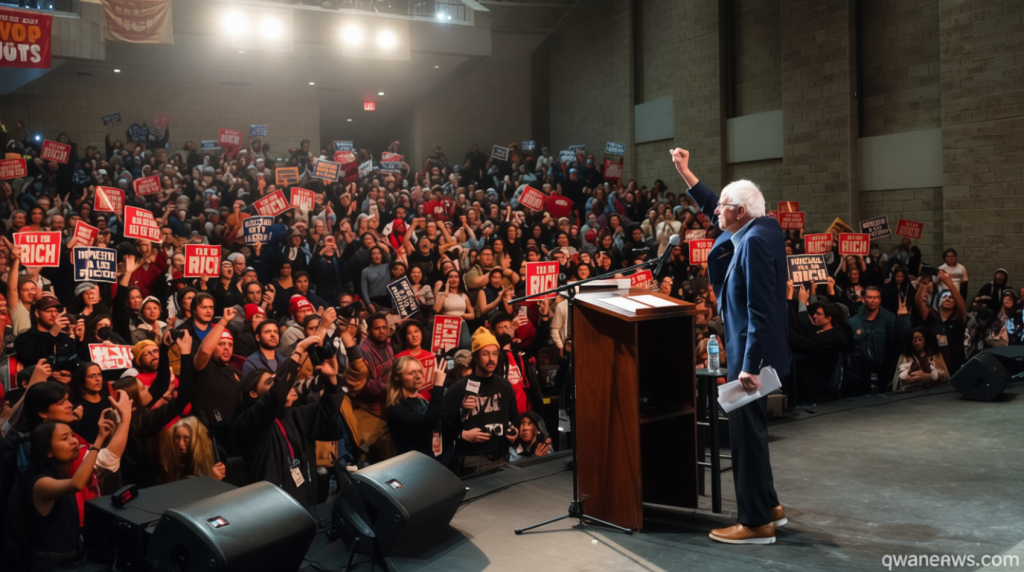
Qwenews.com – Bernie blowback has intensified as Senator Bernie Sanders’ aggressive primary endorsements during the 2026 midterm elections have created divisions within the Democratic Party. The Vermont senator, a longtime presidential candidate, recently targeted a North Carolina House Democrat from the Congressional Black Caucus, signaling a strategy that prioritizes grassroots battles over general election stability. This move sparked backlash from House Democratic leader Rep. Hakeem Jeffries, who warned that endorsing candidates in key House races could jeopardize the party’s broader electoral goals. According to three Democratic insiders, the conversation centered on the risks of diverting resources from general election campaigns to primary contests, which are seen as critical for securing congressional seats in November.
The Debate Over Strategy
Sanders’ approach has reignited debates about the Democratic Party’s path forward. While his campaign emphasizes mobilizing progressive voters and supporting candidates aligned with his “Medicare for All” agenda, critics argue that his focus on primary races has weakened the party’s chances in more competitive general elections. His endorsement of Graham Platner, a Maine Senate candidate accused of sexual misconduct, became a flashpoint. Despite the New York Times highlighting Platner’s alleged mistreatment of women, Sanders remained supportive until CNN and Politico reported rape allegations against him. This delayed withdrawal of endorsement has raised questions about the senator’s judgment in selecting candidates for high-stakes races.
Michigan as a Crucible for Conflict
Michigan, a battleground state with significant Democratic stakes, has emerged as a focal point of the growing rift. Sanders’ backing of Senate candidate Abdul El-Sayed—a progressive advocate for universal healthcare and a vocal critic of Israel—has drawn sharp criticism from some Congressional Black Caucus members. Meanwhile, the group has rallied behind William Lawrence, a House candidate who faced backlash for his 2024 comments about Black leaders. The clash highlights how Sanders’ endorsement strategy is clashing with regional priorities, with some Democrats warning that his influence could fracture the party’s cohesion in key races.
“Bernie’s endorsements have created a clear divide within the party,” said Michigan Rep. Hillary Scholten, who voiced concerns about the impact of supporting candidates like Platner. “His actions send a message that aligns with his progressive base but may not resonate with the broader electorate.”
Jeffries’ intervention underscores the tension between Sanders’ grassroots focus and the need for unity. As the House leader, he has advocated for a more strategic approach, emphasizing that primary victories alone cannot guarantee success in November. The senator’s recent support for over 90 candidates—many of whom are underdog progressives—has drawn scrutiny for potentially undermining the party’s general election campaigns. With 60 races already concluded, 42 have been won by Sanders-backed candidates, including 10 out of 16 federal races, according to his campaign team.
“Bernie has shown a willingness to take risks,” noted Jeffries in a statement. “But in a midterm year, every endorsement carries weight, and we need to ensure our candidates are viable in the general election.”
The fallout is not limited to state-level races. In Michigan, Sen. Gary Peters, a retiring Democrat, has shifted his endorsement to Haley Stevens, a centrist candidate from Detroit, to better position the party against GOP nominee Mike Rogers. This split reflects a broader struggle: how to balance progressive ideals with the practical needs of winning elections. While Sanders insists his candidates “represent working people,” some Democratic leaders argue that his strategy risks alienating moderate voters and wealthy donors who could be pivotal in swing districts. The party’s identity crisis may shape the outcome of the 2026 midterms, as internal divisions threaten to undermine a unified front.