
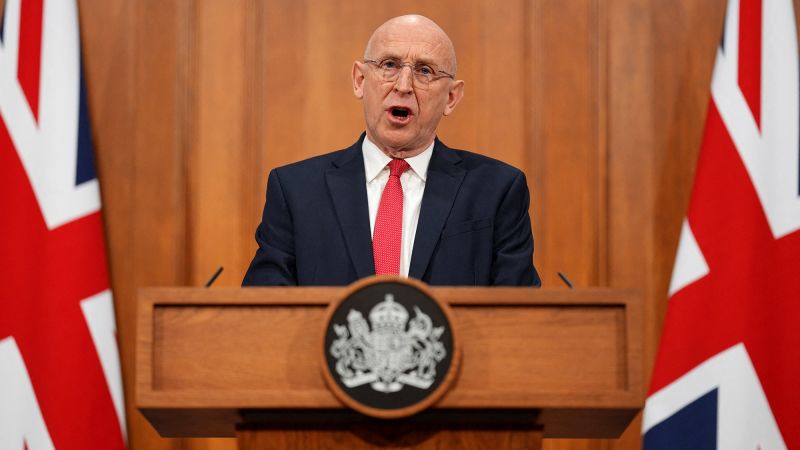
UK Defense Secretary Resigns Over Military Spending
Qwenews.com – John Healey, the UK’s defense secretary, has resigned from his position, citing concerns about military funding as a key reason. His departure follows mounting pressure on Prime Minister Keir Starmer’s Labour government, which has struggled to balance economic priorities with defense commitments in the wake of its 2024 electoral victory. The decision signals a significant challenge for the party’s leadership, particularly as it faces an uncertain political landscape in the coming months.
Reasons Behind the Resignation
Healey’s resignation comes amid a broader debate within the Labour Party about the adequacy of defense spending. He argued that the government’s current budget allocation for the military is insufficient to address emerging threats, such as Russia’s continued aggression in Eastern Europe and the potential for conflict in the Middle East. In a letter to the prime minister, he emphasized that the nation’s defense needs have outpaced the allocated funds, especially in light of recent geopolitical tensions and the UK’s role in NATO operations.
The defense secretary specifically criticized the government’s target to reach 3.5% of GDP for military spending by 2027, calling it a “missed opportunity” to prepare for future conflicts. While Starmer had previously pledged to increase defense spending as a cornerstone of his leadership, Healey contended that the budget shortfall has left the armed forces under-resourced and unprepared for modern warfare. His resignation highlights the internal rifts within the Labour Party, with some members urging a more aggressive approach to defense modernization.
“You have been unable, and the Treasury has been unwilling, to commit the resources that the nation needs to defend the country at this time of rising threats,” Healey wrote in his letter, referencing Starmer’s pledge to boost spending. The defense secretary’s comments underscore the growing frustration among key party figures who believe the government is compromising national security for short-term fiscal goals.
Political Implications for Keir Starmer
Starmer’s government now faces an uphill battle to maintain public confidence after this latest setback. The resignation of Healey, a prominent figure in the party, adds to the pressure on the prime minister to address criticism from both within and outside the Labour ranks. Recent local election results have already raised doubts about the party’s ability to hold power, and Healey’s departure could further weaken its standing.
With the NATO summit approaching, the UK is under scrutiny to demonstrate its commitment to collective defense. The government’s delayed plans for modernizing military capabilities have drawn criticism from defense analysts, who warn that the UK risks falling behind its allies in readiness. Healey’s resignation may also impact the upcoming Makerfield by-election, where his rival Andy Burnham is challenging Starmer’s leadership. A loss in this crucial contest could embolden calls for Starmer to step down as party leader.
Analysts suggest that Healey’s decision reflects a deeper ideological split within Labour between those prioritizing economic stability and those advocating for a stronger defense posture. The government’s reliance on austerity measures has been a point of contention, with critics arguing that military preparedness is essential to safeguard national interests. As the party grapples with internal divisions, the challenge remains to reconcile these priorities without alienating key stakeholders.
The broader implications of Healey’s resignation extend beyond immediate political consequences. His exit may signal a shift