
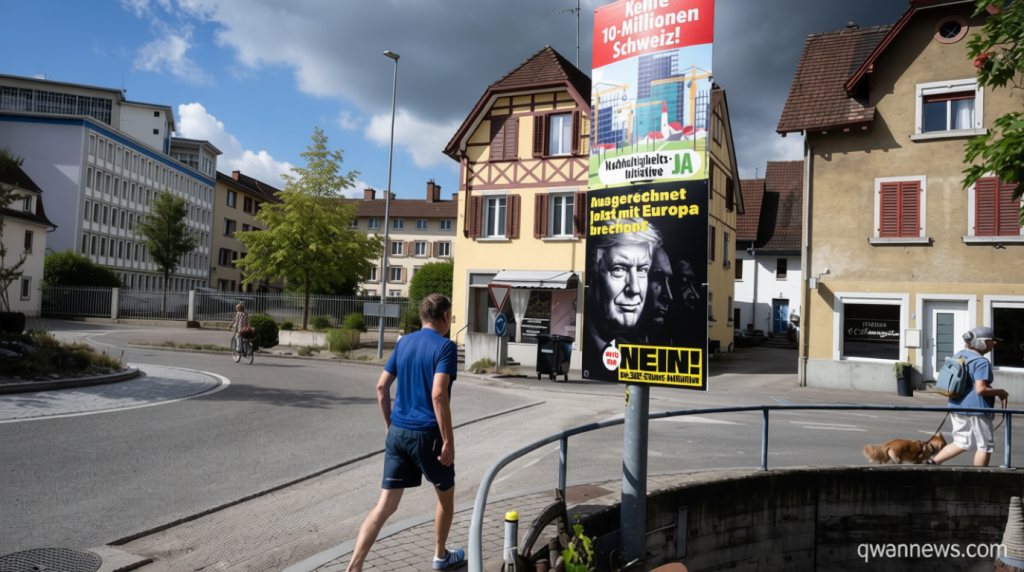
Switzerland’s ‘Brexit Moment’: Population Cap Referendum Intensifies EU Tensions
Qwenews.com – Switzerland’s ‘Brexit moment’ is unfolding as voters prepare to decide on a historic population cap referendum. This Sunday’s vote on limiting the nation’s population to 10 million has sparked heated debates about its potential impact on Switzerland’s relationship with the European Union. The proposal, backed by the right-wing Swiss People’s Party (SVP), reflects growing public unease over immigration and its effect on national identity, economic stability, and quality of life.
The Proposal and Its Rationale
Proponents of the cap argue that Switzerland’s population has surpassed 9 million, with a significant portion of residents being foreign-born. The SVP frames the measure as a necessary step toward “sustainability,” claiming that unchecked immigration is straining resources and altering the country’s social fabric. The party highlights concerns that rapid population growth could diminish the Swiss way of life, a sentiment echoed by many citizens weary of cultural and economic shifts.
“Uncontrolled immigration is driving rapid population growth,” the SVP stated on its campaign site. “Negative consequences are evident in all aspects of life,” they added, emphasizing that “many feel increasingly like strangers in their own country.”
EU Relations and Economic Implications
Switzerland’s decision to impose a population cap could signal a shift in its post-Brexit stance, potentially complicating its ties with the EU. While the country has long enjoyed EU trade agreements and freedom of movement, the referendum raises questions about its commitment to open borders. Economic leaders, however, warn that the measure might disrupt key industries reliant on migrant labor, such as healthcare and hospitality. “The country feels too crowded for many people,” said Jürg Müller of Swiss think-tank Avenir Suisse, while stressing that the initiative represents public frustration with growth.
Switzerland’s population has tripled since the early 20th century, reaching 9 million in 2024. This expansion was driven largely by immigration, which outpaced domestic birth rates. Over a quarter of residents are foreign-born, according to government data, with many coming from Italy, Germany, Portugal, and France. The referendum, which requires 100,000 signatures within 18 months, has been a focal point of political discourse, highlighting tensions between national sovereignty and EU integration.
“Life in France and Germany has changed over the last decades, and in Switzerland quality of living is quite high,” Müller explained. “Three hours in Paris, three hours to Milan – it’s just a nice spot to live.”
Despite broad political opposition, the SVP has leveraged anti-Muslim rhetoric to frame the debate. Campaign materials cite studies suggesting certain migrant groups are “many times more criminal than the rest of the population,” while imagery of veiled women holding Swiss passports is paired with slogans like “Loss of culture and identity.” The party also highlights “creeping Islamization” and alleged harassment by French nationals of North African origin at Swiss public pools, aiming to galvanize nationalist sentiment.
Switzerland’s referendum system, while democratic, has become a tool for polarizing arguments. Recent polls indicate the vote is closely contested, with opposition to the cap currently ahead at 52%. If the measure passes, it could mark a turning point in the nation’s approach to immigration, challenging the EU’s influence and setting a precedent for other European countries. The outcome will likely shape future discussions on balancing growth with cultural preservation in a globalized world.