
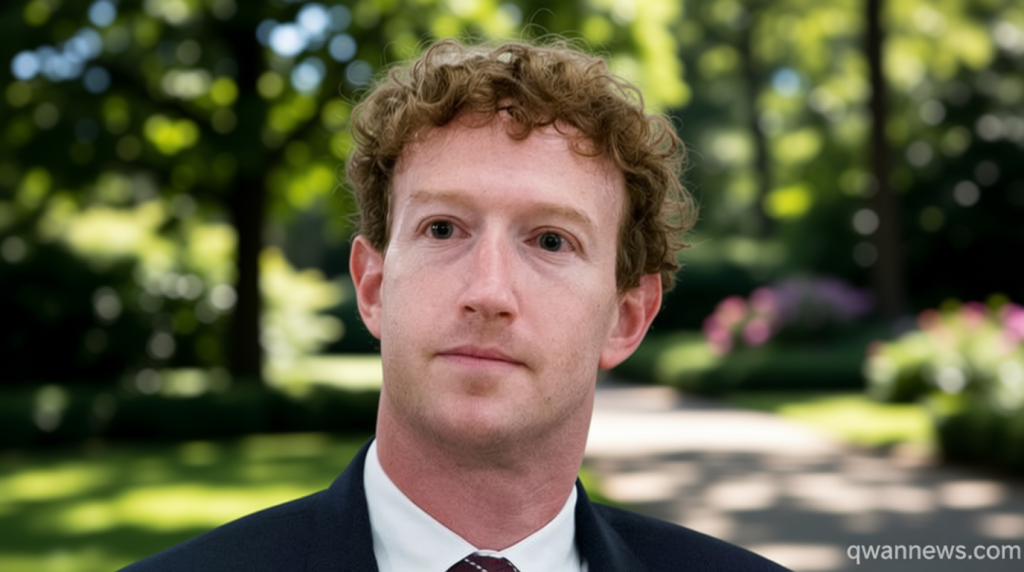
Meta CEO Zuckerberg warns US shouldn’t Ban Chinese AI Models
Qwenews.com – Meta CEO Zuckerberg warns US shouldn’t implement a blanket prohibition on Chinese artificial intelligence technologies, arguing such a move would undermine America’s competitive position in the global AI race. Mark Zuckerberg, the chief executive of Meta Platforms, shared his perspective in a comprehensive interview with the Financial Times, published on Wednesday. He cautioned that blocking Chinese AI models would not serve as “an effective solution” for addressing concerns about technological competition and intellectual property. Instead, the tech mogul suggested that American companies should “systematically” identify bottlenecks and roadblocks to better compete with Chinese AI firms on their own merits.
Zuckerberg’s comments arrive at a critical juncture in Washington’s ongoing debate about how to regulate the rapidly evolving artificial intelligence landscape. The US government faces mounting pressure to respond to increasingly sophisticated Chinese competition while avoiding policies that could inadvertently harm American innovation. The Meta CEO emphasized that collaboration and competition can coexist, and that isolating American AI development from Chinese advancements might prove counterproductive in the long run.
Trump Administration Concerns Over Chinese AI
Some senior Trump administration officials have raised alarms about potential intellectual property violations by Chinese AI companies. According to these officials, there is evidence suggesting that China’s Moonshot AI covertly utilized US rivals to train its latest model, known as Kimi K3. Moonshot AI has firmly denied these allegations, maintaining that its training processes comply with international standards. This controversy has intensified calls for stricter oversight of Chinese AI development activities.
US Treasury Secretary Scott Bessent added weight to these concerns last week, warning that “sanctions” could be considered if Chinese laboratories “cross the line into IP theft.” Bessent’s statement signals that the US government is prepared to take decisive action if evidence of intellectual property violations becomes more concrete. The threat of sanctions represents a significant escalation in the technological rivalry between the two nations.
These AI-related concerns come alongside broader trade restrictions announced by the US government on Tuesday. The new policy would ban imports of humanoid and quadruped robots from foreign manufacturers, citing “unacceptable risks” to US national security. This robotic import ban demonstrates Washington’s comprehensive approach to protecting American technological sovereignty across multiple sectors.
Broader Economic Implications
The US import restrictions extend beyond robotics to include power converters used to connect renewable energy infrastructure and batteries to the power grid. These additional components are crucial for the growing clean energy sector, and their exclusion from foreign manufacturers aims to strengthen domestic supply chains. The new US restrictions, which exclude models already in use, represent the latest attempt by Washington to bolster and safeguard its domestic industries.
Amid this intensifying rivalry with China to dominate advanced technology and artificial intelligence, policymakers must balance security concerns with economic realities. A complete ban on Chinese AI could disrupt established supply chains and increase costs for American consumers and businesses. Meta CEO Zuckerberg warns US shouldn’t overlook these potential consequences when formulating future trade policies.
The debate over Chinese AI models reflects broader questions about globalization in the technology sector. As artificial intelligence capabilities continue to advance at an unprecedented pace, the US faces difficult choices about how to protect its interests while remaining competitive on the world stage. CNN’s John Liu contributed reporting to this story, providing additional context on the developing situation.