
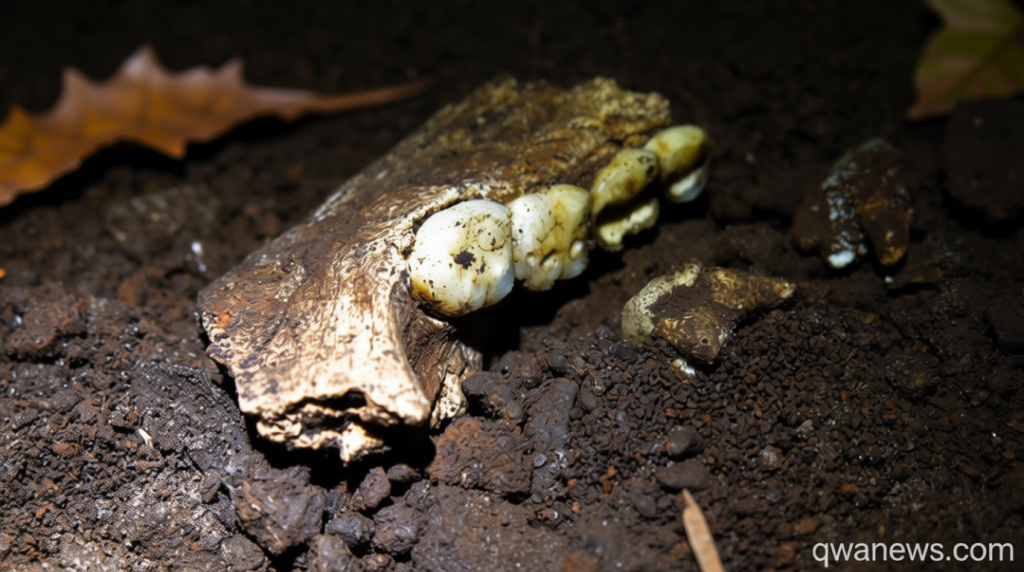
The Most Controversial Fossil Site in Human Evolution Deepens the Mystery
Qwenews.com – The most controversial fossil site in human evolution has sparked renewed intrigue after new research suggests all 20 remains found in the Rising Star cave system may belong to females. This revelation, derived from a study analyzing hominin fossils from the Dinaledi Chamber, challenges existing theories about sexual dimorphism and the behaviors of Homo naledi. The findings, published in *Cell*, raise questions about how these ancient human relatives interacted with their environment and each other, adding complexity to the already enigmatic narrative of human ancestry.
Unearthing a Puzzling Species
Discovered in 2013, the Rising Star cave system in South Africa has been a focal point of paleoanthropological research for nearly a decade. The site’s remains, spanning over 240,000 years, initially unveiled Homo naledi as a distinct species, blending traits of both apes and humans. Scientists were baffled by its small brain size, yet evidence of intentional burial and potential symbolic markings suggested advanced cognitive abilities. This paradox has made the Rising Star site a cornerstone of debates in human evolution, now amplified by the latest findings on sexual composition.
“The Rising Star site has always been a treasure trove of surprises,” said Dr. Lee Berger, a leading paleoanthropologist and co-author of the study. “But this new data on sex bias is turning the entire story on its head.” The analysis, which examined tooth enamel proteins, found no male-specific markers in any of the 20 remains, hinting at a possible lack of male individuals in the fossil record. This could imply either a biological anomaly or a cultural pattern that limited the presence of males in the site’s burial practices.
Technological Advances and Unexpected Results
Researchers utilized paleoproteomics—a cutting-edge technique that identifies proteins in ancient bones—to determine the sex of Homo naledi remains. By analyzing 23 enamel samples, they discovered that two were from the same individual, leaving 20 distinct specimens. The absence of amelogenin-Y proteins in all samples defies the typical sexual dimorphism seen in hominin species, where males are usually larger and more robust than females. This finding has left scientists scrambling to reconcile the data with established evolutionary models, further cementing the Rising Star site’s reputation as a source of unresolved questions.
The study’s implications extend beyond Homo naledi. If the site’s remains indeed reflect a sex bias, it could reshape our understanding of how ancient human relatives organized their social structures and engaged in ritualistic behaviors. Dr. Palesa Madupe, the lead molecular scientist, emphasized that the results were cross-verified by two independent labs to ensure accuracy. “The consistency of the findings across different analyses makes this one of the most significant discoveries in recent years,” she stated, highlighting the role of the Rising Star site in advancing our knowledge of human evolution.
Reassessing the Evidence and Its Implications
While the study acknowledges genetic mutations as a possible explanation for the absence of male-specific proteins, it argues that such mutations would be statistically improbable across an entire species. Dr. Enrico Cappellini, a senior author of the research, noted that the deletion of the AMELY gene in Homo naledi would require a rare and widespread genetic shift, which may not fully explain the findings. This has led to speculation about whether the cave system was a unique habitat or if Homo naledi exhibited behaviors that prioritized female presence in its remains.
“The most controversial fossil site in human evolution is forcing us to rethink long-standing assumptions about both anatomy and behavior,” Cappellini added. “It’s not just about what Homo naledi looked like—it’s about what it meant to be a species.” The discovery of 20 female remains, rather than a mix of sexes, suggests that Homo naledi might have had different social dynamics compared to earlier hominin species. This could imply a more egalitarian structure or a specific ecological reason for the lack of male fossils, leaving the Rising Star site as a pivotal piece in the puzzle of human origins.
With the Rising Star site now central to discussions about sex bias in ancient hominins, the debate is far from over. The site’s unique combination of primitive and advanced traits has already sparked debates about its place in the human family tree, and this new evidence adds another layer of complexity. As scientists continue to analyze the data, the most controversial fossil site in human evolution remains a testament to the unpredictable nature of discovery and the evolving story of our ancestors. Its mysteries are far from solved, but its significance is undeniable.