
Pope Leo Calls War a ‘Painful Defeat’ of Negotiations as Israel and Iran Escalate Conflict
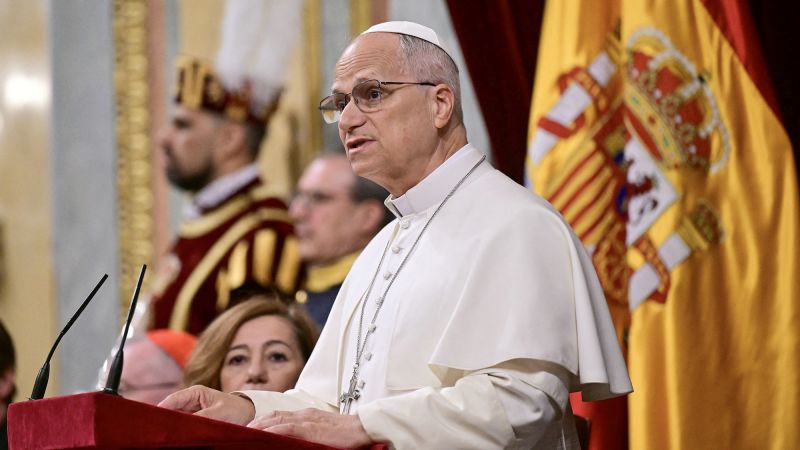
Qwenews.com – In a recent address to Spanish lawmakers, Pope Leo XIV described the ongoing war as a “painful defeat” of diplomatic efforts, underscoring the deepening crisis between Israel and Iran. The pontiff’s remarks, delivered at the Cortes Generales, emphasized the human cost of the conflict and the urgent need for renewed dialogue to prevent further escalation. This moment comes amid the most intense military exchanges between the two nations since April, when a fragile truce temporarily eased tensions. The Pope’s intervention highlights his growing role in global diplomacy, as he seeks to bridge divides and restore hope for peaceful resolutions.
War as a ‘Painful Outcome’ of Failed Negotiations
Pope Leo XIV’s critique of the war as a “painful outcome” of broken negotiations reflects his concern over the erosion of diplomatic channels in recent months. He warned that the conflict has not only strained international relations but also deepened the spiritual and cultural divide among nations. The Pope called for leaders to “renew their commitment to dialogue,” stating that “every war represents a painful setback for the progress of justice and mutual understanding.” His words resonate with the broader European community, which has watched the Israel-Iran conflict intensify despite earlier attempts at reconciliation.
During the address, the Pope specifically referenced the recent strikes between the two sides, noting that they have “created a cycle of retaliation that threatens to spiral beyond control.” He urged Spain to act as a mediator, leveraging its historical ties to both regions. “Spain has long been a beacon of peace in Europe,” he said, “and now it must extend that legacy to the Middle East.” The speech was delivered in a context where Spain’s government has been vocal about its criticism of U.S. and Israeli policies, aligning with the Pope’s call for more balanced global leadership.
Spain’s Humanitarian Role and Moral Imperatives
As part of his visit, Pope Leo XIV highlighted Spain’s role in humanitarian efforts, particularly its work in supporting migrants and refugees. He cited the country’s historical contributions to human rights frameworks, dating back to the 15th century, and emphasized the need for modern systems to uphold “the inviolable dignity of every individual.” The Pope visited the Canary Islands to witness firsthand the challenges faced by those fleeing conflict, reinforcing his message that “moral renewal begins with protecting the most vulnerable.”
Spain’s Prime Minister, Pedro Sánchez, echoed the Pope’s sentiments during the session, defending his country’s stance on the war and criticizing recent U.S. interventions. “The Pope’s words remind us that diplomacy, not force, should guide our actions,” Sánchez stated. The leader’s alignment with the Pope’s message underscores Spain’s commitment to fostering dialogue, even as the Israel-Iran conflict threatens to reshape regional alliances. The Pope’s emphasis on ethical responsibility resonated strongly with lawmakers, who are grappling with the geopolitical implications of the war.
Polarization and the Need for Unity
Pope Leo XIV also addressed the growing polarization within Spain, urging political leaders to “disarm language” and prioritize unity over division. “Pluralism should not become a weapon to destroy the adversary,” he said, drawing applause from the assembly. This call for moral renewal comes as Spain faces internal debates over its foreign policy and domestic priorities. The Pope’s message serves as a reminder that global crises require collective action, not isolated efforts.
Meanwhile, the Israel-Iran conflict continues to dominate international headlines, with recent strikes causing significant damage to infrastructure and civilian lives. The Pope’s intervention adds a spiritual dimension to the political discourse, framing the war as not just a military conflict but a moral one. “The suffering of innocents must not be overlooked in the pursuit of strategic goals,” he emphasized, urging all parties to consider the human impact of their actions. His appeal for peace aligns with the broader European Union’s efforts to mediate the crisis.
Church Accountability and Pastoral Leadership
During a private meeting with Spain’s bishops, Pope Leo XIV tackled the issue of clergy abuse, calling it a “scourge” that wounds the very people entrusted with care. “The most painful encounters are those where faith is betrayed by those who hold it,” he said, referencing a 2023 report by the Vatican ombudsman that identified over 200,000 children affected by abuse over decades. The Pope’s acknowledgment of the crisis signals a renewed focus on accountability within the Church, as he pledges to support survivors and reform systems of abuse.
His remarks on abuse complement his broader critique of the war, illustrating a dual emphasis on spiritual and worldly conflicts. “The Church must lead by example in upholding justice,” he stated, a sentiment that resonates with global audiences. The Pope’s visit to Spain, which included stops in Barcelona and Madrid, was designed to reinforce these messages and inspire a renewed sense of purpose among both clergy and laypeople.