
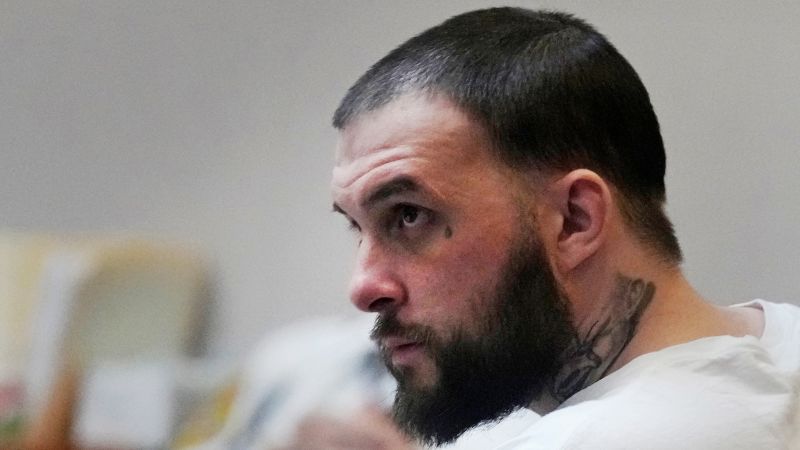
New Hampshire Supreme Court Reverses Murder Conviction of Harmony Montgomery’s Father
Qwenews.com – The New Hampshire Supreme Court has overturned the murder conviction of Adam Montgomery in the death of his 5-year-old daughter, Harmony, sparking renewed debate about the effectiveness of child protective services. The ruling, which came in a 15-page decision, highlighted how the case had drawn sharp scrutiny over the years due to its complex mix of domestic strife, drug use, and allegations of false testimony.
Conviction Based on Weak Evidence
Adam Montgomery was initially found guilty in 2024 of second-degree murder for Harmony’s death in 2021. Alongside this, he faced charges of second-degree assault from a July 2019 incident, as well as witness tampering, evidence manipulation, and corpse abuse. The court’s decision focused on the separation of charges, arguing that the assault and murder trials should have been distinct.
“We conclude that, under these circumstances, trying the second-degree assault and second-degree murder charges in a single trial jeopardized the defendant’s right to a fair trial,” the court stated in its ruling.
The court acknowledged that the assault evidence was robust, supported by multiple witnesses, but emphasized that the murder case relied heavily on testimony from Adam’s wife, Kayla Montgomery, who had admitted to lying under oath. This disparity, the ruling noted, created a risk of jury bias, potentially leading them to connect the July incident to the December fatal one based on weaker evidence.
A Case of Systemic Failures
The decision reignites discussions about the child welfare system’s shortcomings. Harmony had spent time in foster care and with her mother, who struggled with substance abuse, while Adam was incarcerated at the time of her birth. The Massachusetts judge who assigned her to Adam’s custody in New Hampshire faced criticism for prioritizing parental rights over her safety.
Harmony’s remains have yet to be discovered, adding to the emotional weight of the case. The New Hampshire Attorney General’s Office expressed disappointment, vowing to retry Adam on the murder charge. Despite the overturned conviction, he remains in prison for a 43.5-year sentence tied to other felonies and firearm offenses.
Advocacy for Fair Justice
Pamela Phelan, Adam’s appellate attorney, welcomed the ruling, stating it reinforced the importance of fair trial procedures. “Justice is only served when we provide a person accused of a crime a fair and just trial,” she said, highlighting that the system must uphold both victims and defendants.
In 2022, the Massachusetts Office of the Child Advocate released a 101-page report detailing how state officials had placed Harmony’s needs secondary to her parents’ rights. “By not putting her and her needs first, our system ultimately failed her,” said OCA director Maria Mossaides, urging reforms to prevent future tragedies.
Harmony was born in June 2014 with a medical condition affecting her vision and other health concerns. During her early years, her mother’s substance abuse led to reports of neglect, while Adam was absent due to incarceration. She moved between foster care and her mother’s custody until February 2019, when she was placed with Adam and Kayla in New Hampshire.
Harmony’s mother last communicated with her via a FaceTime call in early 2019, but could not reach her afterward. Police reported seeing her for the final time in October 2019, leaving the circumstances of her death to be determined in the retrial that now awaits. The case continues to symbolize the intersection of personal hardship and systemic oversight in child protection.