
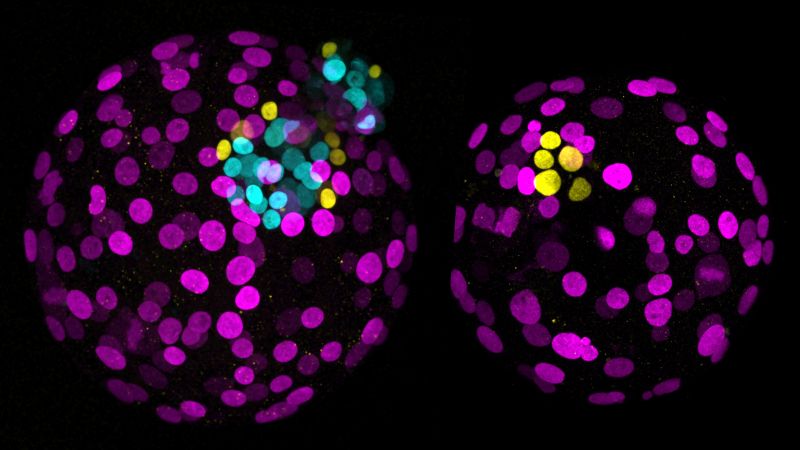
Gene-Edited Babies Closer to Reality as Technology Advances
Qwenews.com – Gene-edited babies are now closer to becoming a reality, thanks to groundbreaking progress in genetic engineering. This technology, which allows scientists to alter DNA sequences with precision, has already transformed the treatment of hereditary diseases, offering hope for eliminating genetic disorders before birth. Yet, as the technique moves toward clinical application, ethical concerns persist, sparking debates about the implications of permanently modifying human embryos for medical purposes.
Recent studies have demonstrated the feasibility of gene editing in early-stage embryos, suggesting that the process could soon be used to prevent conditions such as cystic fibrosis and sickle cell disease. However, the risk of unintended genetic mutations remains a key point of contention. Scientists are now refining methods to enhance accuracy, with innovations like base editing reducing the chance of off-target effects. These developments are pushing the boundaries of what is possible, making gene-edited babies a topic of growing global interest and urgency.
CRISPR and Its Limitations in Embryo Editing
CRISPR-Cas9, the gene-editing tool that revolutionized biomedical research, has played a central role in these advancements. First introduced in 2012, CRISPR allows for targeted modifications to DNA, enabling scientists to correct mutations responsible for genetic diseases. While its applications have been transformative, the technique is not without challenges. Double-strand breaks in DNA can lead to errors, raising questions about its long-term safety. These concerns were highlighted in 2018 when Chinese scientist He Jiankui edited the genes of twin embryos to confer resistance to HIV, a milestone that also ignited ethical controversy.
“The use of gene editing in human embryos is no longer a distant dream,” stated Amander Clark, a UCLA professor specializing in reproductive sciences. “But we must ensure the technology is both precise and ethically sound before it becomes a routine part of human reproduction.”
Base Editing: A Safer Path Forward
Emerging techniques like base editing are addressing some of CRISPR’s limitations, offering a more refined approach to genetic modification. Unlike traditional CRISPR methods, base editing allows for single-nucleotide changes without cutting DNA strands, significantly reducing the risk of unintended mutations. This innovation was first tested on a UK teenager with leukemia in 2022, paving the way for broader clinical use. Since then, base editing has been applied to treat a baby with CPS1 deficiency, a rare metabolic disorder, showcasing its potential in real-world scenarios.
Two recent studies have applied base editing to human embryos, further solidifying its promise. By using embryos created through in vitro fertilization (IVF), researchers have shown the method can achieve precise genetic corrections in the earliest stages of development. These experiments highlight the potential to eliminate hereditary conditions while minimizing risks to the genome. However, the process is still in its early phases, requiring more trials to establish its reliability for widespread use.
Gene-edited babies are now closer to being a reality, but the path forward demands careful evaluation. Regulatory frameworks, such as those established by 70 nations, aim to balance innovation with ethical responsibility. These guidelines limit the use of germline editing to specific, well-justified cases, ensuring that any modifications made to embryos are intended to prevent serious diseases. As the technology evolves, scientists and policymakers must work together to address questions about its long-term impact on future generations.
Global discussions are intensifying as gene-edited babies become a more tangible prospect. The potential to eradicate genetic disorders is a major driving force behind the research, but concerns about unintended consequences and societal acceptance remain. Critics argue that the technology could be misused for non-medical enhancements, such as increasing intelligence or physical traits, raising questions about equality and the definition of “normal” human biology. Proponents, however, emphasize that the primary goal is to reduce suffering and improve quality of life for those born with inherited conditions.