
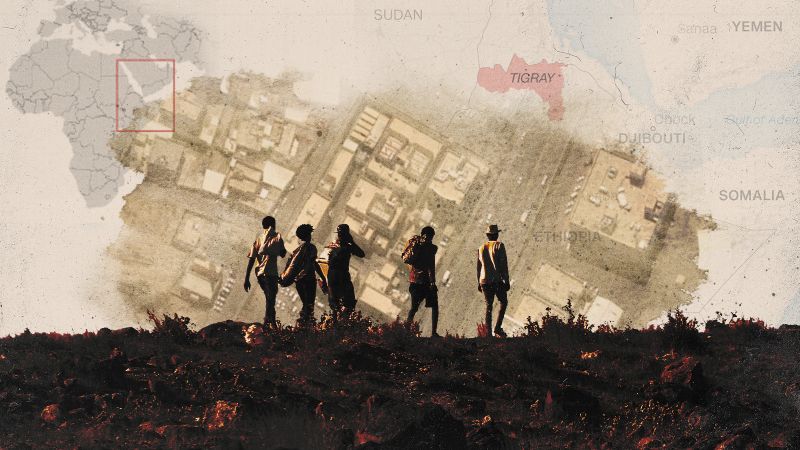
‘I’m a Dead Man Walking’: Ethiopian Migrants on Saudi Arabia’s Death Row
Qwenews.com – “I’m a dead man walking,” says Amanuel, a name he uses to protect his identity, as he describes his harrowing experience in Khamis Mushait prison. The Ethiopian migrant now spends his days in a solitary cell, anxiously awaiting the final sentence that could end his life. For him, the phrase is more than a metaphor—it’s a reality he fears daily. His story, reported by CNN, highlights the growing concern over the treatment of foreign nationals in Saudi Arabia’s judicial system, where drug convictions often lead to capital punishment.
The Escalation of Capital Punishments in Saudi Arabia
Saudi Arabia has seen a sharp rise in executions over the past year, with 356 recorded in 2023, the highest number since the country’s transition to a modern legal framework. Of these, 240 were for drug-related offenses, primarily targeting foreign laborers. The surge in death sentences has drawn international criticism, with human rights groups like Reprieve citing systemic issues in how vulnerable migrants are prosecuted. According to their data, at least 60 Ethiopians are currently on death row in Khamis Mushait for drug crimes, many of whom were arrested without adequate legal representation.
These cases reflect a pattern of targeting individuals from regions like Ethiopia, where economic hardship and political instability have driven thousands to seek opportunities abroad. Amanuel, who fled Ethiopia’s Tigray region during the pandemic, believed he was escaping conflict, not a death sentence. After two years in Yemen, he arrived in Saudi Arabia, working as a shepherd for three months before taking a job transporting goods. He trusted his Saudi employer, unaware that his work would soon become a ticket to the gallows.
From Migrant to Condemned: Amanuel’s Ordeal
Amanuel’s downfall began when police discovered hashish in his delivery vehicle. “We thought we were just carrying normal things,” he recalls, describing the shock of being accused of drug smuggling. The beating that followed—electrical cords and kicks—left him physically and emotionally broken. “They tied my hands behind my back, beat me, and left me in the sun for three hours,” he says. With no lawyer, no interpreter, and no chance to appeal, his fate was sealed at a last-minute hearing where a translator simply read the sentence aloud.
His fear extends beyond the courtroom. As a Christian, Amanuel hides his faith to avoid persecution, having been beaten for wearing a cross in the past. In his cell, four other men have attempted suicide, each time saved by fellow inmates. His story mirrors those of others, such as an Egyptian fisherman recently executed in Tabuk prison. These cases illustrate how quickly a migrant’s life can be overturned by a single mistake, and how justice in Saudi Arabia often prioritizes expediency over fairness.
The legal process for foreign nationals in Saudi Arabia is frequently criticized for its lack of transparency and due process. Taha al-Hajji, a Saudi lawyer based abroad, explains that capital trials often occur without proper legal safeguards. Defendants are frequently denied representation, forced to confess under pressure, and sentenced without the chance to challenge evidence. “This system turns justice into state violence,” al-Hajji says. “It’s not just about the crime—it’s about who the victim is.”
Amanuel’s family claims he was a fisherman, but Saudi authorities have accused him of smuggling drugs. The discrepancy underscores how easily migrants’ identities can be manipulated, and how charges are sometimes used to justify swift executions. While the Saudi government maintains that these convictions are based on solid evidence, critics argue that the process is flawed, with many cases relying on coerced confessions. CNN has sought comment from Saudi officials but has yet to receive a response.