
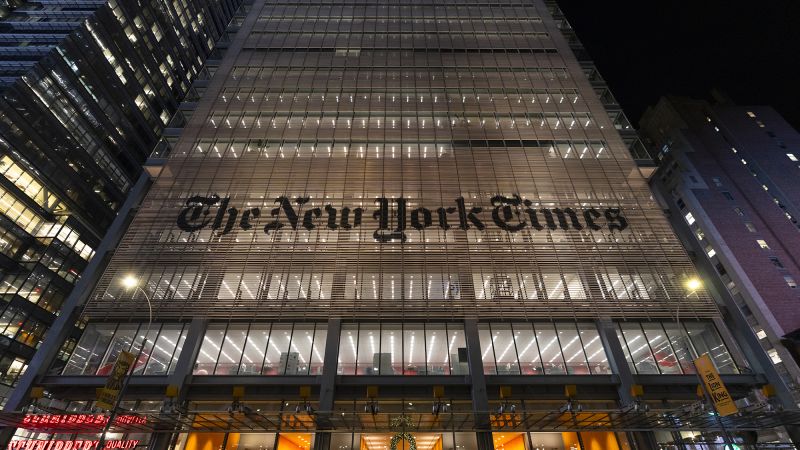
Trump’s Leak Investigation Against The New York Times Is Deeply Personal
Qwenews.com – President Donald Trump’s ongoing efforts to uncover leaks targeting The New York Times have taken a notably personal turn. Last week, journalists at the Times received subpoenas citing “an alleged violation of federal criminal law” just two days after publishing a story that challenged Trump’s assertions about the new Qatari-gifted Air Force One. Sources within the newsroom believe the swift action was driven by Trump’s frustration with the coverage, which exposed discrepancies in his narrative.
Subpoenas Seen as a Retaliatory Move
Joe Kahn, the Times’ executive editor, labeled the subpoenas “impulsive” in a memo to staff, criticizing them as a “naked attempt to intimidate individual reporters.” He argued that the subpoenas aim to pressure journalists into revealing their anonymous sources, a tactic the Times plans to challenge. The court orders demand testimony before a grand jury, though the publication remains confident the judiciary will reject the move, citing constitutional protections for journalists.
“The law shields news gatherers from retaliatory abuse of prosecutorial power,” Kahn wrote. “It is essential that the courts reaffirm that protection and quash this overreach. We are confident they will in this case.”
Legal experts note that this is not the first time the Justice Department has used subpoena power against media outlets, but the level of personal involvement from Trump stands out. Floyd Abrams, a prominent First Amendment attorney, emphasized that the president’s direct role in the decision to subpoena reporters is unprecedented. “I can’t think of another such conflict where the president himself is so personally invested,” Abrams said. “Nor can I recall a case where the public’s interest in the topic was so clear and justified.”
Controversy Over the Qatari Airplane
The dispute began with the controversial gift of a luxury jet from Qatar, which Trump claimed was a symbol of American prestige. However, the plane’s lack of advanced security systems sparked criticism, with some comparing it to a “bribe.” When Trump announced during a NATO summit that he would not fly the Qatari jet out of Turkey, he insisted the switch was unrelated to security. His claim was quickly refuted by anonymous sources, who revealed the decision was indeed driven by safety concerns.
On July 1, The Associated Press reported that the president’s tight schedule limited modifications to the plane. Images of the jet showed it lacked key missile detection systems present in older Air Force One models. This detail was noted by analysts, who pointed out the plane’s vulnerabilities were evident upon close inspection.
The Times’ initial report titled “Security Precaution Led Trump to Use Old Air Force One in Leaving Turkey” highlighted the contradiction between Trump’s public statements and internal government assessments. This inconsistency has fueled further scrutiny, with CNN and other outlets echoing similar findings about the security-driven nature of the plane change.
Historical Context and Legal Precedents
During his two terms, Trump has frequently faced situations where his claims were contradicted by sources within his own administration. However, this instance differs because the Justice Department has actively issued subpoenas, prompting immediate public attention from the Times. While the department claims it is targeting leakers rather than reporters, critics argue the subpoenas are part of a broader strategy to trace information back to journalists.
The Reporters Committee for Freedom of the Press noted that prosecutors typically prioritize non-media leads before resorting to subpoenas. Nonetheless, past practices have included seizing reporters’ phone and email records as part of investigations, a method press freedom advocates have condemned. The Biden administration has since agreed to tighten regulations to address such tactics, signaling a shift in how leaks are handled in the post-Trump era.