
Hamas to Dissolve Gaza Government Amid Ceasefire Stalls
Qwenews.com – Hamas has announced its plan to dissolve the Gaza government, a move that signals growing frustration with the stalled US-brokered ceasefire agreement. The decision, made public on Monday by Ismail al-Thwabta, head of the Government Media Office (GMO), aims to redirect attention toward Israeli compliance while reshaping the political landscape in the Palestinian territory. Analysts suggest this maneuver is intended to create leverage in negotiations, as the 20-point ceasefire plan, initially agreed upon in October, remains unimplemented. The militant group’s statement emphasizes its readiness to hand over governance to a technocratic committee, which will be responsible for managing Gaza under the terms of the deal.
Strategic Shift in Hamas’ Approach
The dissolution of the Gaza government marks a significant strategic shift for Hamas, which has historically maintained control over the territory’s administration. By proposing a technocratic committee, the group seeks to present itself as a pragmatic actor willing to cede power temporarily. Al-Thwabta’s remarks highlight the urgency of international mediators, particularly the US, to facilitate the committee’s establishment. This step also aligns with Hamas’ broader efforts to counter Israeli dominance and garner global support for its position. The committee, known as the National Committee for Gaza Administration (NCAG), is expected to oversee key aspects of governance, such as security and economic policies, while maintaining Hamas’ influence in critical areas.
“We urge all stakeholders to speed up the process for the NCAG to assume its duties swiftly, reinforcing the Palestinian people’s resilience and mending their struggles,” al-Thwabta stated during a press release at Al-Aqsa Martyr’s Hospital in Gaza City.
International Reaction and Next Steps
While the NCAG remains in Cairo, waiting for its mandate to be formalized, the Board of Peace—comprising Qatar, Turkey, and Egypt—has acknowledged Hamas’ decision. However, the board has reiterated its demand for Hamas to fully disarm, emphasizing the need for a unified Palestinian leadership under one authority. Despite this, the committee’s ability to govern Gaza is contingent on Israeli cooperation, which has been slow to materialize. The dissolution of the existing government could be a stepping stone toward a more stable administration, but it also raises questions about the extent of Hamas’ willingness to relinquish control.
“Hamas is attempting to bypass Netanyahu’s resistance by appealing to Trump, showcasing their willingness to relinquish governance entirely,” said Muhammad Shehada of the European Council on Foreign Relations. “This is a calculated step to secure international recognition, though it may come too late.”
The announcement has sparked mixed reactions among Palestinian factions and international observers. Some see it as a bold move to streamline governance and attract foreign aid, while others argue it weakens Hamas’ position by fragmenting the political structure. With the NCAG’s timeline uncertain, the plan’s success depends on rapid agreement among key players. The committee’s entry into Gaza could also influence the implementation of pilot zones, where Palestinians would operate under its guidance, potentially easing tensions with Israeli forces.
Meanwhile, experts caution that Israel’s continued control over Gaza’s affairs could still undermine the NCAG’s effectiveness. “Even with Trump’s support, Israel retains the power to disrupt the committee’s implementation,” Shehada added. The Israeli government has not yet committed to the plan, leaving Hamas’ resolve to dissolve the government as a pivotal factor in the negotiations. The group’s decision underscores the high stakes of the ceasefire talks, with the potential to either accelerate peace or deepen the crisis.
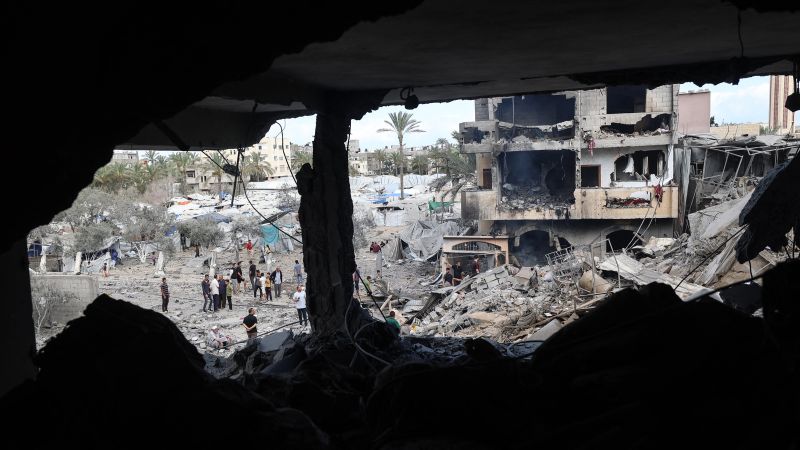
As the 20-point ceasefire plan lingers in limbo, the impact on daily life in Gaza remains profound. Unclaimed bodies and rampant rat activity highlight the challenges of a prolonged conflict, while the uncertainty over governance has stoked anxiety among civilians. The dissolution of the existing administration may bring temporary relief, but its long-term success will depend on international backing and Israel’s willingness to cede authority. With the NCAG’s role evolving, the path to a lasting resolution remains uncertain, but Hamas’ bold action has redefined the political dynamics at play.