
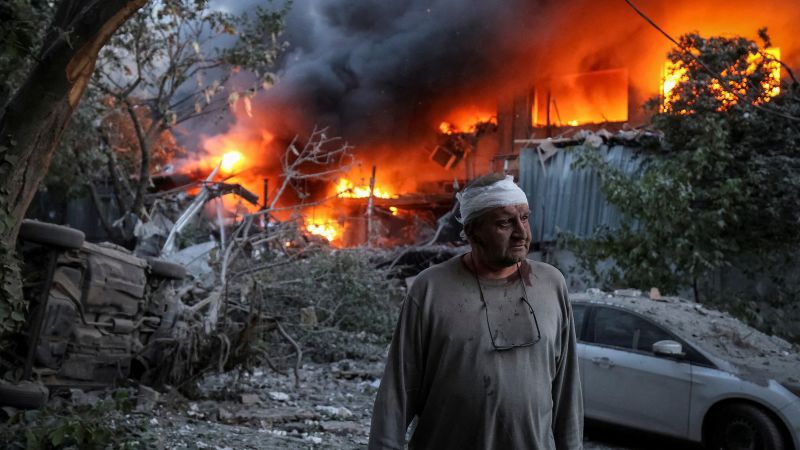
Russian Attacks in June Claim Most Ukrainian Civilian Lives Since 2022
Qwenews.com – Devastating Russian attacks make June the deadliest month for Ukraine’s civilians since the war began in 2022. The United Nations confirmed that at least 293 civilians were killed in June, marking a significant spike compared to previous months. This brings the year-to-date toll to nearly 1,400 deaths, a 37% increase over the same period in 2025 and almost double the 2024 figures. The surge in casualties underscores the relentless impact of Russian military operations, which have shifted focus from frontline zones to urban areas, intensifying the humanitarian crisis.
Escalating Threats in Urban Centers
According to the UN Human Rights Monitoring Mission in Ukraine (HRMMU), the dramatic rise in civilian deaths is largely due to the increased use of long-range missiles targeting residential neighborhoods. Cities like Dnipro, Odesa, and Kyiv have become focal points of these strikes, with infrastructure and civilian life under severe threat. The HRMMU report highlights that the percentage of casualties from such attacks rose by 60% between January and June 2026, indicating a deliberate strategy to maximize civilian harm. “The data shows a clear pattern of escalation, with urban areas bearing the brunt of these attacks,” said Danielle Bell, the head of HRMMU.
“Many describe feeling hunted by short-range drones simply for attempting everyday tasks such as shopping for food, walking dogs, cycling, working in the yard or traveling to safety,” Bell added. “The psychological toll is as severe as the physical damage, creating an environment of constant fear.”
The conflict has not only caused immediate casualties but also disrupted essential services, leading to a humanitarian emergency. Hospitals, schools, and power stations in urban areas are frequently hit, exacerbating the suffering of civilians. HRMMU noted that over 60% of the 293 deaths in June were due to indirect attacks, such as falling debris or secondary explosions from missile strikes. This statistic emphasizes the cascading effects of Russian aerial assaults, which have transformed everyday life into a perilous existence for millions.
Drone Warfare and Frontline Vulnerability
While long-range missiles target cities, short-range drones have intensified the danger in frontline regions. These unmanned aerial vehicles are now a primary tool for Russian forces, striking supply lines, storage facilities, and even civilian movement routes. The HRMMU report reveals that drones accounted for 40% of the 293 June deaths, with incidents occurring in areas like the eastern front and southern coastal regions. Bell explained that these drones have “redefined the dangers” for residents in such zones, making even mundane activities hazardous. “People feel constantly threatened, even when performing simple tasks like grocery shopping or walking their pets,” she said.
“The psychological impact of these attacks is profound. Survivors report nightmares, anxiety, and a pervasive sense of insecurity,” added Bell. “This is not just about loss of life—it’s about the erosion of normalcy in a war that has already upended everything.”
Recent strikes in July have continued to compound the crisis, with at least 240 civilians killed and 1,904 injured in the first half of the month, according to CNN’s tally of local reports. One of the deadliest incidents occurred on July 2 in Kyiv, where a missile strike killed a family of six, including a young man who was set to marry soon. His family friend, Alla Melnychuk, shared the tragedy on Facebook, describing the emotional toll of the attack. “He was only 23 years old. He was supposed to get married in a few days. Dreams. Family. A future,” Melnychuk said.
“The family weren’t just acquaintances. They were people with whom a part of our lives was intertwined,” Melnychuk continued. “It’s hard to imagine the grief of losing someone so young, especially in such a devastating way.”
Ukrainian officials have called for greater international support to counter the escalating threat. They emphasized the need for advanced air defense systems, including Patriot missiles, to intercept Russian ballistic missiles effectively. With limited resources, Ukraine has struggled to protect both military and civilian targets, leaving its population vulnerable to the full force of Russian attacks. The ongoing war has reshaped the country’s landscape, with June’s figures serving as a stark reminder of the human cost of sustained military aggression.