
Venezuelan Man Accused of Attempted Murder, Bystander Video Changes Narrative
Accusation and Initial Charges
Qwenews.com – A Venezuelan man was accused of attempting to murder an ICE officer during a confrontation in Nebraska in June 2025. Gabriel Hurtado-Cariaco, a delivery driver who had been paroled into the U.S. in 2024 after leaving the Venezuelan military, was initially charged with attempted murder and terrorism-related offenses. Government officials, including Deputy Attorney General Todd Blanche, swiftly labeled him a “criminal illegal alien” and a “known Tren de Aragua terrorist,” citing claims that he had struck one officer’s head against the ground and choked her during the incident. These accusations set the stage for a high-profile case that would soon be challenged by new evidence.
Bystander Video Emerges
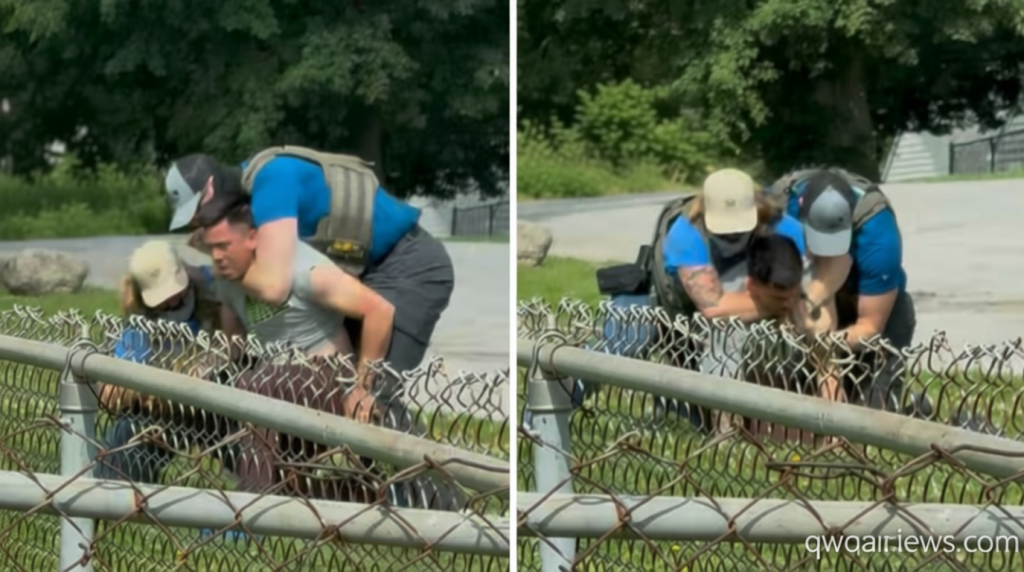
Just weeks after Hurtado-Cariaco’s arrest, a video captured by bystanders began circulating on social media, offering a starkly different account of the events. The footage showed him being tackled by officers and struggling to avoid being apprehended, rather than actively attacking them. This visual evidence sparked immediate debate about the accuracy of the initial charges. Richard McWilliams, Hurtado-Cariaco’s public defender, argued that the video highlighted a pattern of the government using limited evidence to build a case against immigrants, particularly those linked to groups like Tren de Aragua.
“The video clearly demonstrates that Gabriel was resisting arrest, not initiating violence,” McWilliams stated. “This is a common tactic in immigration enforcement cases to paint individuals as dangerous threats.”
The discrepancy between the government’s narrative and the video’s portrayal of events raised questions about the reliability of eyewitness accounts and the speed at which charges were filed. At the time of his arrest, Hurtado-Cariaco was simply driving to register his vehicle, according to his attorney. The video, which became a focal point of public discourse, was not available to prosecutors during the initial indictment, leading to a reliance on subjective testimonies.
Legal Proceedings and Charge Adjustments
As the video evidence gained traction, the legal proceedings against Hurtado-Cariaco underwent significant changes. The original charges of attempted murder were later amended to assault, and the terrorism-related accusation was eventually dropped. This shift underscored the impact of visual proof in shaping legal outcomes. McWilliams emphasized that without the video, the case might have proceeded with a more severe charge, given the government’s initial claims of violent intent.
The case also sparked a broader discussion about the use of video evidence in immigration trials. McWilliams pointed out that such footage often contradicts official narratives, forcing prosecutors to reconsider their stance. The timeline of events—how the video surfaced after the indictment and how it influenced the charges—highlighted the importance of timely evidence in criminal proceedings. Despite the adjustments, the public perception of Hurtado-Cariaco as a “terrorist” had already been cemented in Venezuela and among some U.S. communities.
Public Reaction and Broader Implications
The video evidence ignited a wave of public reaction, with some supporters of Hurtado-Cariaco praising it as a critical tool for correcting misinformation. Others, however, remained skeptical, arguing that the footage could still be interpreted in multiple ways. The incident also brought renewed attention to the Tren de Aragua group, which had been designated a foreign terrorist organization in February 2025. While Hurtado-Cariaco denies any connection to the group, the government’s swift accusation raised concerns about the use of political designations to justify broader immigration enforcement actions.
The case serves as a reminder of how video evidence can reshape narratives in real-time. For Hurtado-Cariaco, the footage not only challenged the charges but also provided a clearer picture of his actions. His guilty plea to resisting arrest with bodily harm in July 2025, following the release of the video, resulted in a 14-month sentence with credit for time served. Yet, the resolution of the case left lingering questions about the balance between accountability and due process in immigration-related crimes.