
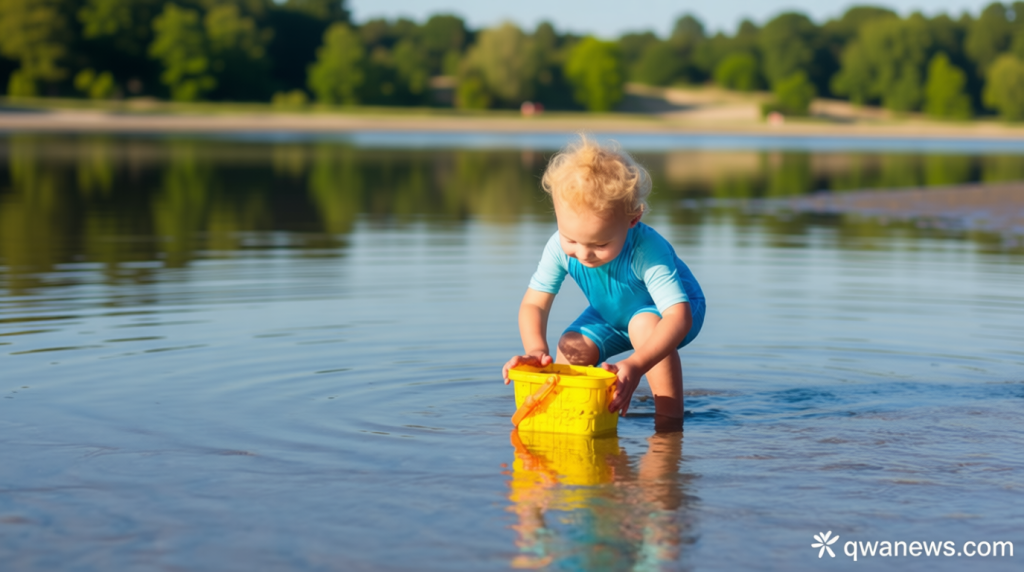
Why More Young Children Are Drowning: Understanding the Risks and Solutions
Qwenews.com – It’s not clear why more young children are drowning in the U.S., even as safety measures have improved over the years. Recent data reveals a troubling trend: childhood drowning fatalities have increased since the start of the pandemic, raising concerns among health experts and parents. While the American Academy of Pediatrics (AAP) has long emphasized water safety education, the current surge suggests that new challenges are at play. This article explores the growing issue, highlights the factors contributing to the rise, and offers actionable steps to protect children during the summer months.
Child Drowning Rates and Pandemic Impact
The rise in child drowning incidents is most pronounced among toddlers aged 1 to 4, a demographic particularly vulnerable to accidental submersion. A 2024 report from the AAP indicates that drowning has become the leading cause of death for children in this age group, surpassing other causes like birth defects. The pandemic disrupted access to swimming lessons, public pools, and community safety programs, leaving many children without the critical skills needed to stay safe in water. As a result, the number of preventable drowning cases has climbed, prompting experts to call for a multi-faceted approach to address this growing crisis.
“It’s not clear why more young children are drowning, but the lack of consistent water safety education appears to be a key factor,” says Dr. Leana Wen, CNN’s wellness medical expert. “With schools and community centers closed for extended periods, families had fewer opportunities to teach essential skills like floating and recognizing danger signs.”
Prevention Strategies for Families and Communities
Experts agree that preventing drowning requires a combination of strategies tailored to both home and public environments. One of the most effective measures is the installation of four-sided pool fencing with self-closing, self-latching gates, which can reduce risks by up to 80% according to the AAP. Additionally, using life jackets during water activities, such as boating or swimming in rivers, lakes, or oceans, is crucial, especially for children under the age of 13. Dr. Wen also stresses the importance of active supervision, noting that even a brief lapse in attention can lead to tragic outcomes.
“The report underscores that it’s not clear why more young children are drowning, but the data is clear: consistent, focused supervision is vital,” Wen explains. “Parents should never leave a child unattended near water, whether in a bathtub, backyard pool, or public facility.”
Another key strategy involves teaching children basic water safety skills early on. Programs that introduce floating, treading water, and recognizing the signs of distress can significantly lower risks. However, many families remain unaware of these opportunities, highlighting the need for broader awareness campaigns. The AAP also recommends installing pool alarms, using waterproof sunscreen, and ensuring that caregivers are trained in CPR, as these steps can make the difference between life and death in emergencies.
Common Misconceptions and Their Consequences
One of the most pervasive myths about child drowning is the belief that it always involves loud splashing or visible struggle. In reality, many drowning incidents are quiet and subtle, with children often struggling to breathe without making noise. Dr. Wen notes that this misunderstanding can delay critical responses, increasing the likelihood of fatalities. “It’s not clear why more young children are drowning, but one reason is the lack of recognition of these silent dangers,” she adds.
“Parents may think a child is fine if they’re floating still, but they could be in distress without realizing it,” Wen warns. “The key is to stay alert and maintain constant supervision, even in seemingly safe environments. It’s easy to become complacent, especially during hot summer days when children are eager to play in water.”
Targeting High-Risk Environments
While residential pools are a major source of drowning incidents, other settings like public beaches, inflatable water toys, and backyard ponds also pose risks. The AAP emphasizes that it’s not clear why more young children are drowning, but certain environments require additional precautions. For example, public pools may lack adequate lifeguards during off-peak hours, and inflatable water play areas can be unpredictable. Parents are encouraged to assess all water-related spaces and implement safety measures accordingly.
Research also highlights the role of socioeconomic factors in drowning risk. Families in lower-income communities may have limited access to safety equipment or education programs, contributing to higher rates of incidents. Addressing these disparities through targeted outreach and subsidized resources is essential to ensuring that all children have equal opportunities to stay safe. As Dr. Wen puts it, “It’s not clear why more young children are drowning, but the evidence shows that access to knowledge and tools makes a significant difference.”
Advocacy and Policy Changes
Experts are urging policymakers to prioritize child drowning prevention as part of broader public health initiatives. The AAP has called for increased funding for water safety programs, especially in underserved areas, and for stricter regulations on pool safety standards. Additionally, public awareness campaigns are being developed to correct misconceptions about drowning and promote proactive measures. These efforts aim to create a culture of vigilance, where it’s not clear why more young children are drowning, but the solutions are readily available and widely adopted.