
Submersible Unveils Vast Whale Graveyard in Indian Ocean
Qwenews.com – A submersible ride revealed a vast whale graveyard off the southeastern coast of Australia, deep in the Diamantina Zone. This newly discovered site, located within a deep-sea trench, contains hundreds of fossilized remains, including a species previously unknown to science. The graveyard spans over 746 miles (1,200 kilometers) in length and is estimated to house millions of whale skeletons, some dating back more than 5 million years. Researchers have also documented modern carcasses still in the early stages of decomposition, indicating the site has been accumulating remains for millennia.
Unearthing Secrets from the Deep
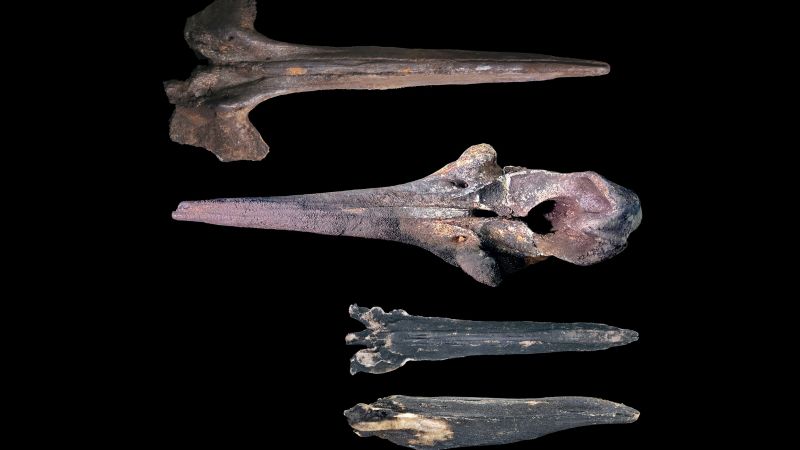
The Diamantina Zone, formed 30 to 40 million years ago during the tectonic separation of Australia and Antarctica, has become a critical area for deep-sea exploration. This submersible expedition, part of the Global Hadal Trench Exploration Program, utilized the advanced submersible *Fendouzhe*—famous for its 2020 descent into the Mariana Trench—to probe the site. Over 32 dives in February and March 2023, scientists collected 43 fossils and observed unique ecological interactions, offering a glimpse into the region’s ancient and present-day biodiversity.
“The scale of this whale graveyard is unprecedented,” said Peng Zhou, a co-lead author of the study. “It’s not just a repository of bones—it’s a living ecosystem that supports deep-sea life through the process of whale falls.”
The Beaked Whale Connection
Beaked whales, known for their deep-diving habits and rarely seen surface behavior, dominate the fossil record at this site. Their streamlined bodies and ability to dive over 10,000 feet (3,000 meters) suggest they have long contributed to the accumulation of remains in the Diamantina Zone. The discovery of both ancient and modern beaked whale carcasses highlights the site’s role as a continuous deep-sea necropolis. Some areas of the graveyard contain an astonishing 760 fossils per square kilometer, a density that challenges previous assumptions about deep-sea ecosystems.
Ecological Significance of the Site
Whale falls—decomposing carcasses that sustain deep-sea life—have been identified in the graveyard, supporting communities of chemosynthetic bivalves, bone-eating worms, and other specialized organisms. These findings underscore the site’s importance for understanding how marine life thrives in extreme environments. The presence of both fossilized and modern remains indicates that the Diamantina Zone has served as a natural “sink” for whales, with the submersible ride revealing a vast graveyard that continues to evolve with time.
“This site offers a unique window into the past and present of deep-sea ecosystems,” noted Olivier Lambert, a vertebrate paleontologist. “The submersible ride revealed a vast graveyard that’s not only a treasure trove of fossils but also a dynamic habitat for life.”
Future Implications for Science
Scientists believe the graveyard may hold clues about past climate changes and oceanic conditions, as the remains of whales can reveal insights into ancient marine environments. The continuous accumulation of bones over millions of years suggests the site’s role in the carbon cycle and nutrient distribution in the deep sea. Researchers are now working to analyze the collected fossils, which could lead to the identification of new species and a deeper understanding of how deep-sea ecosystems function. The submersible ride revealed a vast graveyard that challenges existing knowledge about whale behavior and deep-sea habitats.
Conclusion and Ongoing Research
This groundbreaking discovery in the Diamantina Zone has redefined our understanding of deep-sea environments and their ecological importance. The submersible ride revealed a vast whale graveyard that not only preserves the remains of ancient species but also supports ongoing life in the abyss. As further studies are conducted, the site may provide invaluable data for marine conservation efforts and the search for deep-sea biodiversity. The continued exploration of such areas highlights the vast mysteries that still lie hidden beneath the ocean’s surface, waiting to be uncovered by technology and curiosity alike.