
A 300-Year-Old Bonfire Tradition in Northern Ireland Targets Muslims
Historic Bonfire Culture in Modern Context
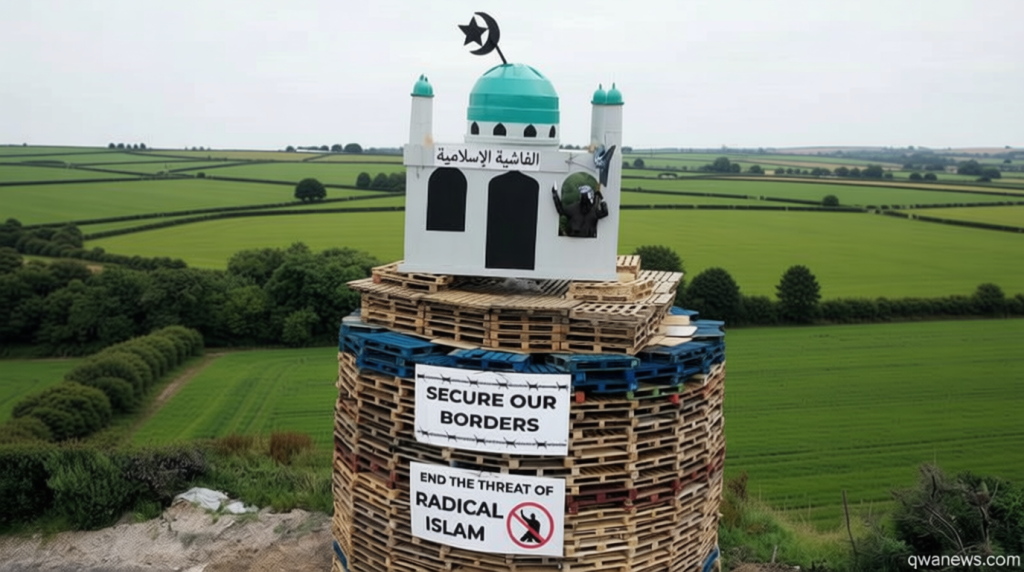
Qwenews.com – In a striking departure from its historical roots, a 300-year-old bonfire tradition in Northern Ireland has recently turned its focus toward Muslim communities. This year’s event, held in Moygashel, County Tyrone, saw a replica mosque set ablaze, complete with an ISIS flag and banners reading “Secure our borders” and “End the threat of radical Islam.” The Mogyashel Bonfire Association, which has organized the event annually for over three centuries, defended the act as a political statement against what they describe as uncontrolled illegal mass immigration. The flames, which have long symbolized loyalist unity and historical victories, now serve as a backdrop for contemporary debates about identity, belonging, and community tensions.
Origins and Symbolism of the Bonfire Tradition
The bonfire tradition dates back to the 1690 Battle of the Boyne, a pivotal moment in Northern Ireland’s history that marked the Protestant victory over the Catholic King James II. For centuries, these gatherings have been a way for loyalist communities to celebrate their heritage and reinforce their connection to British identity. Typically, effigies of the pope, Irish flags, and Catholic symbols are burned, reflecting the deeply rooted political and religious significance of the event. However, this year’s bonfire took on a new meaning as it targeted a replica mosque, underscoring a shift in the tradition’s focus and its relevance in today’s social climate.
“The bonfire is a time-honored symbol of our shared history, but this year it has become a focal point for modern political tensions,” said local historian Dr. Ewan McCallum. “It’s a reminder that even ancient traditions can evolve to reflect current anxieties.”
Rising Anti-Muslim Sentiment and Community Reactions
As the tradition continues, it has increasingly drawn criticism for its association with anti-Muslim sentiment. The incident in Moygashel has been labeled a “hate-motivated crime” by authorities, leading to charges against a 56-year-old man for incitement to hatred. The defendant denied the accusations, stating that the bonfire was a response to perceived threats to Northern Ireland’s cultural and religious identity. While some loyalists view the act as a legitimate form of political expression, others, particularly from Catholic and republican communities, argue that it perpetuates prejudice and fuels division.
Political and Social Undercurrents in the Bonfire Display
Analysts suggest that the bonfire’s shift toward Muslim symbols reflects broader societal concerns about immigration and cultural integration. The Mogyashel Bonfire Association has framed the event as a necessary defense against “ideology and government policy,” asserting that their opposition is not personal but ideological. However, the inclusion of a replica mosque and Islamic flags has raised questions about the role of historical traditions in shaping modern political discourse. Naomi Green, assistant secretary general of the Muslim Council of Britain, emphasized that such displays echo past episodes of sectarian hostility, including the burning of migrant effigies in 2025.
“This isn’t the first time the bonfire has been used to express prejudice, but the targeting of a mosque marks a significant escalation,” Green noted. “It shows how deeply ingrained the conflict remains in everyday expressions of identity.”
Law Enforcement and Public Response
The Police Service of Northern Ireland has taken a firm stance on the incident, with Chief Superintendent Norman Haslett stating that the bonfire’s political message has been “sickening and cowardly.” The force has launched an investigation into the event, highlighting its role as both a cultural practice and a potential tool for spreading racial animosity. Meanwhile, local communities have expressed mixed reactions, with some residents supporting the bonfire as a symbol of local pride and others condemning it as a form of discrimination. The event has sparked discussions about the balance between tradition and modern inclusivity in Northern Ireland.
Broader Implications for Northern Ireland’s Future
As the bonfire tradition continues to evolve, its impact on Northern Ireland’s social fabric is becoming more pronounced. The 2026 event has drawn sharp criticism from religious leaders and politicians, with the Church of Ireland and Catholic archbishops issuing a rare joint condemnation. Britain’s Northern Ireland Secretary, Hilary Benn, described the act as “cowardly” and “sickening,” underscoring its potential to deepen divisions in a region already grappling with complex political dynamics. Despite these concerns, the Mogyashel Bonfire Association remains steadfast, insisting that their tradition is a lawful expression of political sentiment and a vital part of their community’s heritage.
“We burn not just for history, but for the present and future,” said a spokesperson for the association. “Our bonfire is a call to protect Northern Ireland’s identity from the growing influence of radical Islam.”
With the bonfire’s flames now symbolizing both unity and conflict, its continued relevance in Northern Ireland’s modern identity remains a topic of heated debate. As the tradition adapts to new social and political landscapes, it serves as a powerful reminder of how historical customs can shape contemporary discourse. The 300-year-old bonfire, once a celebration of Protestant triumph, now stands as a complex reflection of the region’s evolving tensions and cultural expressions.