
Trump Admin Strikes $26M Settlement for Keystone Pipeline 2022 Spill
Qwenews.com – Under the leadership of the Trump administration, a landmark settlement has been reached with the operator of the Keystone Pipeline following a major oil spill in Kansas in December 2022. The agreement, which involves a $26 million civil penalty, aims to address the environmental damage caused by the incident and ensure better safeguards for future operations. This settlement, announced jointly by the Environmental Protection Agency (EPA) and the Department of Justice (DOJ), marks a significant step in holding the pipeline operator accountable for the spill’s aftermath.
Key Details of the Settlement Agreement
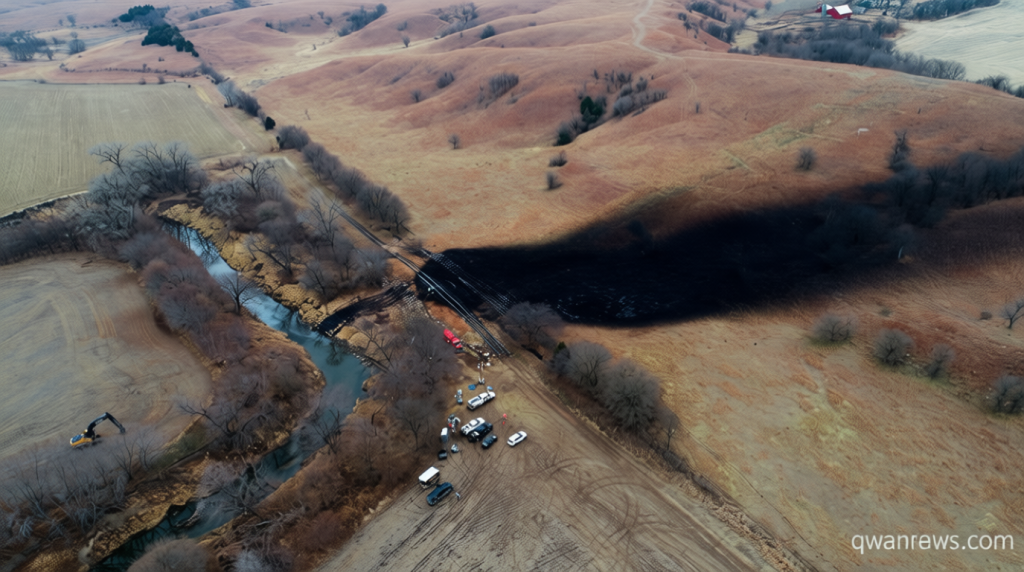
The spill, which occurred on a frozen section of the Keystone Pipeline, released over 540,000 gallons of crude oil into a nearby creek and surrounding farmland. The damage was extensive, with a one-inch-thick oil slick spreading across 3.5 miles of the waterway and causing the death or illness of approximately 2,700 animals. South Bow LP, the company responsible for the pipeline, has agreed to a $26 million fine in addition to $40 million in infrastructure upgrades to prevent future spills. A further $3 million will be allocated to Kansas for ecological restoration efforts.
The settlement was reached after months of negotiations between the company and federal agencies. The agreement outlines specific measures to improve pipeline safety, including enhanced monitoring systems and stricter maintenance protocols. These improvements are expected to reduce the risk of similar incidents and align with the Trump administration’s broader agenda of promoting energy infrastructure development while addressing environmental concerns.
The Environmental Impact of the 2022 Spill
Environmental experts have emphasized the long-term consequences of the spill on Kansas’s ecosystems. The contamination of waterways and farmland not only disrupted local wildlife but also raised concerns about the potential impact on drinking water sources and agricultural productivity. “This incident had a massive impact on Kansas,” said Ryan Kriegshauser, the U.S. Attorney for the District of Kansas, during a press conference. The EPA’s involvement highlights the agency’s role in enforcing environmental regulations and ensuring that companies operating critical infrastructure adhere to safety standards.
The spill also drew attention to the broader challenges of oil transportation in the American Midwest. While the Trump administration has consistently supported the Keystone Pipeline as a vital component of U.S. energy strategy, the incident sparked renewed debates about the balance between economic growth and environmental protection. Critics argue that the settlement is insufficient to cover the full extent of the damage, while supporters of the pipeline contend that the measures outlined in the agreement will lead to long-term improvements in safety and operational efficiency.
The Ongoing Debate Over Keystone XL
The 2022 spill has added new momentum to the ongoing controversy surrounding the Keystone XL pipeline, a proposed expansion of the existing infrastructure. First proposed in 2008, the Keystone XL project has been a focal point of political and environmental discourse, with supporters highlighting its potential to boost domestic energy production and create jobs. Opponents, however, have raised concerns about its environmental impact, including the risk of oil spills and the contribution to greenhouse gas emissions.
Despite these concerns, the Trump administration actively pushed for the Keystone XL project, viewing it as a cornerstone of its energy policy. In April 2022, President Trump signed a presidential permit to advance the pipeline, reversing a decision made by the Biden administration to halt construction. The recent $26 million settlement may be seen as a validation of the administration’s approach to balancing economic and environmental priorities. However, environmental advocates remain skeptical, arguing that the financial penalties are a small price to pay for the ecological risks associated with such projects.
While the settlement provides a resolution to the 2022 spill, it also underscores the complex relationship between regulatory agencies and energy companies. The EPA and DOJ have used this case to demonstrate their commitment to enforcing penalties for environmental violations, but the agreement also includes provisions that allow the pipeline operator to invest in improvements rather than solely paying fines. This approach may encourage companies to prioritize preventive measures while still holding them accountable for past mistakes.
Looking ahead, the success of this settlement could influence future regulatory actions and the treatment of environmental incidents in the energy sector. As the Trump administration continues to advocate for fossil fuel infrastructure, the case of the Keystone Pipeline spill serves as a reminder of the need for stringent oversight and proactive safety standards. The agreement also sets a precedent for how large-scale environmental damage can be addressed through a combination of fines and investment in corrective measures.