
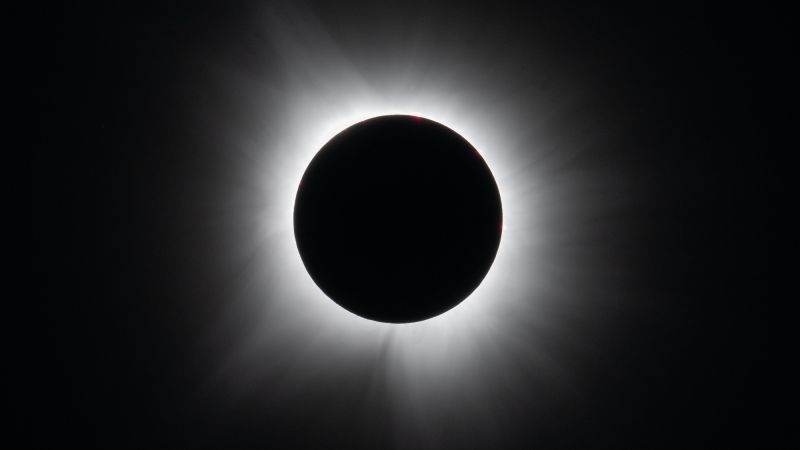
A Celestial Spectacle This Summer
Qwenews.com – This summer, a total solar eclipse will captivate observers across a narrow path stretching from Greenland to northern Spain, offering a rare and awe-inspiring natural phenomenon. As the moon moves into perfect alignment with the sun, it will cast a shadow over the Earth, temporarily plunging selected regions into darkness. This event marks the first total solar eclipse in over two years, and its occurrence has sparked excitement among astronomers and casual stargazers alike. For those in Greenland, Iceland, northern Spain, and northeastern Portugal, the skies will briefly transform into a scene of surreal beauty, with the sun entirely obscured for a short but unforgettable period. Such eclipses are not only visually stunning but also scientifically significant, providing unique opportunities to study the sun’s corona and the effects of light and shadow on our environment.
Path of Totality and Duration
The total solar eclipse’s path of totality will span a remarkable distance of 5,157 miles (8,300 kilometers), beginning along the Arctic coastline at approximately 1 p.m. ET and traveling toward the North Pole. As the shadow moves southward, it will cross Greenland, Iceland, and eventually reach northern Spain and Portugal, where the eclipse will be visible just before sunset. The duration of the total eclipse will vary significantly depending on location, with Greenland witnessing over two minutes of complete darkness, while northern Spain may experience only about 20 seconds. Weather conditions will also play a crucial role in determining visibility, as clouds could obscure the view for some observers.
Historical Significance and Scientific Importance
Historically, total solar eclipses have been pivotal in advancing our understanding of astronomy. The last total solar eclipse visible from mainland Europe occurred in 2006, and this year’s event holds special importance for Spain, marking the first such occurrence on its mainland since 1905. This is also the first of three total solar eclipses between 2026 and 2028, creating a rare window for public engagement with scientific observation. Carole Mundell, a science director at the European Space Agency, highlights the universal appeal of these events:
“A total solar eclipse is a shared moment that bridges human curiosity and cosmic wonder. It reminds us of our place in the universe and the endless possibilities of discovery.”
Such eclipses provide critical data for studying solar activity, Earth’s atmosphere, and even the behavior of animals, making them more than just a visual treat.
When and Where to See the Total Solar Eclipse
This summer’s total solar eclipse will occur on August 12, 2026, with the path of totality passing through Greenland, Iceland, northern Spain, and northeastern Portugal. The event will be visible to the public in these regions, though the exact timing and duration depend on geographic location. In Greenland, the eclipse will peak at around 1:18 p.m. ET, offering a prolonged period of darkness that allows for detailed observations of the sun’s corona. In contrast, viewers in northern Spain will witness the eclipse’s peak at approximately 8:30 p.m. local time, with the shadow passing over the Atlantic coast. To ensure optimal viewing, it is recommended to check local weather forecasts and plan for clear skies, as overcast conditions can diminish the experience.
How to Prepare for the Eclipse
Observing a total solar eclipse requires careful preparation to ensure safety and maximize the viewing experience. During the brief period of totality, it is safe to look directly at the sun without eye protection, but as soon as the moon begins to move away, the sun’s rays will once again become dangerous. Certified eclipse glasses, handheld solar viewers, or optical devices equipped with proper filters are essential tools for viewing the partial phases of the eclipse. It is crucial to avoid using regular sunglasses or unverified filters, as they may not block harmful radiation. Additionally, preparing a viewing plan—whether on a rooftop, beach, or in a designated observation area—can help observers capture the event’s full impact through photography or sketching.
Next Eclipses and Their Impact
Following this summer’s total solar eclipse, another significant event will occur on August 2, 2027, with the path of totality crossing southern Spain, North Africa, Saudi Arabia, and Yemen. This will mark the second of three eclipses in this region within the next two years, further emphasizing the opportunity for global participation in celestial observations. The United States will not see a total eclipse until March 30, 2033, when the shadow will pass over Alaska, offering a rare spectacle in the northernmost part of the country. A more extensive path will then cross the contiguous U.S. on August 22, 2044, providing a coast-to-coast experience. These upcoming events will continue to inspire public interest and scientific research, ensuring that the fascination with solar eclipses remains a cornerstone of astronomical studies.
Why Birds and Other Wildlife React
The total solar eclipse will not only affect human observers but also trigger fascinating responses in wildlife. Birds often go silent during an eclipse, mistaking the sudden darkness for nighttime, while animals may exhibit behaviors associated with dusk. This phenomenon has long intrigued scientists, who study how natural light changes influence animal activity and environmental conditions. The next total solar eclipse will be a unique opportunity to observe these effects firsthand, blending the wonders of nature with the precision of astronomical events. Whether you’re a seasoned stargazer or a first-time observer, this summer’s total solar eclipse will be a moment to remember, uniting people and creatures in a shared experience of cosmic beauty.