
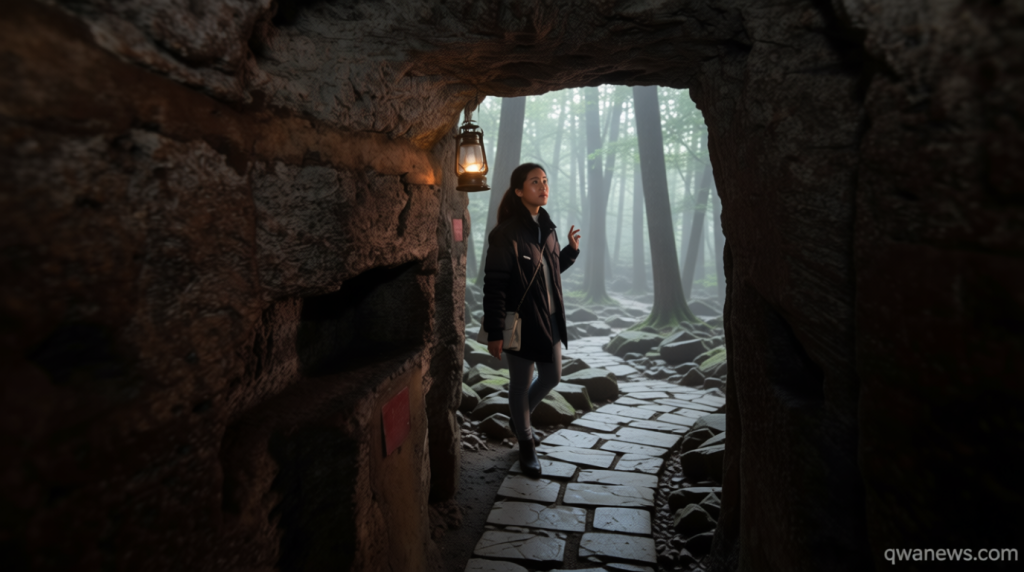
Hidden Beneath the Sands: The Underground Village of Vịnh Mốc
Qwenews.com – On the edge of Vịnh Mốc, a small coastal village in central Vietnam, bamboo groves ripple in the breeze over street food vendors. Red plastic chairs line the sidewalks, offering a familiar backdrop for locals preparing grilled rice and noodle meals. Coca-Cola dispensers sit beside the stalls, a testament to the enduring cultural rhythm of everyday life. Yet this tranquil scene masks a darker past, as the village once bore the brunt of intense warfare.
A Shift from Peace to Peril
Before the Vietnam War, Vịnh Mốc was a peaceful fishing community nestled along the shores of Quảng Trị province. The landscape was defined by rice paddies, red basalt soil, and the golden sands of South China Sea beaches. Its serenity was shattered in 1954 when the Geneva Accords divided Vietnam, creating the Vietnamese Demilitarized Zone (DMZ) north of the Bến Hải River. This boundary placed the village near critical supply lines for North Vietnamese forces, making it a prime target for US and South Vietnamese aerial attacks.
Survival in the Shadows
By 1965, relentless bombing had forced residents to seek shelter beneath the surface. The tunnels, an underground network spanning over a mile, were built as a defensive system to protect lives and resources. “Relocation wasn’t an option due to constant bombardment and the threat of losing land,” explains Văn Ngọc Vũ, a tour guide. “Digging underground was both practical and strategic.”
“People here already knew how to dig small shelters. The soil around Vịnh Mốc was hard enough not to collapse easily and soft enough to dig with simple tools,” says Tran My Hoa, a guide from Connect Travel.
The concept originated during a 1963 visit by Trần Nam Trung, a senior Communist Party official. Inspired by the Củ Chi tunnels near Ho Chi Minh City, he envisioned a subterranean village tailored to the region’s needs. Unlike Củ Chi’s narrow crawlways, Vịnh Mốc’s tunnels were designed for family living, with wide passageways and communal spaces.
Engineering Resilience
Construction began in 1965 and continued for two years, overseen by Lê Xuân Vy, a border police commander. The tunnels were engineered to withstand bombings, featuring zigzag pathways to absorb blast waves and arched ceilings to reinforce structural integrity. “Tunnel exits were vital for ventilation, escape, and accessing supplies,” notes Vũ. Thirteen such exits connected the network to farmland and the sea, enabling secret supply missions to Cồn Cỏ Island.
The underground complex stretched across three levels, ranging from 50 to 75 feet below ground. Narrow tunnels widened into communal areas, while niches in the walls housed sleeping quarters for families. Though less claustrophobic than Củ Chi, the system still demanded adaptation—visitors today often bend to navigate its low ceilings.
Today, the tunnels stand as a haunting reminder of resilience. Visitors step into a world of dim light and damp air, where the echoes of war linger in every turn. The experience underscores the lengths Vietnamese people went to endure conflict, transforming their village into a hidden sanctuary beneath the earth.