
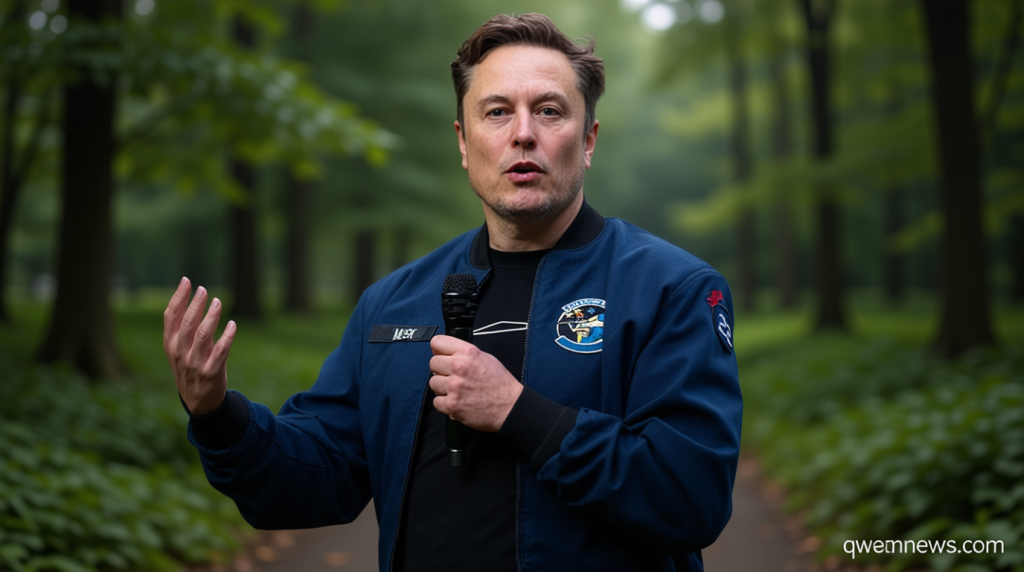
Elon Musk Likely Broke Law with $1 Million in Wisconsin Voter Payments
Qwenews.com – Elon Musk likely broke the law by distributing $1 million in checks to Wisconsin voters ahead of the 2025 Supreme Court election, according to a bipartisan committee investigating the matter. The Wisconsin Elections Commission has formally referred two complaints to the Brown County district attorney’s office, signaling a potential probe into election-related violations. These allegations suggest that Musk’s financial contributions could have constituted vote bribery, a charge that has drawn scrutiny from legal experts and watchdog organizations.
Legal Findings and Election Context
The Wisconsin Elections Commission, composed of three Democrats and three Republicans, voted 5-1 to forward complaints about Musk’s actions to the district attorney’s office. This decision follows a thorough review of evidence, including financial records and voter testimonies. The committee’s report highlights that Musk’s campaign and affiliated groups spent at least $20 million to support Republican candidate Brad Schimel, who ultimately lost to Susan Crawford, the Democratic-backed opponent. The $1 million in direct payments to voters is now under scrutiny as a potential tool to sway the election outcome.
According to the complaints, Musk’s political action committee, America PAC, offered $100 to voters in Milwaukee and Green Bay who signed petitions opposing “activist judges” or referred others to do so. This strategy intensified in the final days of the campaign, with Musk personally handing out checks at a rally in Green Bay just days before the vote. The commission argues that these payments were designed to influence voters’ decisions, raising questions about the legality of such tactics in Wisconsin’s election framework.
“Musk’s actions were intended to generate a grassroots movement against activist judges, not to directly influence any specific candidate,” his legal team stated in filings. However, the commission disputes this claim, emphasizing that the financial incentives created a direct link between voter behavior and Musk’s campaign goals.
Previous Tactics and Legal Precedents
The commission’s findings build on earlier concerns about Musk’s political strategies. In the 2024 presidential election, his PAC offered $1 million daily to Wisconsin and six other key states’ voters who supported the First and Second Amendments. While a Pennsylvania judge ruled that effort did not meet the criteria for an illegal lottery, the current case in Wisconsin presents a different legal challenge. This time, the focus is on whether the payments constituted an unlawful attempt to bribe voters, which could lead to criminal charges.
Wisconsin’s election laws stipulate that no individual or group can directly pay voters to influence their vote in a state or local election without disclosing the transaction. The complaints allege that Musk failed to meet these disclosure requirements, thereby enabling his campaign to operate under the radar. This lack of transparency has sparked debates about the limits of political spending and the need for stricter regulations to prevent undue influence on voters.
Crawford’s victory in the Supreme Court race ensured Democratic control of the state’s highest court, increasing their majority to 5-2 after the election. The Wisconsin Democracy Campaign, a government watchdog, has filed a lawsuit against Musk, arguing that his actions disrupted the electoral process and violated vote bribery rules. The case is now pending in Brown County, where the district attorney will decide whether to pursue legal action against Musk and his affiliated groups.