
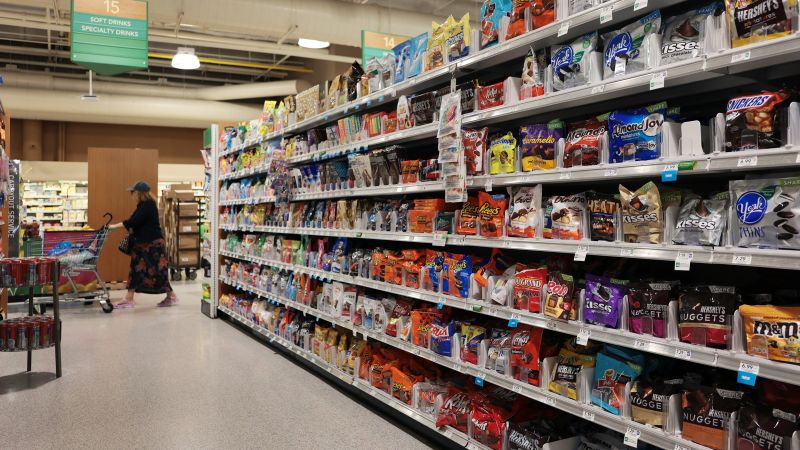
Ultraprocessed Food Campaign Sparks National Movement for Change
Qwenews.com – A new public initiative is gaining traction as Americans grow increasingly concerned about the impact of ultraprocessed foods on health. The “Fed UP!” campaign, spearheaded by food scientists, highlights widespread public demand for stricter regulations, with 77% of respondents across political lines calling for mandatory warning labels on UPF packages. This comes amid growing frustration with the food industry and government agencies for their slow response to health risks linked to highly processed foods.
Public Demand for Transparency and Regulation
Survey data reveals that 70% of Americans support banning ultraprocessed food ads during children’s programming, while 87% advocate for rigorous safety testing of lab-made chemicals before they are used in food. These findings, published in the American Journal of Public Health, underscore a shift in consumer priorities toward clearer information and proactive oversight.
“Families are now pushing for meaningful changes in how food is produced, promoted, and controlled,” noted Ashley Gearhardt, a psychology professor at the University of Michigan, who co-led the campaign.
Industry Inaction and Regulatory Delays
The MAHA Commission, established to address ultraprocessed food concerns, had promised bold measures by August 2025. However, its final report in September only emphasized ongoing efforts to define UPFs, leaving many critics dissatisfied. “This document is full of pledges but lacks real enforcement,” said Barry Popkin, a public health expert from UNC Chapel Hill, criticizing the industry’s influence on policy decisions.
Health Risks and Scientific Backing
Researchers warn that even small increases in UPF consumption carry severe consequences. A 10% daily rise in calories from these foods is associated with a 50% higher risk of cardiovascular disease mortality, while higher intake also correlates with increased obesity and type 2 diabetes rates. Recent studies further link UPFs to cognitive decline and Alzheimer’s, with high consumers showing a 60% greater dementia risk compared to those eating minimally processed options.
“We’re seeing the effects of processed diets on both physical and mental health,” remarked Cindy Leung, a public health nutrition professor at Harvard. “The evidence is clear, yet action remains delayed.”
Industry Influence and the Need for Reform
Experts argue that industry lobbying has stalled progress. From 1999 to 2020, ultraprocessed food companies invested $1.15 billion in political campaigns—outspending sectors like tobacco and alcohol. “We’re still not making significant strides on this issue,” said Laura Schmidt, a health policy professor at UC San Francisco. “Global efforts show what’s possible, but the U.S. lags behind.”
The campaign aims to empower consumers by offering tools to advocate for healthier food systems, including strategies to influence local policies and school nutrition programs. With mounting evidence and public support, the push for regulatory reform continues to gain momentum.