
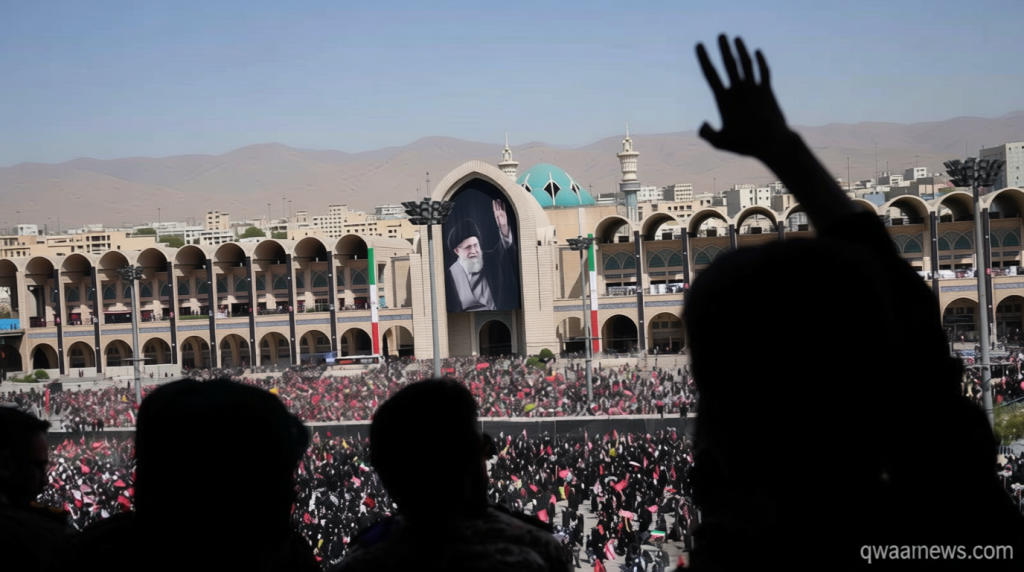
The View from Tehran: Iran’s Grief and Vengeance at Supreme Leader’s Funeral
Qwenews.com – The view from Tehran has become a symbol of both sorrow and resolve as Iran mourns the death of its longest-serving supreme leader, Ali Khamenei. His nearly 40-year tenure as a spiritual and political figure left an enduring legacy, shaping the nation’s trajectory through periods of conflict and cooperation. The funeral, held amid escalating tensions with the United States, showcased a mix of national unity and personal grief, with crowds gathering in vast numbers to honor their leader. Despite the emotional weight of the event, the atmosphere was also charged with a sense of vengeance, as Iranians expressed their anger over recent attacks on civilian vessels in the Strait of Hormuz and the U.S. airstrikes that followed.
A Nation’s Duality: Grief and Political Resolve
The funeral processions in Tehran transformed the capital into a sea of black-clad mourners, with government officials claiming over 10 million people attended. While independent verification remains challenging, the streets were packed with thousands showing their devotion. The 20-kilometer route, lined with flags and floral tributes, reflected a blend of religious tradition and political fervor. Some residents, however, opted to leave the city for the holiday, yet the scenes of unity and determination remained overwhelming, underscoring the deep emotional ties to Khamenei’s leadership.
Amidst the sorrow, the event also served as a platform for expressing political grievances. Many Iranians, particularly younger generations, viewed the funeral as a moment to channel their frustrations into a call for retribution. The phrase “the view from Tehran” encapsulates the nation’s collective mood, as the streets buzzed with chants of “kill Trump” and “death to America,” highlighting the simmering anger toward U.S. policies. Yet, the atmosphere was not entirely one-sided, with some voices questioning the government’s handling of recent conflicts and its reliance on military posturing.
The Emotional Core of the Ceremony
The funeral ceremony was deeply moving, with attendees reflecting on Khamenei’s influence and the sacrifices made under his rule. For many, the event was a personal tribute, as individuals shared stories of their connection to the leader. “I even loved him more than my father. It’s as if I lost my father again,” said Nafiseh Sadat Sadri, a 30-year-old Tehran resident. “I feel like an orphan now—it burns in my heart.” Such emotional displays were common, as the faithful gathered to pay homage to a man who had guided Iran through decades of challenges.
“He was our leader. He was a great man,” added Fatemeh, a 25-year-old who traveled overnight from Kashan to witness the procession. “I will carry on his legacy.”
Others saw the funeral as a rallying cry for action. “We are here to avenge our leader’s blood,” declared Mahtab Ehsani, a young woman in the crowd. “Blood must be paid with blood.” These sentiments resonated with many, as the event coincided with a period of heightened hostilities. The presence of clerics and officials further amplified the sense of purpose, with some urging the public to maintain their anger and determination in the face of external threats.
Contrasting Voices: Support and Dissent
While the majority of mourners celebrated Khamenei’s legacy, a few voices of dissent emerged, questioning the government’s strategies. Tayyebeh Sadat, a government employee, remarked, “I’m criticizing my country’s leaders. They failed to respond to those overseas. Negotiations were against the people’s will. They wasted our military’s efforts.” Her words highlighted a growing divide between those who saw Khamenei as a unifying figure and others who felt his leadership was tied to compromises that undermined national interests.
Yet, even in the presence of dissent, the overall mood remained one of collective mourning. Social media platforms were flooded with videos capturing the fervor of the crowds, with chants echoing through the streets. These moments of unity were interspersed with subtle expressions of frustration, as some participants greeted CNN journalists with warm welcomes, indicating a nuanced perspective on the country’s direction. The contrast in public sentiment at the funeral underscored the complexity of Iran’s political landscape.
International Reactions and Domestic Implications
The funeral in Tehran also drew attention from the international community, with analysts noting the event’s symbolic importance in the ongoing U.S.-Iran standoff. While the United States continued its airstrikes in retaliation for attacks on oil tankers, the funeral provided a moment for Iranians to assert their resilience. The phrase “the view from Tehran” now carries added weight, as the nation’s leaders use the occasion to reinforce their narrative of defiance against foreign powers.
Domestically, the funeral has become a pivotal moment for the Iranian government to consolidate support. With Khamenei’s passing, his successors face the challenge of maintaining the legacy of a leader who was both revered and controversial. The emotional impact of the ceremony, combined with the calls for vengeance, has created a climate where the government is likely to emphasize national solidarity. This dynamic is expected to shape Iran’s future policies, as the nation moves forward with a mix of grief and determination.