
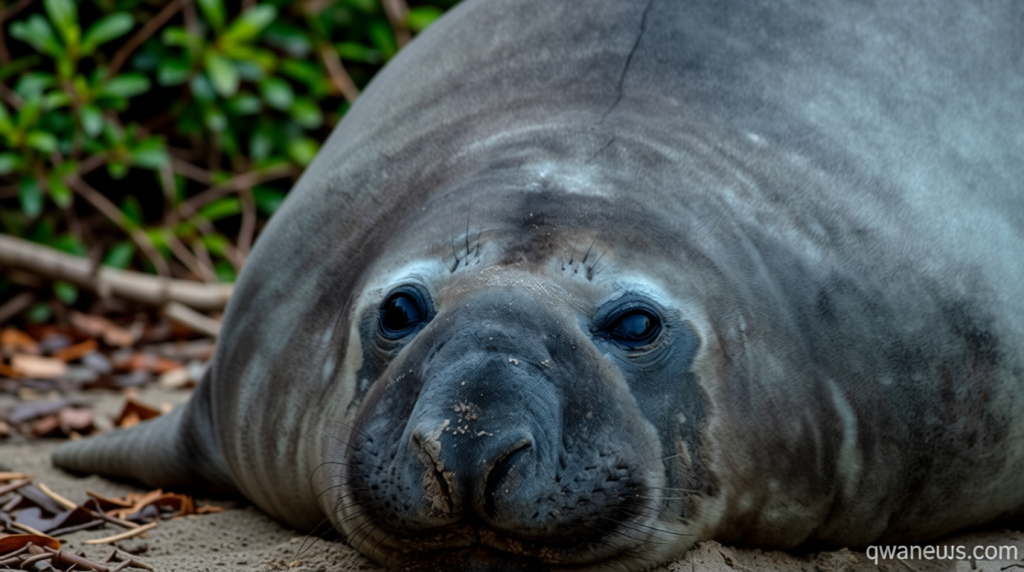
Neil the Elephant Seal’s Return to Sea Sparks a Unique Dilemma
Qwenews.com – Weeks after a dramatic farewell, Neil the elephant seal has finally returned to the ocean, leaving behind a community of admirers and raising questions about his future as he continues to grow. His departure this week was met with mixed emotions by locals in Tasmania, who had grown accustomed to his playful antics on land. Rebecca Thomson, a resident of Hobart, described the moment he left as both thrilling and amusing. “It’s as if a massive slug is charging towards you,” she joked, recounting how Neil had followed her to the beach in June before making a sudden exit.
A Local Celebrity with a Mischievous Side
Neil’s reputation as a beloved yet unpredictable figure has only deepened over the years. While most southern elephant seals retreat to remote subantarctic islands for breeding and socializing, this young male has taken to the Tasmanian coastline, where he has become a source of local fascination. Videos of him interacting with humans—rocking vehicles, flattening traffic cones, and even nudging street signs—have gone viral, earning him a dedicated following on platforms like TikTok, which boasts over 1.7 million followers.
“He’s more ungovernable than ever,” one TikTok caption noted, highlighting Neil’s growing status as a cultural icon.
Despite his chaotic behavior, Neil has not harmed anyone, according to Thomson. “He’s definitely become an icon,” she said, adding that his presence has even inspired local advertising and insurance campaigns. However, officials caution that his rising fame may now put him at risk. As he grows larger and more active, the chance of him encountering dangers increases, prompting concerns about his safety in a human-dominated environment.
An Unusual Start in a Surprising Location
Neil’s journey began in 2020, when he was born near Hobart, far from the typical breeding grounds of Macquarie Island, 1,500 kilometers south of the city. Clive McMahon, a research ecologist with the Sydney Institute of Marine Science, explained that this was an anomaly. Most southern elephant seals return to their birthplace for mating and giving birth, but Neil’s mother may have been too young to navigate the journey, leading her to give birth on Tasmanian shores instead.
“Neil is doing exactly what we expect from a good elephant seal,” McMahon said, noting that his behavior—like the mid-year haul-out and social interactions—is natural. “It’s just that he’s doing it in a strange place.” This unusual pattern has made him a standout among his species, drawing attention from scientists and the public alike. The Department of Natural Resources and Environment Tasmania (NRE Tas) reports that only a few southern elephant seals have survived being born in the state over the past four decades.
The Seasonal Rituals of Elephant Seals
While southern elephant seals typically gather on isolated islands, Neil has adapted to life in Hobart’s coastal areas. His seasonal visits coincide with key events in their lifecycle: molting in December and January, breeding from September to November, and the enigmatic mid-year haul-out, which occurs from April to August. During these periods, seals interact, with young males practicing combat to establish dominance. Yet, in Hobart, Neil has no fellow males to spar with, leading him to improvise by engaging with vehicles and traffic cones.
Marine ecologist Sophia Volzke, who studies seals in Hobart, described Neil as a blend of celebrity, mascot, and local prankster. “Everyone loves him,” she said, emphasizing that Tasmanians are fiercely protective of the animal. Volzke, who is currently working on her PhD, has observed how Neil’s presence has become a fixture in the community, blending wildlife with everyday life in unexpected ways.