
Recreating the Great Pacific Migration: Indigenous Taiwanese Navigators Emulate Celestial Voyages
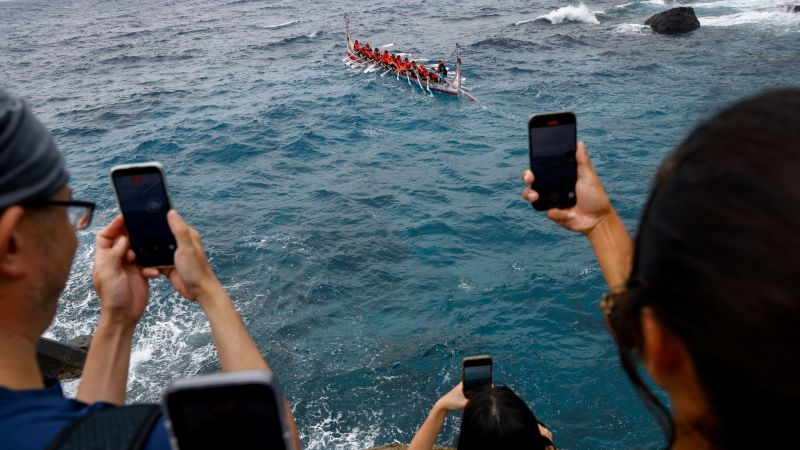
Qwenews.com – Using the stars and paddles, indigenous Taiwanese navigators embarked on a groundbreaking 111-mile voyage to the Philippines, retracing a perilous route believed to be used by Austronesian ancestors over 4,000 years ago. This historic expedition, led by 60 members of the Tao people from Taiwan’s Orchid Island, marks a powerful effort to revive the ancient maritime practices that once connected the island to distant shores. By relying on traditional wooden canoes and celestial navigation, the journey not only honors the Great Pacific Migration but also highlights the enduring resilience of indigenous seafaring skills. The event drew widespread attention, with cultural displays and community celebrations underscoring the significance of this renewed link to ancestral traditions.
Reconnecting with Austronesian Heritage
The Great Pacific Migration is widely recognized as one of humanity’s most remarkable journeys, with indigenous peoples of Taiwan serving as key custodians of its legacy. Scholars suggest that the Austronesian-speaking communities, including the Tao, were among the first to undertake long-distance oceanic voyages, reaching as far as Madagascar, Hawaii, and Easter Island. This expedition, part of a broader initiative to celebrate the origins of these cultures, aims to restore a route that was last used by the Tao people in the 17th century. By navigating to the Philippines, the group honors the historical ties between the two regions, which have been reaffirmed through linguistic and archaeological research.
Traditional Techniques and Collaborative Efforts
At the heart of the journey was the meticulous construction of the canoe, “Ovayan” or “Golden Friendship,” which was built using age-old methods passed down through generations. Over 200 individuals from six indigenous communities contributed to the project, joining wooden planks without nails—a testament to their craftsmanship and deep connection to ancestral practices. Hsieh Chen-Hsiung, a shipbuilder involved in the process, emphasized the importance of uneven surfaces in reducing resistance from the sea, a technique that aligns with the wisdom of traditional navigators. The voyage also benefited from government support, reflecting Taiwan’s commitment to preserving and promoting its indigenous heritage as a vital part of the nation’s cultural identity.
Cultural and Linguistic Significance
Experts argue that Taiwan was the starting point of the Austronesian expansion, a theory supported by linguistic evidence. The word for “five” in languages like Bahasa Indonesian, Māori, and Hawaiian—“lima,” “rima,” and “ʻelima,” respectively—shares common roots, underscoring the deep historical connections between these communities. Taiwan’s indigenous languages, however, exhibit greater diversity and complexity, suggesting a rich cultural foundation from which the Great Pacific Migration emerged. This linguistic data, combined with archaeological findings, strengthens the case for Taiwan as the cradle of the Austronesian seafaring network, offering new insights into early human exploration and adaptation to marine environments.
The Voyage’s Challenges and Triumphs
Recreating the Great Pacific Migration required overcoming both physical and logistical challenges. The 111-mile journey, which took two days to complete, involved navigating unpredictable ocean currents and weather patterns using only the stars and paddles as guides. Navigators relied on oral traditions and environmental cues, such as wave patterns and bird behavior, to chart their course—a method that has been used for millennia. Despite the risks, the group successfully reached the Philippines, where they were greeted with cultural exchanges and displays of unity. The event symbolizes not just a historical reenactment but also a contemporary effort to bridge the past and present through shared knowledge and collective effort.
“This is not only a significant day for the Pacific Ocean but also a day of commemoration for the Austronesian people,” said Maraos, chairperson of the Indigenous Peoples Cultural Foundation.
“The high-level diversity suggests that Taiwan was the original dispersal of the family,” remarked Victoria Chen, a senior lecturer at Victoria University of Wellington.
Debating Origins and Identity
The “Out of Taiwan” theory has sparked debates, particularly with mainland Chinese academics who argue that Austronesian roots lie in southern China. While this theory remains contested, the voyage serves as a cultural statement for Taiwan, emphasizing its role in the global narrative of seafaring innovation. Maraos noted that the event is part of a broader movement to assert Taiwan’s distinct identity, separate from Chinese influence. This dual purpose—celebrating Austronesian heritage while reinforcing Taiwan’s cultural sovereignty—adds depth to the expedition’s significance. The success of the journey also highlights the importance of collaboration between indigenous groups, both in preparation and execution, as they work to preserve their ancestral knowledge in an era of modernization.
Implications for Future Research and Exploration
The voyage’s completion has sparked renewed interest in studying the Great Pacific Migration and its implications for human history. Researchers believe that such reenactments provide critical insights into the navigational techniques and survival strategies of early seafarers, shedding light on how they managed to traverse vast oceans without modern technology. The event also serves as a model for future projects that aim to combine traditional knowledge with contemporary scientific methods. By using the stars and paddles, the indigenous navigators not only revive an ancient practice but also demonstrate its relevance in today’s world. As the expedition gains recognition, it may inspire further efforts to explore and document the maritime history of Taiwan and its connections to the wider Pacific region.