
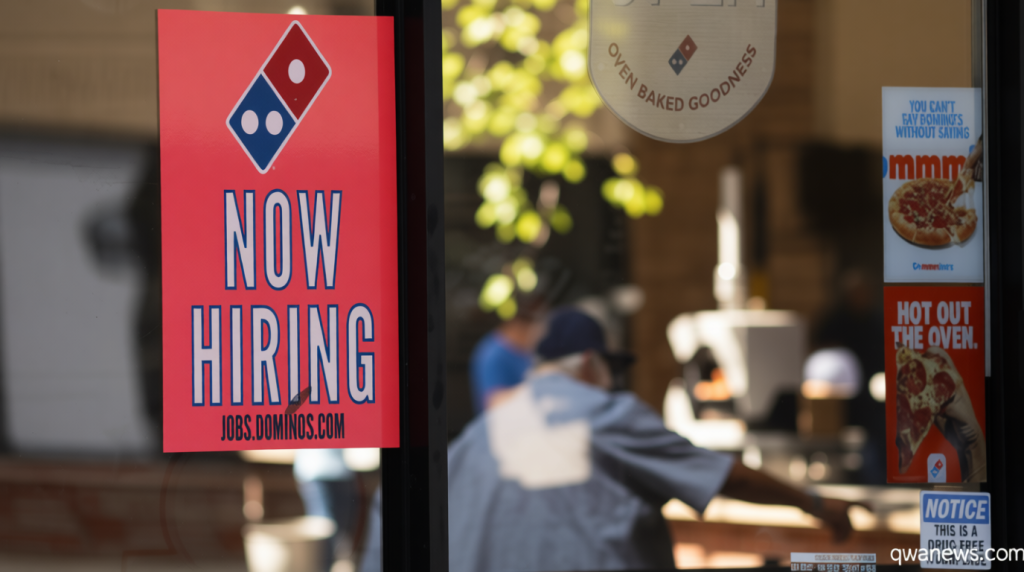
US Job Openings Much Higher Than Expected in May, Despite Iran War Uncertainty
Qwenews.com – Recent data has shown that US job openings were much higher than anticipated in May, defying expectations amid ongoing geopolitical uncertainties. The Bureau of Labor Statistics reported a significant rise in available positions, with the count reaching nearly 7.6 million—a sharp increase from the 7.59 million recorded in April. This surge signals a potential shift in labor demand, as companies appear to be adjusting their strategies in response to market dynamics.
The unexpected uptick in job openings has sparked renewed optimism about the US labor market. Analysts had projected a decline of almost 10% in May, forecasting around 6.975 million openings. However, the actual figure highlights a resilient job market, suggesting that the April spike was not a one-off event. This development underscores a broader trend of cautious optimism, with businesses gradually increasing their hiring efforts despite lingering concerns over international tensions.
Industry-Specific Shifts and Automation Impact
The rise in job openings was not uniform across all sectors. While industries such as leisure and hospitality, wholesale trade, construction, and manufacturing reported notable growth, others like healthcare, finance, and technology experienced a decline. Heather Long, chief economist at Navy Federal Credit Union, highlighted this divergence, stating,
“The hiring recession is over, and we are starting to see more industries look for workers again, and that’s really good news.”
Experts attribute the rebound to the recovery of blue-collar sectors, which have been a key driver of job market stability. In contrast, the tech and finance industries continue to grapple with challenges stemming from automation and digital transformation. Despite these pressures, the overall labor market remains stable, with companies recognizing the persistent need for human labor in various roles.
Employment Trends and Worker Behavior
The U.S. economy added an estimated 172,000 jobs in May, continuing a trend of steady employment gains. This follows three consecutive months of over 100,000 new positions, indicating a slow but consistent recovery. The unemployment rate held at 4.3%, reflecting the resilience of the labor force even as some industries face headwinds.
Despite the increase in job openings, hiring activity has remained cautious. New hires declined for the third consecutive month, as employers hesitated to commit to expansion. Sneha Puri of Indeed explained this trend,
“It’s not a contradiction. Recent employment gains are more a result of fewer people leaving jobs than increased hiring.”
This suggests that while more positions are available, the pace of filling them is still influenced by worker retention and hesitancy to enter the job market.
Noah Yosif of the American Staffing Association noted that the stable job openings could also be linked to a shrinking labor pool. He cited a smaller working-age population as a contributing factor, while also pointing out that layoffs and voluntary quits did not rise significantly. This indicates that workers remain confident in their current positions, despite the uncertainty surrounding global events.
Consumer Sentiment and Economic Outlook
A separate report from the Conference Board revealed that consumer confidence remained cautious in June, though it edged upward slightly. Falling gas prices contributed to the modest increase, yet 22.5% of respondents still reported difficulty finding work, the highest proportion since January 2021. Dana Peterson, the Conference Board’s chief economist, observed,
“Perceptions of the current labor market softened measurably, with a growing percentage of consumers expressing concern about job availability.”
Despite the positive job market indicators, there are still underlying challenges. Peterson emphasized that respondents expect minimal changes in the labor market over the next six months, suggesting a plateau in growth. However, the combination of rising job openings and steady employment numbers points to a broader economic recovery, even as automation continues to reshape certain industries.
The data on US job openings were much higher than expected, offering a mixed picture of the labor market. While some sectors are rebounding, others are still navigating disruptions. This highlights the importance of continued monitoring as businesses and workers adapt to evolving conditions. The next jobs report, delayed by the July 4th holiday, will provide further insight into whether this trend is sustainable or a temporary fluctuation.