
Massive Die Off Predicted for Exceptionally Rare California Island Pines
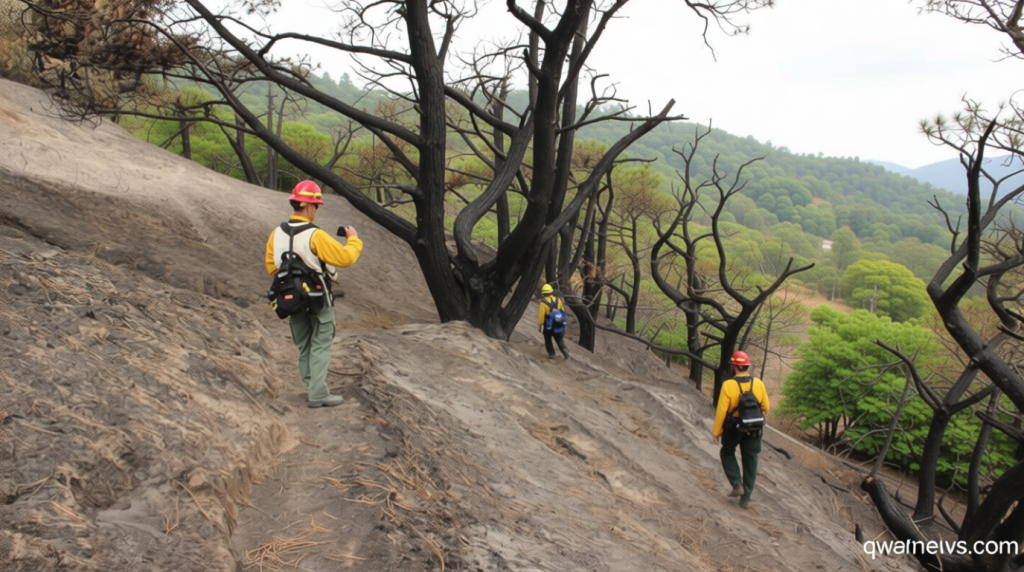
Qwenews.com – A massive die off predicted for exceptionally rare Torrey pine trees is reshaping conservation efforts on Santa Rosa Island. This historic wildfire, sparked by human activity in May 2026, has fundamentally altered the ecological landscape of this remote sanctuary located approximately 26 miles from the Southern California coast. The blaze consumed more than a third of the island’s surface area within Channel Islands National Park, threatening unique species that exist nowhere else on Earth.
Unprecedented Loss Among World’s Rarest Pines
Federal evaluations reveal alarming statistics about the Santa Rosa Island Torrey pine population following the devastating fire. These ancient conifers, which cling to sandstone cliffs overlooking the Pacific Ocean, represent one of the most endangered pine species globally. Ana Cholo, a spokesperson for the National Park Service, revealed that between 60 and 80 percent of these remarkable trees are expected to perish following the inferno. This massive die off predicted for exceptionally rare specimens represents one of the most significant ecological losses in recent California history.
“Because Torrey pines are not well adapted to fire, even low-severity burns may result in delayed mortality,” Cholo explained. “A detailed assessment is underway, and the full extent of impacts may not be known for at least a year.”
Only a tiny fraction—just 2 percent—of the entire grove escaped the flames entirely. Some specimens perished instantly, while others face a slow decline as their compromised systems fail over coming months and years. The timing of this disaster could not be worse for these vulnerable trees that have survived for thousands of years in this unique coastal environment.
Ecological Ripple Effects Across the Island
The potential loss extends far beyond the trees themselves. Heather Schneider, who directs conservation and research at the Santa Barbara Botanic Garden, emphasized how these distinctive, gnarled pines function as ecological engineers. Their needle-covered branches intercept coastal fog, channeling precious moisture downward to nourish both their own root systems and surrounding vegetation. This water-capturing mechanism supports an entire ecosystem of plants and animals that depend on this moisture source.
“Plants like this affect local water availability and can make a huge difference in terms of how much water is captured by life on the ground,” Schneider noted.
Dustin Wolkis, serving as director of science and conservation at the Center for Plant Conservation, highlighted another critical vulnerability. These isolated populations possess limited genetic diversity, making them exceptionally susceptible to catastrophic events. Even minor reductions in their gene pool could prove devastating for long-term survival. The massive die off predicted for exceptionally rare trees threatens not just individual specimens but the genetic future of the entire species.
“When you lose even just a little bit of genetic diversity, that can be catastrophic for the population,” Wolkis stated. “Once that genetic diversity is lost, you cannot get that back. All you can do is maintain what you have.”
Conservation Efforts and Future Challenges
Remarkably, the Santa Barbara Botanic Garden had been gathering seeds from these island pines for several years before the fire struck. Schneider described this as “an eerie twist of fate,” noting that the organization successfully cultivated these seeds and established a conservation grove. Approximately 40 additional seeds remain at their nursery, potentially offering a lifeline for recovery efforts. These preserved seeds represent hope for the future of this endangered species.
Other institutions, including the Center for Plant Conservation, have also preserved seeds from this rare species. Meanwhile, the surviving trees may harbor their own natural seed bank. Schneider explained that while mature trees release most of their seeds, they retain some in their canopies for extended periods—sometimes exceeding a decade. Should any of these dormant seeds survive within scorched cones, even deceased trees could contribute to regenerating the population.
However, new generations of Torrey pines will face mounting pressures from global climate change. Schneider pointed out that rising temperatures and delayed onset of the rainy season are altering the delicate environmental conditions these plants require throughout their life cycles. The massive die off predicted for exceptionally rare trees comes at a critical time when climate patterns are shifting rapidly.
“It’s a hard time to be a pine tree on Earth as the climate shifts,” Schneider observed.
Scientists and conservationists are now working tirelessly to document the damage and develop strategies for protecting what remains. The outcome of this disaster will shape conservation priorities for decades to come, as researchers race to understand the full scope of losses and implement measures to prevent similar catastrophes in the future.