
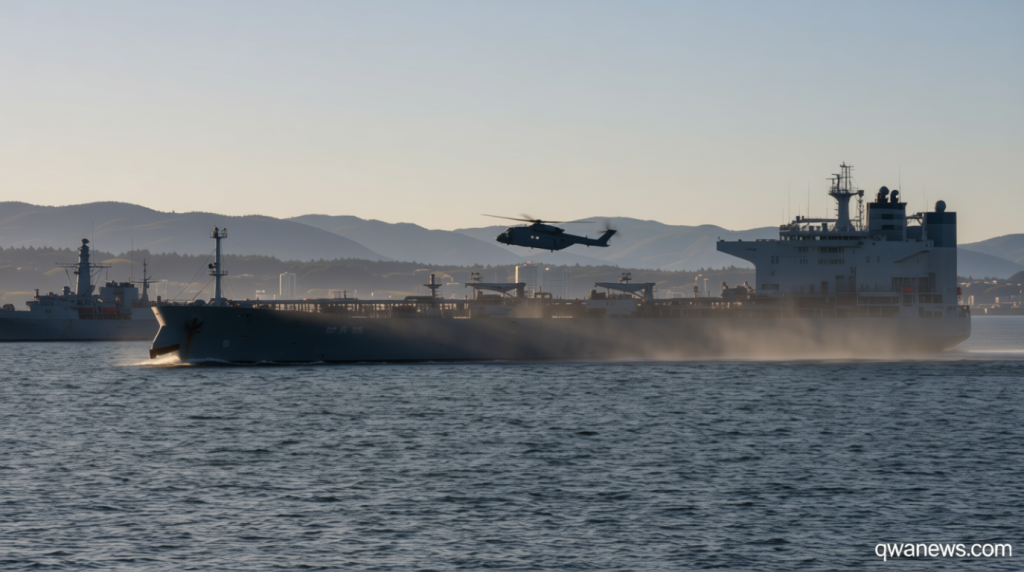
UK Conducts First Shadow Fleet Interception in English Channel
Historic Operation Targets Russian Oil Smuggling
Qwenews.com – The United Kingdom has made history by intercepting a Russian shadow fleet tanker for the first time in the English Channel, a significant step in countering the country’s efforts to circumvent international sanctions. This operation, orchestrated under the leadership of Prime Minister Keir Starmer, marks a critical moment in the UK’s strategy to disrupt Russia’s oil supply chain. Starmer confirmed the move during a live address on X, emphasizing, “The UK has taken decisive action to intercept a shadow fleet oil tanker, sending a clear message that we will not allow Russia to evade accountability for its actions in Ukraine.” The incident underscores the growing intensity of efforts to limit Russia’s access to global markets and its financial resources.
Details of the Interception
The intercepted vessel, identified as the Smyrtos, is a Cameroon-flagged tanker that had been linked to the Russian shadow fleet network. According to maritime tracking data, the ship was last spotted in Russia’s Luga Bay on June 5, 2026, and departed the Baltic Sea six days later. Its original route was planned to reach Port Said, Egypt, but the UK’s operation thwarted this plan. The ship had previously been sanctioned by the UK in 2025 for its role in transporting Russian oil to countries outside of Europe. This latest action, however, marks the first time a tanker associated with the shadow fleet has been directly seized by British forces.
The operation involved a coordinated effort between commandos and the National Crime Agency (NCA), which deployed a swift response to board the vessel. Officials confirmed that the interception occurred in international waters near the English Channel, where the UK asserts its jurisdiction. The NCA has been instrumental in tracking and identifying ships suspected of participating in the shadow fleet, which Russia uses to bypass sanctions that restrict direct exports of oil to Western markets. This move is part of a broader campaign to weaken Russia’s economic leverage and support Ukraine’s ongoing war efforts.
Strategic Implications of the UK’s Action
The interception of the Smyrtos represents a symbolic and operational victory for the UK in its fight against Russian oil smuggling. By seizing the tanker, the country has not only disrupted a key supply route but also demonstrated its commitment to enforcing sanctions more aggressively. Analysts suggest that the shadow fleet’s operations are a major concern for global energy markets, as they enable Russia to continue selling oil at favorable prices despite international restrictions. This action is expected to have a ripple effect on other nations that may be hesitant to take similar steps.
UK Defense Secretary Dan Jarvis, who oversaw the operation, stated, “Russia’s shadow fleet is crucial to sustaining their conflict in Ukraine, and our interdiction delivers a blow to Putin’s illegal war.” The move aligns with the government’s broader goals to pressure Russia economically, which has been a central focus since the invasion of Ukraine began in 2022. By intercepting the tanker, the UK has added a new dimension to its sanctions regime, potentially leading to more targeted measures against Russian vessels and their crews.
“This successful operation delivers yet another blow to Russia and reminds those fueling Putin’s war in Ukraine that we will not let them hide,” Starmer added.
European Collaboration and Future Steps
France has been active in intercepting Russian shadow fleet vessels for several months, but the UK’s interception marks a turning point in the collective response by European nations. Ukrainian President Volodymyr Zelensky praised the UK’s action, calling it a “vital step” in the fight against Russian aggression. He urged Europe to “take legislative steps to enable not only the detention of tankers and restrictions on oil shipments, but also the confiscation of the oil they carry,” highlighting the need for more robust enforcement mechanisms.
“Europe urgently needs to act,” Zelensky emphasized.
While the operation has been lauded as a success, it also highlights the challenges of intercepting Russian vessels in contested waters. The shadow fleet operates with a mix of commercial and military assets, often using neutral flags to mask its origins. This tactic complicates enforcement efforts, as it allows Russia to evade direct responsibility for its oil exports. The UK’s success in this case, however, signals that such strategies may become more effective in the future.
The interception comes amid ongoing debates over the UK’s military budget and priorities. Defense Secretary Dan Jarvis took over from John Healey, who resigned earlier this year due to disagreements over resource allocation. Jarvis has since positioned the interception as a demonstration of the UK’s dedication to countering Russian influence, stating, “Our actions show that we are willing to take bold steps to protect our allies and challenge Russian expansionism.”
“Russia’s shadow fleet is crucial to sustaining their conflict in Ukraine,” Jarvis stated.
Despite the UK’s achievements, the Russian government has responded with criticism, accusing the country of shifting focus from its migrant crisis to energy sanctions. Kremlin envoy Kirill Dmitriev called the interception a “distraction,” arguing that it diverts attention from the pressing issue of refugee influx. However, analysts believe that the operation reinforces the UK’s determination to target Russia’s oil supply chain, a move that could have long-term consequences for the country’s economic and military capabilities.