
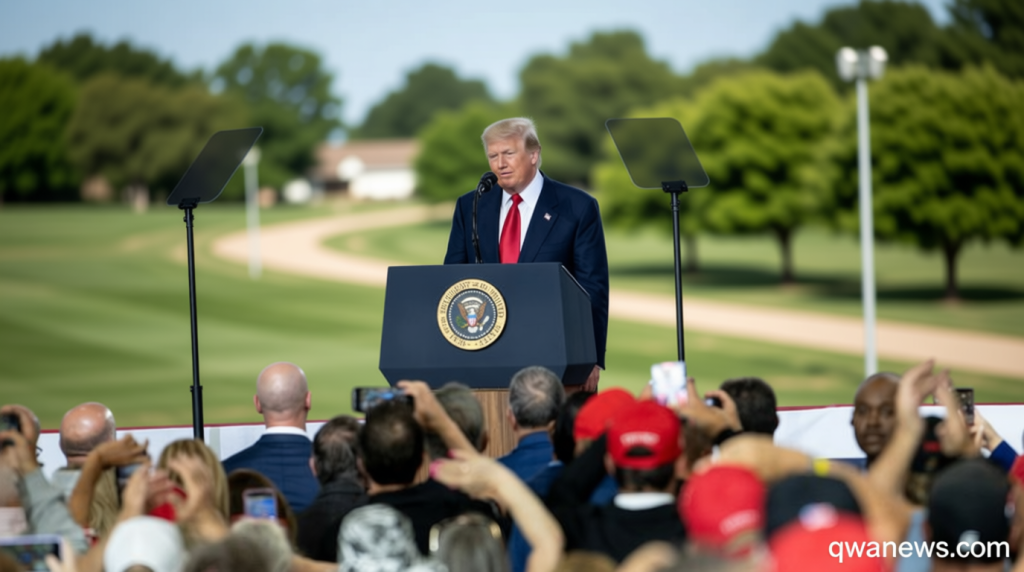
Republican Voters Face Mounting Challenges as Midterm Elections Approach
Qwenews.com – Republican voters are increasingly voicing concerns about declining enthusiasm within their ranks as the 2026 midterm elections draw nearer. These constituents have traditionally been less likely to participate in elections without Donald Trump appearing on the ballot, and the situation has become even more difficult as the president experiences new lows in public approval. A recent CNN survey sheds light on this concerning development: significant portions of Trump’s dedicated supporters are expressing disappointment about several recent policy decisions and leadership choices.
Across a wide range of topics including economic conditions, the ongoing conflict in Iran, the president’s business ventures, and efforts to reshape Washington, considerable shares of Republicans and GOP-leaning independents are registering their dissatisfaction. Frequently, these numbers reach 30%, 40%, 50%, or even higher thresholds. The comprehensive CNN poll shows that 30% of Republicans and GOP-leaning independents disapprove of Trump—a figure that stands remarkably high by itself. However, this statistic might actually underestimate the depth of frustration in certain key areas.
Economic Worries Lead Voter Concerns
Without question, the most troubling statistics relate to economic matters. The economy ranks as voters’ foremost concern, and it simultaneously represents Trump’s weakest area of performance. Specifically, among Republicans and GOP-leaning independents surveyed, approximately half or more of those who should be Trump’s natural allies harbor significant complaints about economic conditions and his handling of them.
Foreign Policy Issues Continue to Grow
Conditions regarding Iran present somewhat less severe but still worrisome figures. Within the same Republican demographic, Trump’s trajectory on this issue continues its downward path. Disapproval ratings among these groups have climbed from 30% in March to 40% currently.
Personal Initiatives Face Scrutiny
The survey reveals that numerous Trump supporters are dissatisfied with his priorities, particularly his attention to personal wealth and initiatives such as the White House ballroom and the Lincoln Memorial Reflecting Pool renovation. These findings carry additional weight when combined with the majority of Trump’s base indicating he has neglected inflation concerns.
Together, these data points suggest many of his followers believe he is concentrating on matters that either lack importance or actively generate unpopularity. During Trump’s initial months returning to office, enthusiasm within his base was noticeably strong. When asked about their outlook for the remainder of his second term, nearly nine out of ten Republicans and GOP-leaning independents described themselves as “enthusiastic” or “optimistic.” That figure has now declined to 70%, while 30% report feeling “pessimistic” or “afraid.”
This 30% negative outlook represents something quite exceptional. Following Barack Obama’s 2012 reelection victory, merely 8% of Democrats and Democratic-leaning independents expressed pessimism or fear. Before George W. Bush’s 2004 reelection, only 5% of Republicans and GOP-leaning independents shared similar sentiments about him.
Electoral Consequences Loom Large
Additional findings from a recent Pew Research Center survey add valuable context to these concerns. That study revealed 81% of Democrats and Democratic-leaning independents view their midterm ballot as a vote against Trump, compared to just 44% of Republicans and GOP-leaning independents who see theirs as a vote for him.
Indications of this kind of stagnation have existed for approximately one year, beginning when the Jeffrey Epstein controversy gained prominence. The most current data suggests this malaise has now spread throughout significant portions of the GOP base—arriving at precisely the wrong moment for the party.