
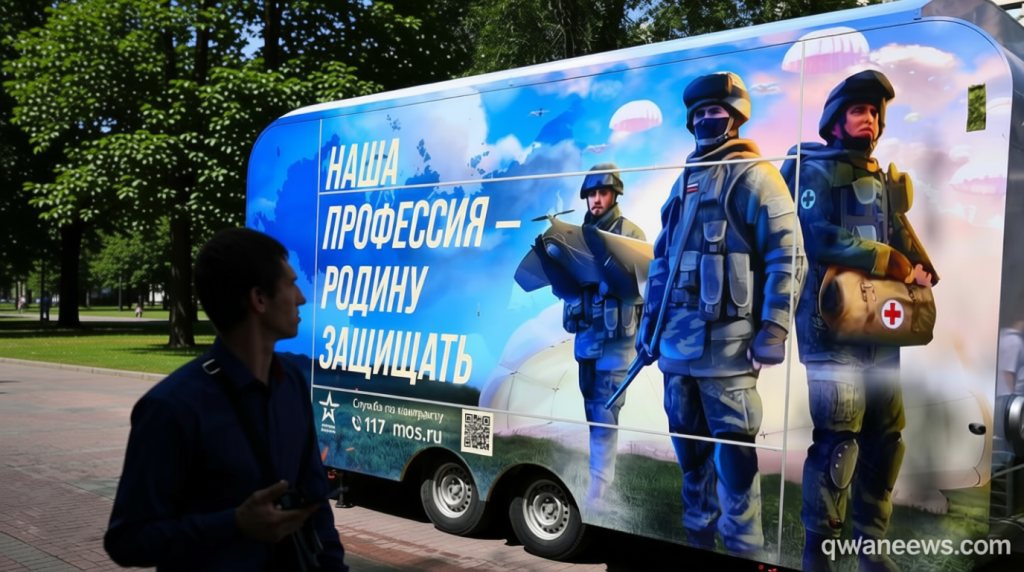
Russia s overwhelming manpower advantage in Ukraine war is starting to wane
Qwenews.com – As the Ukraine conflict enters its fifth year, Russia’s long-standing edge in troop numbers is facing significant challenges. The nation’s strategy of leveraging its vast population and industrial capacity to sustain prolonged combat has faltered, with declining recruitment rates and rising attrition rates threatening the Kremlin’s ability to maintain its military dominance. Experts now warn that the initial assumption of an insurmountable manpower advantage may no longer hold, as the war’s physical and psychological toll on Russian citizens grows.
Economic Strains and Recruitment Challenges
Despite aggressive efforts to incentivize enlistment, the Russian government is struggling to meet its staffing needs. Bonuses of up to $80,000 and debt forgiveness programs worth $140,000 have been introduced, yet these measures are increasingly failing to attract new recruits. The war has created a dual crisis: not only is the military losing personnel to combat, but the broader workforce is also shrinking due to labor shortages. This has forced industries to operate at reduced capacity, further straining the economy and compounding the problem.
“Russia’s reliance on mass conscription has become a burden rather than an asset,” noted Dr. Anna Petrova, a military analyst at the Moscow Institute of International Relations. “The state is paying citizens to fight, but the cost is escalating, both in terms of money and morale.”
With factories and logistics networks struggling to maintain output, inflation is rising, and wages are climbing as companies compete for fewer workers. This economic pressure is not only affecting the military’s ability to replenish ranks but also undermining the stability of everyday life for Russian civilians. The government’s attempts to compensate for the manpower deficit are creating a cycle of financial strain that could worsen if the trend continues.
Global Recruitment and Strategic Shifts
To address the crisis, Russia is exploring new avenues for sourcing troops. Reports suggest the Kremlin is considering recruiting from India, North Korea, and other African nations, where conscription systems or labor shortages could provide an alternative workforce. This marks a departure from the country’s historical reliance on its own population, signaling a potential shift in strategy as the war drags on. Meanwhile, some soldiers are turning to bribing officers to avoid frontline duty, highlighting growing dissatisfaction within the ranks.
“The Russian military is no longer just drawing from its domestic population,” said Gould-Davies. “It’s now seeking external support, which could alter the geopolitical landscape of the conflict.”
These unconventional methods reflect the evolving nature of the war. While they may temporarily alleviate the manpower shortage, they also raise questions about the sustainability of Russia’s military approach. Analysts warn that without a more efficient recruitment system or a reduction in combat intensity, the country may face deeper challenges in maintaining its strategic objectives in Ukraine.
As the war enters its fifth year, the balance of power is shifting. Russia’s overwhelming manpower advantage, once a key pillar of its military strategy, is now a critical vulnerability. The country must either find innovative solutions to replenish its ranks or adjust its ambitions in the conflict. The implications extend beyond the battlefield, affecting Russia’s domestic stability and economic resilience. With the war demanding more than ever from its people, the nation’s ability to sustain its efforts will determine the outcome of this prolonged conflict.